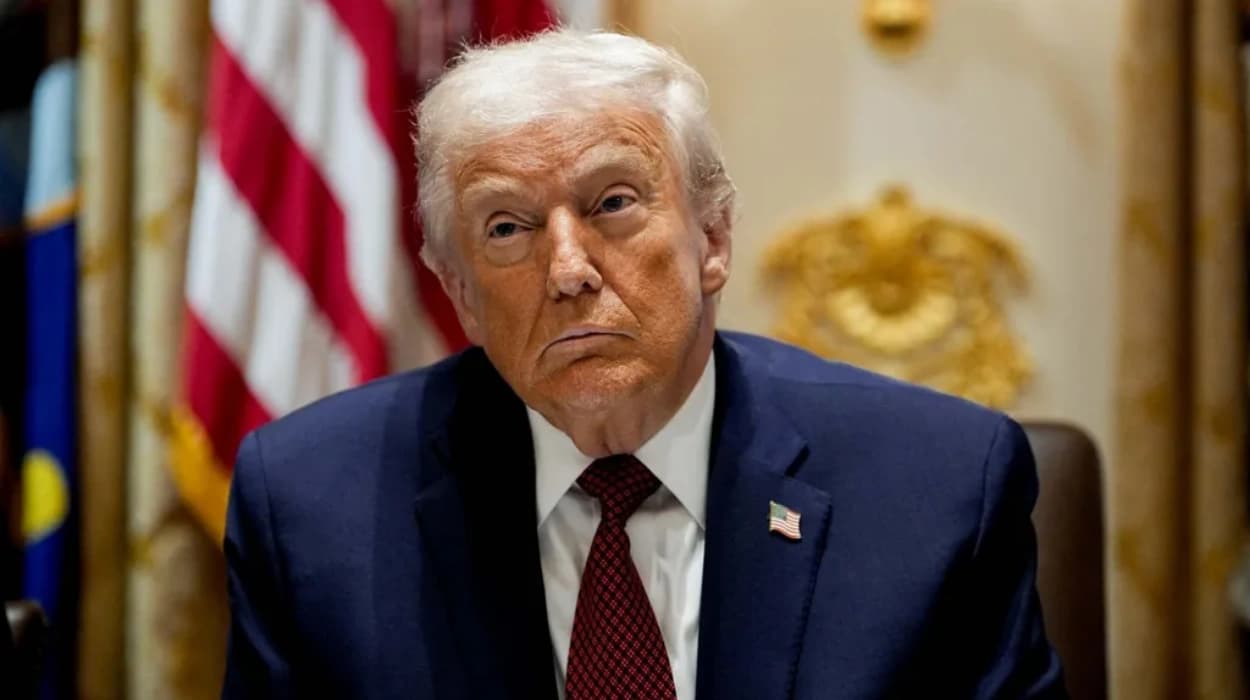
US President Donald Trump sharply criticized European leaders, arguing they are failing to manage migration pressures and the ongoing war in Ukraine.
In an interview with Politico at the White House, Trump stated that Europe was under a lot of stress and that its leaders had n't done enough to handle serious issues.
“I think they’re weak,”
he said.
“I also think that they want to be so politically correct. I think they don’t know what to do. Europe doesn’t know what to do.”
The conversation takes place as European leaders respond to the United States' new National Security Strategy, which charges the continent with being overly regulated, facing "civilizational erasure" as a result of immigration, and suffering from a decline in "self-confidence." It asserts that European institutions "undermine political liberty and sovereignty" and projects that Europe will be "unrecognizable in 20 years or less" if present trends continue.
At the Jacques Delors Institute's annual conference in Paris on Monday, European Council President Antonio Costa urged the United States to respect the bloc's domestic political life and democratic choices.
At the Jacques Delors Institute's annual conference in Paris on Monday, European Council President Antonio Costa urged the United States to respect the bloc's domestic political life and democratic choices.
"If we are allies, we must act as such—and allies do not threaten to interfere in each other’s domestic political life and democratic choices,"
said Costa.
Costa reiterated that the US and Europe "no longer share" the same understanding of the international system and have different worldviews.
However, Trump told Politico that he plans to keep supporting European politicians who share his beliefs, even if doing so causes opposition.
“I’d endorse. I’ve endorsed people, but I’ve endorsed people that a lot of Europeans don’t like. I’ve endorsed Viktor Orban,”
he said, pointing to the Hungarian prime minister’s border policies as an example he admires.
Also, he expressed worries about migration in crucial European metropolises, characterizing Paris and London as under strain. He appertained to London Mayor Sadiq Khan as a" disaster" and criticized demographic shifts for his election.
“He gets elected because so many people have come in. They vote for him now,”
said Trump.
Regarding the conflict between Russia and Ukraine, Trump stated that Russia is "obviously in a stronger position than Ukraine" and mentioned that he had given a fresh draft peace proposal, which he claimed some Ukrainian officials had examined but President Volodymyr Zelenskyy had not yet read.
“It would be nice if he would read it,”
he said.
During their meeting with Zelenskyy on Monday, European leaders reaffirmed their opposition to any deal that would force Ukraine to give up land. Trump questioned the impact of Europe's participation in the talks.
“They talk, but they don’t produce, and the war just keeps going on and on,”
he said.
While advocating for what he calls a peace-focused foreign policy, Trump hinted that his administration would intensify its military fight against drug networks in Latin America. In order to target suspected drug traffickers and put more pressure on Venezuela's government, he has already sent sizable US military assets to the Caribbean.
When it came to deploying US ground forces into Venezuela to assist in overthrowing President Nicolas Maduro, Trump was unsure.
“I don’t want to rule in or out. I don’t talk about it,”
he said, adding that he would not publicly discuss military strategy.
Trump stated that he might think about deploying force against targets connected to drugs in other nations, particularly Mexico and Colombia.
“Sure, I would,”
he said.
Trump claimed to know "very little" about former Honduran President Juan Orlando Hernandez, who was found guilty in a significant drug trafficking case. However, he took action after hearing from "very good people" that Hernandez had been handled unfairly.
“They asked me to do it and I said, I’ll do it,”
he said.
Regarding domestic matters, Trump defended his management of the economy in spite of voters' worries over living expenses.
He declared that "prices are all coming down" and gave the economy's performance a "A-plus-plus-plus-plus-plus." According to Politico, which used the most current Consumer Price Index, "everything is coming down," despite federal figures indicating a 3% increase in inflation over the previous year.
When asked if it would be a litmus test, Trump responded "yes," confirming that his next nominee to head the Federal Reserve would need to approve swift interest-rate decreases.
Significant premium hikes in 2026 could result from the president's failure to prolong enhanced Affordable Care Act subsidies, which are scheduled to expire at the end of the year.
“I don’t know. I’m gonna have to see,”
he said, shifting to criticism of Democrats. When reminded that families are already budgeting for next year, he replied,
“Don’t be dramatic. Don’t be dramatic.”
In addition, Trump discussed his attempt to revoke US birthright citizenship and other upcoming Supreme Court decisions.
He claimed that if the Court decided against him, it would be "devastating." Additionally, he asked Samuel Alito and Clarence Thomas, two of the oldest conservative justices, to stay on the bench.
“I hope they stay … ’cause I think they’re fantastic,”
he added.
How will Trump's remarks affect US EU diplomatic relations?
Trump's reflections, bedded in the US National Security Strategy and interviews, are straining US- EU political relations by provoking public counterreaction and signaling a shift from traditional alliance solidarity.
EU leaders like Council President António Costa and German Foreign Minister Johann Wadephul condemned the review of Europe's migration programs, free speech, and birthrates as unwarranted hindrance, rejecting US lectures on sovereignty while defending popular values.
The strategy's depiction of Europe as risking" civilizational erasure" and unreliable as a supporter fosters comprehension of enmity, potentially weakening NATO cohesion, trade addresses, and Ukraine support collaboration amid pitfalls of tariffs and reduced US commitments.
Judges prevision a" reorientation towards an alliance of illiberals," with Europe accelerating defense autonomy and diversified partnership with Asia, though profitable interdependence may temper outright rupture.