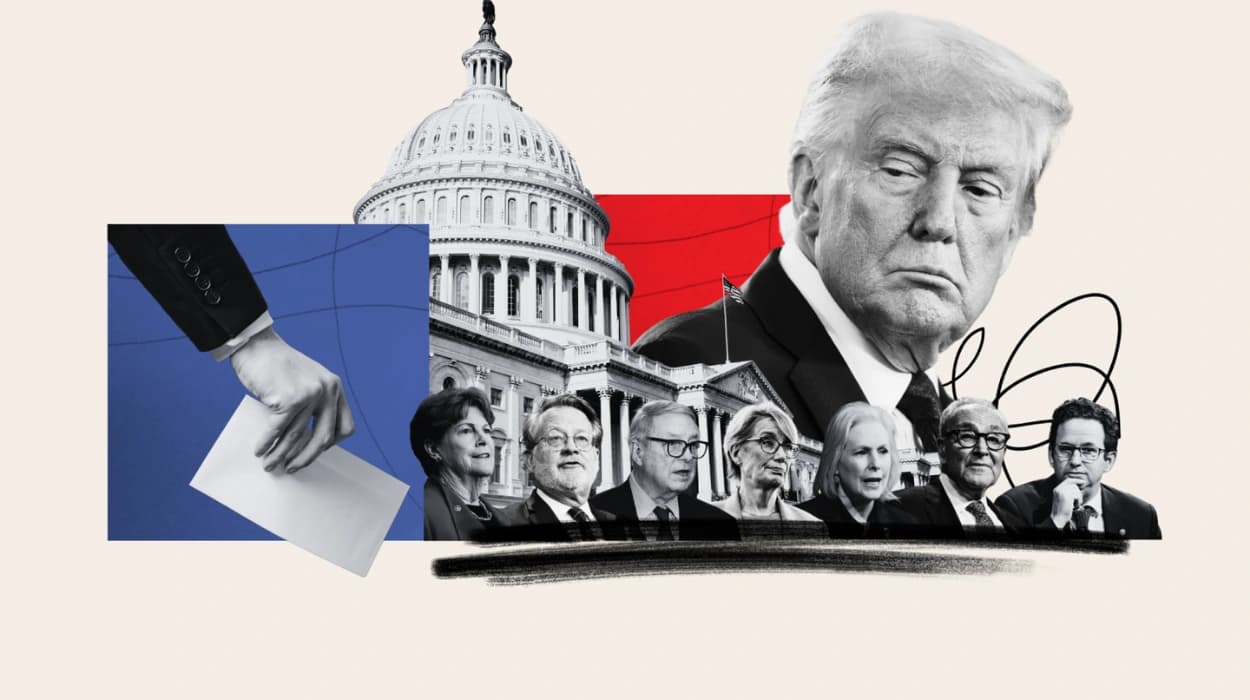
President Donald Trump has escalated his pressure on Democrats amid the US government shutdown, threatening mass layoffs of federal workers and freezing billions in funding for projects in Democratic-led states. The impasse between Republicans and Democrats shows little sign of resolution, impacting federal employees and essential services.
Trump escalates shutdown pressure on Democrats
President Donald Trump has intensified efforts to push Democrats into a compromise on federal spending amid a government shutdown that began on October 1, 2025. As reported by Alan Feuer of The New York Times, the Trump administration took aggressive steps by freezing nearly $26 billion in funds, including $8 billion for climate change projects primarily in Democratic-led states, and approximately $18 billion for infrastructure projects mainly in New York City. These moves are seen as both retaliation and leverage to compel Democratic legislators toward agreement.
Russell T. Vought, Director of the White House Office of Management and Budget (OMB), has publicly announced on social media the suspension of these funds, describing some expenditures as excessive or aligned with what he called the "Left climate agenda." He emphasized that the timing and selection of projects were deliberate to increase pressure on Democratic governors and congressional representatives, including Senator Chuck Schumer and Representative Hakeem Jeffries, frequent subjects of President Trump’s critiques.
The New York City infrastructure funding was paused pending further examination by the Transportation Department, which attributed the halt partly to policy concerns related to diversity, equity, and inclusion programs. The department also furloughed staff responsible for reviewing these projects as a direct consequence of the shutdown.
Threat of layoffs and administration’s strategy
As detailed by Alex Moe of The Hill, the White House has announced that layoffs of federal employees could begin imminently. In a private call with House Republicans, Mr. Vought suggested that a reduction in the federal workforce might start within days. Press Secretary Karoline Leavitt confirmed layoffs were imminent during a media briefing.
Vice President JD Vance supported the administration's stance, asserting that these staffing cuts would help maintain “essential services,” although similar layoffs were not mandated during previous shutdowns. President Trump previously characterised the shutdown as an opportunity to enact long-lasting budget cuts and reorganize federal agencies, even mentioning potential mass terminations of government staff.
While many federal employees are furloughed without pay, others deemed essential, including military personnel and airport baggage screeners, are working without compensation pending Congressional resolution. An exact timeline for back pay remains unclear, alongside a significant reduction or suspension of numerous government services.
Political standoff and partisan blame
The deadlock between Republicans and Democrats centres not only on budget figures but also on policy issues. Democrats have demanded the extension of subsidies under the Affordable Care Act and the reversal of Medicaid cuts introduced earlier this year under Trump's “One Big, Beautiful, Bill.” These demands were part of the sticking points that caused the Senate to fail in passing a continuing resolution, with the GOP-controlled Senate missing the 60 votes needed to advance.
Democratic House leader Hakeem Jeffries expressed opposition to Trump’s approach, noting to NHK World that
“Trump and shut the down because don't want to provide to working-class Americans.”
Conversely, Republicans have maintained that Democrats’ refusal to compromise has forced the shutdown.
Further intensifying the partisan atmosphere, federal agencies have publicly blamed Democrats on websites and automated email responses, stating that the "radical left" is responsible for the shutdown. This unprecedented partisan messaging from government agencies has raised concerns among government ethics experts about potential violations of laws prohibiting the use of federal resources for political lobbying. Richard Painter, a law professor at the University of Minnesota, described this as a
“coordinated effort in the executive branch to have all the agencies push Congress to get the Democrats to cave”.
Economic and social impact of the shutdown
The protracted shutdown threatens to cause growing financial harm to American families, businesses, and the broader economy. CNN's report highlights the disruption to hundreds of thousands of federal employees and the suspension or reduction of critical government functions.
Despite the pressure, the two parties remain entrenched. Republicans have refused to negotiate while the government is shut down, with Vice President Vance and other Republican leaders reiterating unfounded claims that Democrats’ true motive is to provide healthcare to undocumented immigrants. Democrats continue to insist on essential health subsidies, warning that failure to extend them would lead to sharp premium increases for millions of Americans.
Some Republican senators have expressed unease about the administration’s unilateral moves. Texas Senator John Cornyn suggested Democrats must secure votes to end the shutdown to prevent further unilateral federal cutbacks. Meanwhile, Democratic Senator Mark Kelly said Republicans have “misjudged the situation” with their stance. Vermont Senator Peter Welch also stated that the administration would continue aggressive budget cutting regardless of government status.
Broader implications and outlook
The current shutdown marks the first federal closure in nearly seven years, with Republican leaders controlling both Congress and the presidency but unable to overcome Senate filibuster hurdles. The standoff underscores deep divisions not only on fiscal policy but also governance philosophy under the Trump administration, which appears willing to use the shutdown as an opportunity for structural changes in government staffing and spending priorities.
With no clear signs of compromise and the Senate not scheduled to vote again until Friday, the shutdown may continue for an extended period. The Trump administration’s escalating actions to freeze funds and threaten layoffs have drawn bipartisan concern but so far have not produced movement towards reopening government operations.
As political and economic pressures mount, the US faces an ongoing crisis affecting public services and federal employees with potentially wide-reaching consequences for government functioning and public trust.