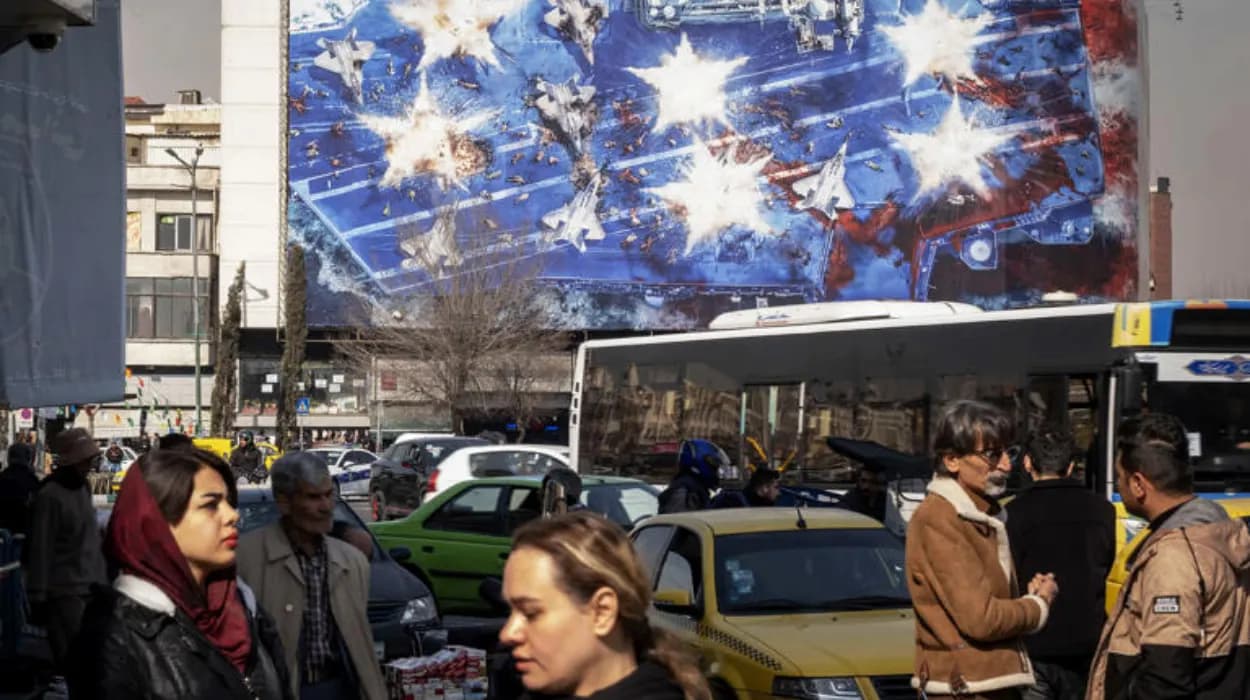
Washington (The Telegraph Newspaper) 30 January 2026 – Pressure mounts on Iran as US President Donald Trump considers military action following recent proxy attacks on American interests. The administration evaluates response options after Houthi missile strikes on Red Sea shipping and militia rocket fire targeting US bases in Iraq and Syria. Tehran faces simultaneous diplomatic isolation through UN sanctions and economic measures from Gulf states.
European allies urge restraint while Israel prepares potential preemptive operations. Iran's Foreign Minister Abbas Araghchi warned against escalation during UN Security Council session.
Trump Administration Signals Potential Military Response

President Trump addressed the issue during a 29 January Cabinet meeting, stating
"all options remain on the table"
regarding Iran-backed attacks. National Security Advisor Michael Waltz confirmed the administration reviews targets including IRGC Quds Force facilities and Houthi missile sites in Yemen.
Pentagon spokesperson Major General Pat Ryder detailed 12 attacks on US positions since 15 January, injuring 23 service members. Trump authorised deployment of B-2 Spirit bombers to Diego Garcia, capable of carrying 30,000-pound Massive Ordnance Penetrators for hardened bunkers.
State Department designated three additional IRGC entities under terrorism financing executive orders. Treasury froze $2.8 billion Iranian assets across 14 jurisdictions.
Recent Iran Proxy Attacks Prompting US Response
Houthi forces launched 18 anti-ship missiles at US Navy vessels 24 January, intercepted by Arleigh Burke destroyers. Iraqi Kata'ib Hezbollah fired six Katyushas at Al-Asad Airbase 27 January, triggering Patriot intercepts.
Syrian Democratic Forces reported Iranian-supplied drones striking SDF oil facilities in Deir ez-Zor, destroying 40,000 barrels. Saudi Arabia intercepted three ballistic missiles aimed at Riyadh 28 January.
US Central Command verified 142 proxy attacks since October 2025, compared to 67 during equivalent Biden period. Casualties include four US contractors, 19 wounded troops.
Israeli Preparations for Coordinated Action

Israeli Defence Minister Israel Katz ordered F-35I Adir squadrons to full readiness, capable of 2,000-kilometre strikes reaching Tehran. IDF Chief of Staff Eyal Zamir conducted Natanz nuclear site simulation exercise 28 January.
Prime Minister Benjamin Netanyahu conferred with Trump via secure video link 29 January, coordinating potential joint operations. Mossad reportedly penetrated IRGC missile production facilities in Isfahan.
Israel deployed Arrow-3 batteries to Eilat facing Houthi threats. F-15I strike eagles conducted Yemen border patrols with Saudi F-15SA escorts.
European Diplomatic Pressure on Tehran
EU High Representative Kaja Kallas summoned Iranian ambassador to Brussels 29 January, demanding proxy cessation. France, Germany, UK activated snapback sanctions mechanism under JCPOA resolution 2231.
European Council approved €1.2 billion naval mission EMAS2OH protecting Red Sea shipping. Italy contributed Carlo Bergamini frigate, France Horizon-class destroyer Chevalier Paul.
UK Foreign Secretary David Lammy announced sanctions targeting 18 IRGC commanders, freezing £400 million offshore assets. Germanyhalted €300 million dual-use exports to Iran.
Gulf States Economic Measures Against Iran
Saudi Arabia redirected 15 million barrels monthly crude oil sales from China to Europe, crashing Brent to $68 per barrel. UAE froze $1.7 billion Iranian funds in Abu Dhabi Islamic Bank.
Qatar reduced LNG cargoes to Iran by 40 per cent, diverting to Pakistan. Bahrain expelled 200 IRGC-linked diplomats. Oman closed three consular offices suspected smuggling.
GCC Supreme Council issued joint declaration designating IRGC terrorist organisation, harmonising with US, Israel designations. Bahrain hosted 14-nation maritime security conference.
Iranian Military Posture and Defensive Preparations
IRGC Aerospace Force Commander Amir Ali Hajizadeh announced S-300PMU-2 batteries redeployed protecting Natanz, Fordow facilities. Bavar-373 systems activated around Tehran defence perimeter.
IRGC Navy deployed 12 Ghadir-class midget submarines Persian Gulf chokepoints. Fateh-110 ballistic missiles repositioned western Iran provinces.
President Masoud Pezeshkian ordered 72-hour national mobilisation exercise. Basij paramilitary forces conducted urban warfare drills 15 cities.
UN Security Council Developments and Positions

US Ambassador Dorothy Shea tabled resolution condemning Houthi attacks, gaining UK, France support. Russia, China vetoed 27 January procedural vote.
Iranian UN representative Amir Saeid Iravani accused US of "warmongering" during 90-minute intervention. IAEA Director General Rafael Grossi reported 142 per cent weapons-grade uranium stockpile increase since 2025.
UN sanctions committee blacklisted 22 vessels in Iran "shadow fleet" transporting 180 million barrels sanctioned oil.
US Congressional Authorisation Debates
Senate Foreign Relations Committee Chairman Jim Risch introduced Iran Military Force Authorisation limited 90-day campaign. House Armed Services Ranking Member Adam Smith called for AUMF renewal tied to NATO burden-sharing.
35 Republican senators cosponsored resolution supporting Israel preemptive rights. Progressive Caucus introduced concurrent measure mandating congressional approval major operations.
Congressional Budget Office estimated 30-day campaign cost $28 billion including munitions, deployments.
Economic Impact of Iran Tensions on Global Markets
Brent crude spiked to $82 per barrel before Saudi production increase announcement. S&P 500 declined 2.4 per cent week citing Mideast risk premium.
Iranian rial collapsed to 980,000 per dollar black market rate. Tehran Stock Exchange suspended trading three days amid capital flight.
China increased Russian Urals crude purchases 25 per cent offsetting Iran sanctions impact.
Regional Military Balance Assessment Factors
US Fifth Fleet maintains 42 warships Arabian Sea including two carrier strike groups. Israel possesses 273 combat aircraft capable Iran roundtrip missions.
Iran fields 580,000 active personnel, 4,000 tanks across regular army, IRGC forces. Houthi arsenal includes 1,200 ballistic missiles, 400 armed drones per US intelligence.
Saudi Arabia operates 1,062 aircraft including 160 F-15SA Eagles. Turkey contributed Bayraktar TB2 drones to coalition operations.
Diplomatic Channels Remaining Open
Qatari Prime Minister Sheikh Mohammed bin Abdulrahman Al Thani offered mediation hosting technical talks. Oman Foreign Minister Badr Albusaidi shuttled Tehran-Riyadh proposals.
Switzerland activated "good offices" facilitating US-Iran backchannel messages. Muscat hosted IRGC Quds Force deputy commander discreet meeting.
UN Secretary-General António Guterres dispatched envoy Rosemary DiCarlo regional tour. Pope Leo XIV called for de-escalation during Sunday Angelus address.
Iranian Domestic Political Dynamics Observed
Supreme Leader Ali Khamenei chaired three emergency Security Council meetings since 25 January. Assembly of Experts issued fatwa supporting defensive jihad preparations.
IRGC-affiliated media intensified anti-US propaganda reaching 28 million daily viewers. Economic protests suspended following Revolutionary Guard deployments 14 cities.
Tehran Friday prayers attendance reached 1.2 million, highest since 2022. Ayatollah Ahmad Khatami sermon warned "Zionist-American aggression" response.
US Domestic Political Support for Action
Pew Research poll showed 62 per cent Americans support military action neutralising Iran nuclear threat. 78 per cent Republicans, 49 per cent independents favour strikes.
Veterans of Foreign Wars national commander endorsed "decisive response" protecting troops. American Israel Public Affairs Committee mobilised 15,000 activists Capitol Hill.
Anti-war protests planned 50 cities coinciding State of the Union address. Code Pink announced civil disobedience campaign federal buildings.
Timeline of Recent Escalation Events
18 January: Houthis sink Liberian-flagged tanker Red Sea, 22
crew rescued.
22 January: IRGC Shahed-136 drones strike SDF positions Deir ez-Zor.
25 January: Kata'ib Hezbollah Katyushas wound 11 US troops Al-Asad.
27 January: Houthi cruise missile intercepted over Eilat by Arrow-3.
29 January: Trump-Putin call secures Kyiv pause amid Iran crisis.
International Atomic Energy Agency Reports
IAEA Board Governors passed resolution declaring Iran non-compliant safeguards obligations. Grossi verified 408 kilograms 60 per cent enriched uranium stockpile.
Natanz pilot enrichment hall expanded 1,400 IR-6 centrifuges operational. Fordow facility enrichment increased 28 per cent monthly rate.
IAEA cameras detected undeclared uranium particles three sites. Iran suspended Additional Protocol implementation March 2025.