The US federal government shut down at midnight on 1 October 2025 after the Senate failed to pass either the Democratic or Republican funding proposals, ending government funding for the first time since 2018. The shutdown affects many non-essential federal services and employees, with essential services continuing but facing operational challenges.
Government Shutdown Confirmed After Senate Deadlock
The United States federal government officially entered a partial shutdown as of midnight on 1 October 2025, following the Senate's failure to approve a budget funding bill. Both a Democrat-led proposal and a Republican alternative were defeated, preventing an extension of government funding beyond the fiscal year deadline. The shutdown marks the first funding lapse since 2018, ending a nearly seven-year period without such an interruption. The funding impasse unfolded amid strong partisan divisions over healthcare spending and other policy priorities.
Senate Votes Fail to Secure Funding
On Tuesday night, the Senate voted against a Democrat-backed bill that aimed to maintain funding through October, losing 53 to 47. Shortly afterwards, the Republican proposal, which would have extended funding until November 21 but excluded expanded health insurance subsidies, failed to reach the 60-vote threshold required for passage, securing only 55 votes.
Unlike standard legislation, government funding bills require a supermajority of 60 votes due to Senate filibuster rules. With no bipartisan agreement, the votes highlighted the deep divide between the parties, specifically over the continuation and expansion of healthcare subsidies under the Affordable Care Act.
Political Positions and Statements
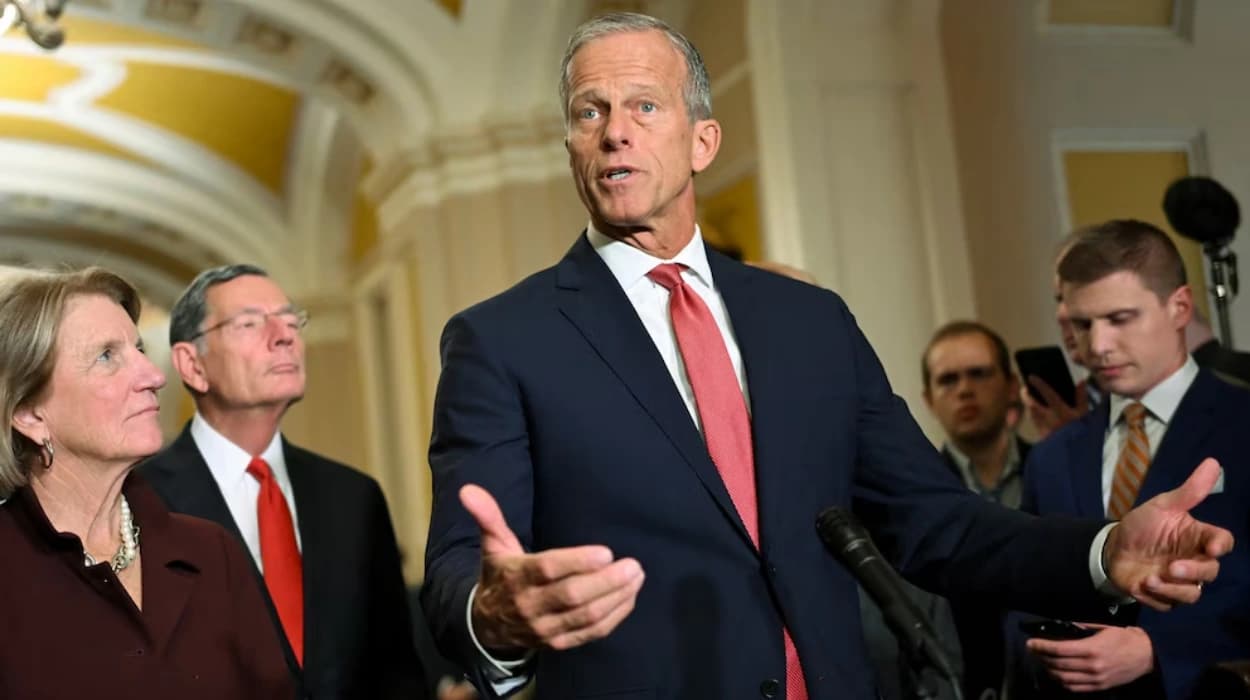
Republican Senate Majority Leader John Thune publicly blamed Senate Democrats for the shutdown, accusing them of holding federal workers "hostage" by refusing to support the Senate's funding bill without demands for increased healthcare spending. Thune stated to reporters,
"It’s in the hands of Senate Democrats... If they reject this tonight, they’ll be the ones explaining the government’s shutdown at midnight".
Conversely, Senate Minority Leader Chuck Schumer argued that Republicans bear the responsibility, asserting they refused to address the extension of healthcare subsidies critical for millions of Americans. Schumer contended at a Capitol news conference that
"the responsibility lies with them to find a solution. It’s their shutdown".
President Donald Trump, who met with Congressional leaders in a last-ditch effort to avoid the shutdown, criticised Democrats’ refusal to agree on funding terms and warned of possible “irreversible” changes during the shutdown, including significant job and program cuts. In a White House statement, Trump said,
“We can implement measures during the shutdown that are irreversible, that are unfavourable for them, such as eliminating numerous positions and cutting programmes they support”.
Impact on Federal Services and Employees
With the lapse of funding, many non-essential federal employees are being furloughed or laid off, while essential personnel — including law enforcement, military members, and air traffic controllers — continue working but will do so without immediate pay. Agencies affected by the shutdown planned to implement orderly closure procedures per instructions from the Office of Management and Budget.
Critical services such as Social Security payments, Medicare and Medicaid, and food assistance programmes continue, though delays might occur due to workforce reductions. Meanwhile, national parks, museums, and various scientific studies may be suspended entirely, while the release of important economic data, including the September employment report, will be delayed or disrupted.
The shutdown carries a significant financial cost, with estimates indicating thousands of federal employees furloughed daily will cost the government about $400 million per day. The duration of the shutdown remains uncertain, with ongoing Senate efforts envisaged to continue voting on funding proposals over the coming days.
Political Background and Recent Developments
The shutdown is rooted in a partisan dispute primarily over Medicaid and Affordable Care Act subsidy extensions, with Democrats demanding reversals of recent cuts and expansions of healthcare benefits, while Republicans resist changes that would increase spending or reverse prior tax legislation. The House of Representatives previously passed a continuing resolution funding government operations until November 21, but the Senate could not muster enough bipartisan support due to progressive pressure within the Democratic caucus.
Efforts to broker a last-minute deal included a White House meeting between President Trump, Senate Majority Leader Chuck Schumer, and House Minority Leader Hakeem Jeffries. However, no compromise was reached, with Jeffries describing the discussions as "frank and sharp," but indicating Republicans were "divorced from reality" over healthcare.
This shutdown is the 21st occurrence since 1977 and comes seven years after the last shutdown in late 2018, which was the longest in U.S. history lasting 35 days. The current shutdown is notable for occurring during President Trump's second term, and there is intense speculation on how long it may last and its broader political implications for both parties ahead of upcoming elections.
Senate Republicans have announced plans to continue voting on the same funding proposal in the coming days, including sessions over the weekend, hoping to pressure Democrats to break ranks. However, Democrats remain united against the Republican funding conditions linked to healthcare subsidies.