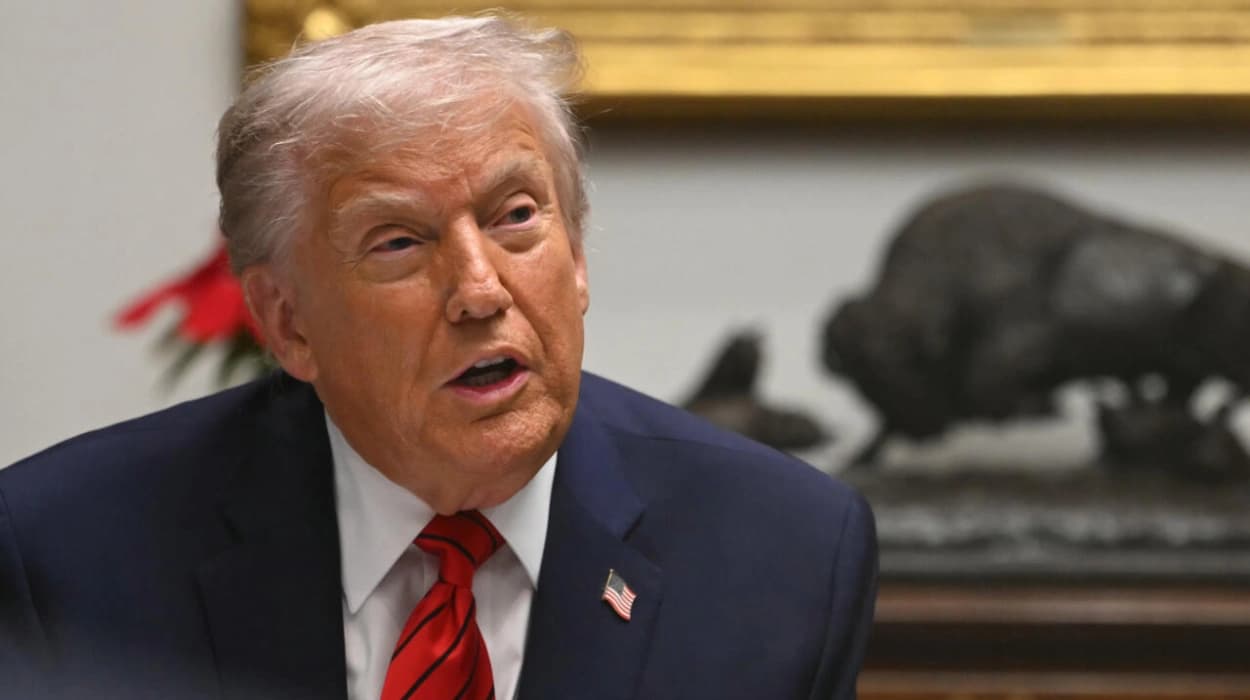
US lawmakers condemn the seizure of a Venezuelan oil tanker, warning that Trump’s actions risk escalating tensions and edging the US toward conflict.
The administration's increasing military posture in the region is causing growing, at least partially bipartisan, anxiety in Washington. Trump has raised the US military's presence in the Caribbean to a level not seen in decades and accused Venezuela of aiding drug trafficking. Over 80 individuals have died as a result of the administration's program of airstrikes of suspected drug vessels.
Trump confirmed the tanker seizure shortly after it occurred, telling reporters:
“We’ve just seized a tanker on the coast of Venezuela – large tanker, very large, largest one ever seized, actually.”
When asked what would happen to the oil, Trump responded:
“We keep the oil, I guess!”
The tanker seizure, according to Senator Chris Van Hollen of Maryland, a member of the Senate foreign affairs committee, showed that the administration was lying about its military actions in the area.
“This shows that their whole cover story – that this is about interdicting drugs – is a big lie,”
Van Hollen said.
“This is just one more piece of evidence that this is really about regime change – by force.”
The Republican senator from Kentucky, Rand Paul, told NewsNation that "seizing someone's oil tanker is an initiation of war" and asked whether "the American government's job is to go looking for monsters around the world, looking for adversaries and beginning wars."
Chris Coons, a Democratic senator, said he was also alarmed at the administration’s actions, telling the station:
“I have no idea why the president is seizing an oil tanker and I’m fairly gravely concerned that he’s sleepwalking us into a war with Venezuela.”
"So they can seize an oil tanker, but not a drug boat?"
Democratic senator Mark Warner wrote on social media, highlighting what he described as conflicting objectives.
When CNN asked Chuck Schumer if he disagreed with Trump's plan to overthrow the Venezuelan government, Schumer declined to respond, claiming that it was impossible to determine Trump's genuine objectives due to his inconsistent messaging.
“The bottom line is President Trump throws out so many different things in so many different ways, you don’t even know what the heck he’s talking about,”
the Senate minority leader said.
“Obviously, if Maduro would just flee on his own, everyone would like that,”
he said, but added the lack of clarity made it impossible to endorse specific policies.
The FBI, Homeland Security Investigations, and the Coast Guard had executed a seizure warrant for the ship, according to Attorney General Pam Bondi. She claimed the ship had been carrying sanctioned oil from Iran and Venezuela for years as part of a network that supported international terrorist groups.
The confiscation, according to Venezuela's administration, was
"a blatant theft and an act of international piracy,"
demonstrating that US hostility has "always been about our natural resources, our oil, our energy."
Not everyone was against it. Ted Cruz, a Republican senator from Texas, sidestepped questions about the oil tanker seizure by claiming that Trump was protecting American lives by going after drug dealers.
US Central Command denounced Iran's seizure of a Marshall Islands-flagged tanker in the Strait of Hormuz in November as a "blatant violation of international law" that threatened freedom of commerce and navigation.
California Democratic Senator Adam Schiff described it as a
"very dangerous escalation and a prelude to potential conflict."
He and Paul, together with fellow senators Schumer and Tim Kaine of Virginia, introduced a war powers resolution last week with the intention of preventing the administration from using force against Venezuela without the consent of Congress.
In an apparent attempt to combat what Trump has called "narco-terrorists," the government has established what it claims is the biggest Navy presence in the Caribbean since the Cuban Missile Crisis of 1962.
How might this affect US relations with Cuba and Iran?
The US seizure of a Venezuelan oil painting tanker bound for Cuba with sanctioned crude could strain formerly tense relations with Havana by buttressing comprehensions of aggressive US interventionism in the semicircle, egging Cuba to consolidate ties with Maduro and accelerate oil painting trade deals with Iran to neutralize dearths.
Havana, reliant on Venezuelan petroleum for 40% of energy requirements, views the interdiction as profitable warfare that threatens knockouts and food instability; anticipates political demurrers, prayers to the OAS/ UN, and near alignment with Caracas, potentially hosting further Russian or Iranian vessels in retribution.
Tehran, which has supplied Venezuela with refined products in exchange for heavy crude, may ramp up shipments via" shadow line" tankers to sustain the triangle, risking further US nonmilitary competitions and warrants escalation while using the incident to rally Global South review of" US pirating".