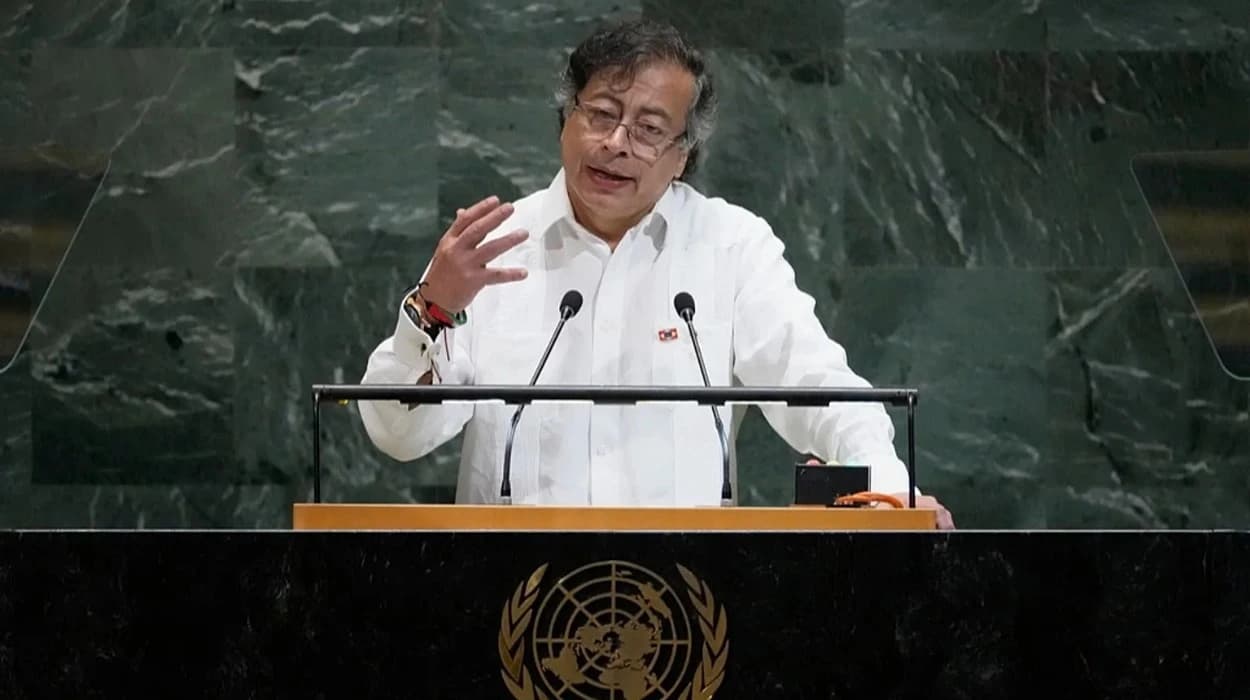
The United States has revoked the visa of Colombian President Gustavo Petro following his public exhortation to U.S. soldiers to disobey orders during a pro-Palestinian rally in New York City after the UN General Assembly session. The visa revocation reflects escalating diplomatic tensions between Washington and Bogotá over Petro's criticisms of U.S. policies and Israel’s actions in Gaza.
US Announces Visa Revocation Over "Reckless and Incendiary Actions"
As reported by John Roberts of Fox News, the Trump administration announced on Friday, September 26, 2025, that it had revoked Colombian President Gustavo Petro's U.S. visa due to his "reckless and incendiary actions" in New York City. The U.S. State Department took this unprecedented step after Petro publicly called on U.S. soldiers to disobey orders and incite violence during a street demonstration outside the United Nations headquarters.The official X (formerly Twitter) account of the U.S. State Department stated,
"Earlier today, Colombian President @petrogustavo stood on a NYC street and urged U.S. soldiers to disobey orders and incite violence. We will revoke Petro's visa due to his reckless and incendiary actions."
The revocation was announced as Petro was departing the United States following his participation in the annual UN General Assembly meeting.
Petro’s Speech at Pro-Palestinian Rally in New York
During the demonstration, Petro addressed a large crowd of pro-Palestinian activists at Dag Hammarskjold Plaza, just outside the UN headquarters. As reported by Reuters' Ismail Shakil, Petro called for the creation of a global "army for the salvation of the world," which he said should be stronger than the U.S. military, with a mission focused on the liberation of Palestine.Petro specifically implored U.S. soldiers present at the rally:
"I urge all soldiers of the United States Army not to aim their weapons at humanity. Disobey Trump's orders. Follow the commands of humanity."
In an unofficial translation shared by Al Jazeera, Petro's call urged countries worldwide to contribute troops to this proposed international force, emphasizing justice and peace.
Context of Strained US-Colombia Relations Under Trump's Presidency
As detailed by CNN reporters Stefano Pozzebon, Jennifer Hansler, and Alejandra Jaramillo, this incident has intensified an already strained relationship between Petro and the Trump administration. Since Trump's second inauguration in January 2025, there have been several clashes, including a threat by Trump to impose 50% tariffs on imports from Colombia over its initial refusal to accept deported Colombians during Trump's deportation efforts. Petro had initially resisted but later agreed to the flights' arrival.In April 2025, Petro publicly claimed the Trump administration had already revoked his visa, preventing him from attending meetings in Washington, D.C. During a cabinet meeting, Petro lightheartedly remarked he had already "seen Donald Duck several times," referencing U.S. relations in a dismissive tone.
Petro’s Criticism of U.S. and Israeli Actions
Beyond the protest call to U.S. soldiers, Petro used the UN platform and rally to harshly criticise President Trump for U.S. deadly strikes on boats in the Caribbean, which the White House alleged were drug trafficking vessels. Petro rejected these claims, labelling the attacks an "act of tyranny" and demanding criminal investigations against Trump and administration officials. He dismissed allegations that the passengers were part of a Venezuelan gang, saying they were "poor young people from Latin America".Furthermore, Petro strongly condemned Israel’s military offensive in Gaza, accusing Trump of complicity in what he described as genocide. Petro's language and stance align with a growing international movement recognising the Palestinian struggle, including recent UN investigations that reportedly concluded Israel committed genocide against Palestinians in Gaza—a claim Israel vehemently denies.
Reactions from U.S. Officials and International Figures
The U.S. State Department, with Secretary of State Marco Rubio involved, indicated this visa revocation is part of a continued policy to deny visas to foreign dignitaries or individuals whose actions are considered hostile to American interests or incite unrest. Rubio has previously supported visa denial for figures with "hostile attitudes" toward the U.S..Petro’s announcement and speech were met with condemnation from Washington but gained support among pro-Palestinian advocates and some international allies. Colombian Interior Minister Fernando Benedetto on X controversially suggested the visa that should have been revoked was that of Israeli Prime Minister Benjamin Netanyahu instead, stating,
"But since the empire shields, it is taking it on the president brave enough to confront him with the truth".
Historical Visa Actions and Diplomatic Implications
Petro is not the first high-profile figure to have a U.S. visa revoked under current policies. Previous cases include several Latin American leaders and political figures who had their U.S. travel privileges withdrawn over criticisms of the American government or policies. This move often triggers diplomatic fallout and raises questions about the U.S.'s approach to international diplomatic norms and the dignity of heads of state.Colombia remains one of Washington’s closest allies in South America, particularly concerning defense and anti-narcotics efforts. Petro's leadership, as Colombia’s first left-wing president, marks a shift in the country’s political dynamic, complicated by his confrontational rhetoric toward the U.S. administration.
The revocation of Colombian President Gustavo Petro's U.S. visa following his provocative speech at a pro-Palestinian rally outside the United Nations headquarters represents a significant diplomatic escalation between Bogotá and Washington. The incident underscores the deepening fissures over regional security, immigration, and foreign policy perspectives—highlighting President Petro's defiant stance against U.S. policy and his vocal advocacy for Palestinian rights on the world stage.
Petro’s call for U.S. soldiers to disobey orders has solidified his contentious relationship with the Trump administration, exemplifying the increasing polarisation in international relations at this critical geopolitical juncture.