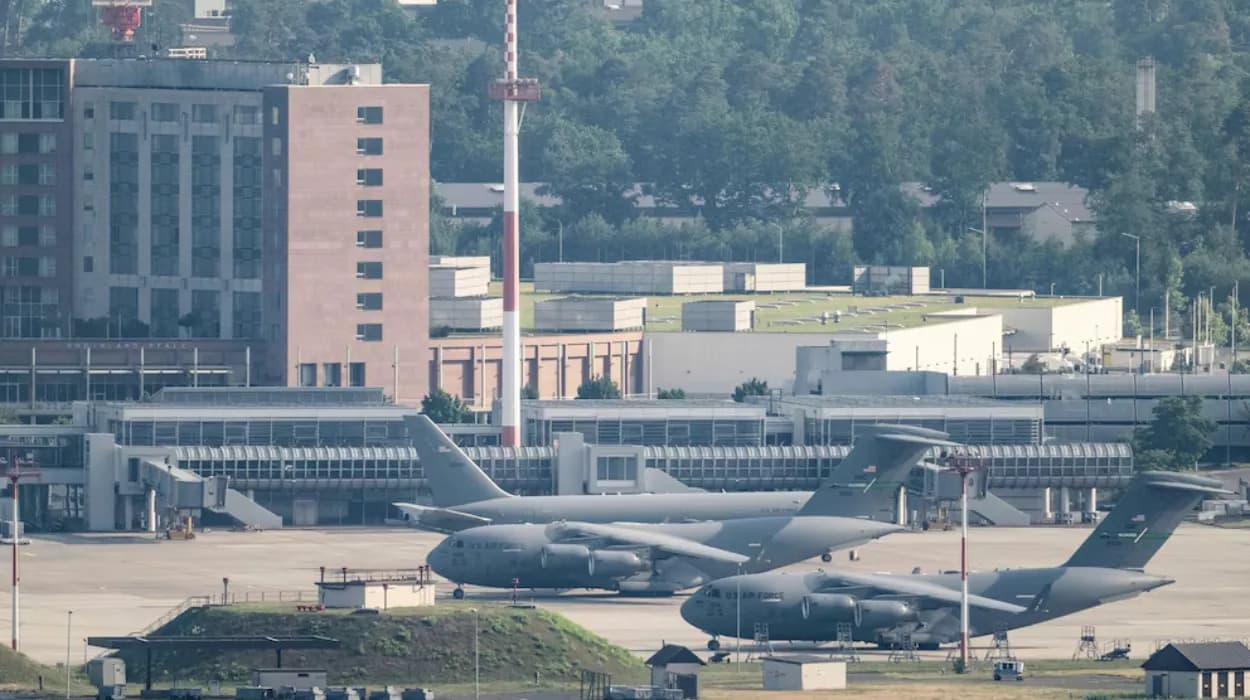
As the U.S. endures its longest government shutdown, local workers at American military bases in Europe are facing pay delays and growing uncertainty.
Since the shutdown started over six weeks ago, thousands of workers at military bases in Europe have had their pay interrupted. In certain instances, the governments that host U.S. bases have taken on the financial burden in the hopes that the United States will eventually make amends. Others, like Portugal and Italy, have simply continued to work unpaid while Washington's impasse persists.
Foreign nationals work in food service, construction, logistics, maintenance, and other specialized tasks at U.S. facilities across the globe.
According to Amber Kelly-Herard, a public affairs spokesman for the U.S. Air Forces in Europe and Africa, local employee compensation varies by country and is determined by particular agreements the U.S. government has with each host country.
According to a statement from Germany's finance ministry, the government has intervened to cover the salaries of about 11,000 civilian workers on U.S. military posts. The Ramstein Air Base, a vital center for operations in the Middle East and Africa and the headquarters of the U.S. Air Forces in Europe and Africa, is one of the American facilities in Germany.
According to union coordinator Zaccaria, more than 4,600 Italian citizens are employed at the five American bases in Italy. Approximately 2,000 workers are among them.
The U.S. Army and Air Force were in discussions with the Pentagon about using their own funds to pay the salaries of Italian workers, the ministry said in a statement after discussing the matter with American officials.
“There are workers struggling to pay their mortgages, to support their children or even to pay the fuel to come to work,”
Zaccaria said.
According to Linda Bilmes, a public policy professor at the Harvard Kennedy School and a public finance specialist, local contractors at U.S. military bases are typically the most vulnerable to losing their jobs during government shutdowns in the United States.
In the past, she continued, the U.S. government has always reimbursed full-time workers, including foreign nationals employed at foreign facilities. However, contractors are not always covered, which is why some add extra fees to their contracts to cover potential government funding stoppages.
A union that represents over 1,000 Spanish workers in Spain, where the United States maintains military bases in the south at Moron and Rota, announced last month that the Spanish government had assisted in resolving a payment backlog.