Summary
- Israel’s aid measures in Gaza insufficient, access blocked.
- Airdrops harm some groups, lack scale, and are risky.
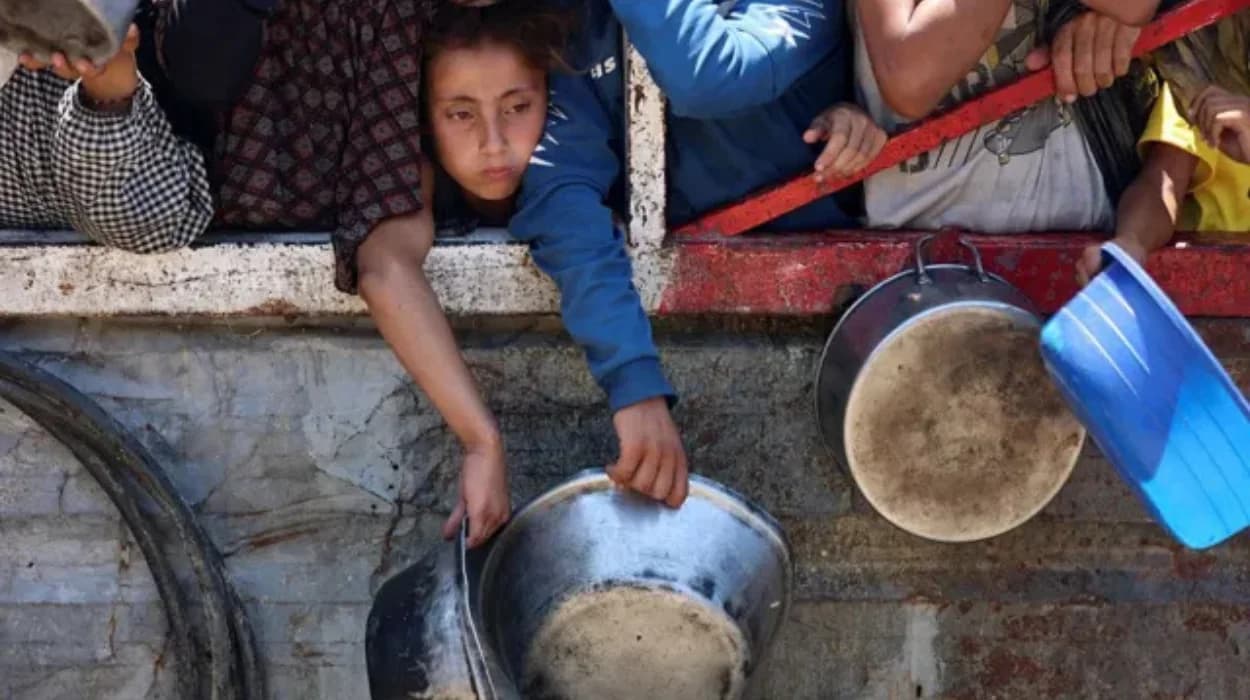
- Starvation and famine worsen amid ongoing restrictions.
- Aid workers urge safe, constant aid delivery.
- Humanitarian pause falls short of needs.
As international pressure grew to address the starvation situation, Israel announced the additional measures, which went into effect on Sunday and include daily humanitarian pauses, airdropped aid, and humanitarian corridors for UN supply vehicles.
The primary cause of the starving crisis, which has claimed the lives of 151 Palestinians, more than half of whom perished in the last month alone, according to aid organizations, is Israel's blockade of humanitarian aid into the Gaza Strip. Israel's military has persisted in its bombardment despite the worsening situation, killing at least 103 Palestinians in Gaza in the past day, according to the territory's health ministry.
“Twenty-one months in, these are token gestures. They’re theatrics, they’re designed from my perspective to deflect scrutiny. We’re being blocked and delayed at every turn,”
said Bushra Khalidi, the policy lead at Oxfam, commenting on the new Israeli aid measures.
The majority of the Gaza crossings remain shut. In order to solve the hunger crisis immediately, the UN has demanded a complete truce and that Israel permit humanitarian aid to enter the region.
Since the announcement of the new regulations, more assistance trucks have begun entering Gaza; on Tuesday, the Israeli customs authority (COGAT) reported that over 200 vehicles had entered the territory. Since May, this amounts to an average of almost 70 trucks every day.
However, the number of aid trucks still falls far below the 500-600 trucks the UN has said is necessary to sustain the two million residents of Gaza. Some aid agencies have suggested the true scale of need is now far greater than 600 trucks, given that Gaza is now facing famine.
“The needs are exponentially greater than they were prewar. But the access is actually worse. Starvation cannot be solved by 10 or even 300 trucks. What’s needed isn’t piecemeal fixes, but actual systemic changes,”
Khalidi said.
Residents and medical professionals said they have yet to feel a change to their daily conditions, with malnutrition continuing to grip the territory.
“We are hearing a lot of news that more aid will come, but this is just in the media. The situation on the ground has not changed since Sunday. The food supply has not reached the target population,”
said Dr Noor al-Din al-Amassi of the Project Hope NGO medical team in Gaza.
He went on to say that despite having twice as many patients as he can handle, starving children still visit his clinic every day for food, and he is out of "high energy biscuits," which are intended to cure malnutrition, to give them.
Humanitarians employed by international organizations have reported that, in spite of the release of more aid measures, new bureaucratic roadblocks are still being created behind the scenes that keep them from bringing aid into Gaza.
Among these is the new registration procedure for foreign NGOs, which mandates that non-UN aid organizations register with the Israeli Ministry for Diaspora Affairs and Combating Antisemitism, which was recently founded.
INGOs have been required to provide the identifying data of their Palestinian employees as part of the registration procedure, but the majority are refusing to do so out of concern for the employees' safety in Gaza and the West Bank.
They cite the high number of humanitarians Israel has killed in Gaza as proof of the danger of giving Israel information about their employees. Whether Israel will permit them to register without supplying that information is uncertain.
Humanitarians familiar with Gaza's supply chain logistics have reported that Israeli customs have caused certain INGOs that have not yet received their registration from the new Israeli ministry to have their imports delayed indefinitely.
They fear customs officials will not allow them to import goods into Gaza without being registered in Israel, jeopardising their ability to send aid into the besieged territory.
“While the clear violations on the ground in Gaza has a major impact on public opinion, the violations of access via bureaucracy don’t have the same impact on people because it’s boring and complicated. But this is what is stopping aid from getting in,”
a humanitarian who works in Gaza aid supply chain management said anonymously as they were not allowed to talk to the media.
The humanitarians argued that the customs body's refusal to provide clarification was part of a "deliberate policy" to make delivering aid into Gaza as difficult as possible. They claimed that customs officers rarely provided an explanation for the denial or delay of aid shipments into Gaza, leaving charity workers to speculate as to what was permitted.
According to the humanitarian, Israeli customs officials routinely threw out dates and olives without providing a reason. They discovered that fruits or vegetables with pits or seeds that might be planted were the common denominator after combining their experiences with those of other relief organizations.
Subsequent shipments with pitted olives and date paste were successfully allowed entry into the region.
Although Israel's new relief initiatives were a good beginning, several UN officials stated that, when taken as a whole, humanitarian access was still well short of what was required.
“It’s always give with one hand, take away with the other,”
said Sam Rose, the acting director of UNRWA affairs in Gaza.
What are the main reasons aid measures in Gaza have been ineffective so far?
Israel has continuously denied or heavily restricted the entry of humanitarian supplies into Gaza. This includes complex and inefficient procedures for aid entry that cause long delays—sometimes over two months—and outright denial of essential items like food, water, medical supplies, and shelter materials due to security or "dual use" concerns (potential military use).
Aid agencies report these policies have worsened since early 2024 despite international legal rulings calling for better humanitarian access.
The humanitarian aid that does manage to enter Gaza is often too little to meet the enormous needs of over 2 million people facing famine and crisis. Aid deliveries happen in small amounts, irregularly, and are kept under tight control by Israeli and US authorities.