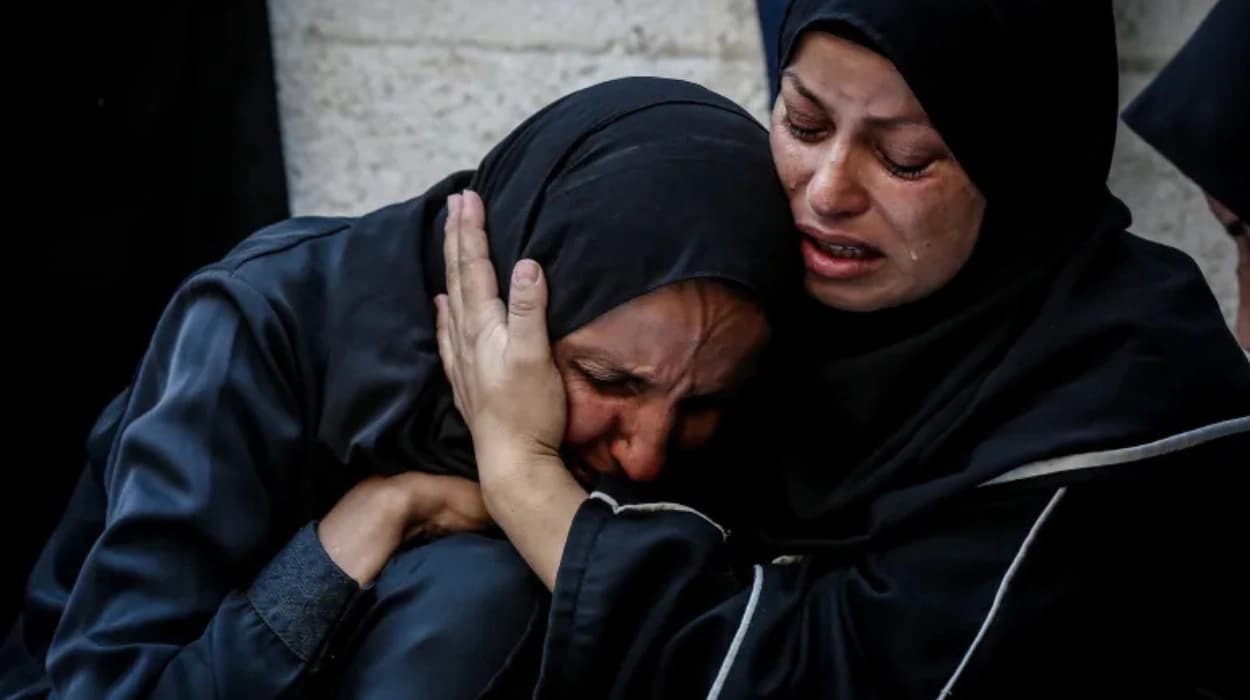
Over 62,000 Palestinians have died in Gaza amid two years of Israeli strikes, starvation, and a worsening humanitarian crisis with no safe refuge.
As it prepares to take control of Gaza City and forcefully relocate tens of thousands of residents to concentration zones in the south, Israel is stepping up its attacks on the territory's major, now-demolished metropolitan center.
Since Monday morning, Israeli attacks have killed at least 26 Palestinians throughout the Gaza Strip, including 14 who were attempting to obtain relief.
Al Jazeera’s Tareq Abu Azzoum, reporting from Deir el-Balah, says,
“Israeli attacks are still ongoing, unabated, in the eastern part of Gaza City. The scale of attacks illustrates how Israel’s current strategy is shaping the geography and demography of Gaza.”
“We can see how Israel is using heavy artillery, fighter jets and drones, in order to destroy what’s left of residential homes there. The scale of destruction is extremely overwhelming,”
he said.
“This current military tactic ensures that Israel will enable its forces to operate on the ground and will also ensure residential areas turn into zones of rubble. People there say Israeli attacks are happening day and night.”
Many people from Gaza City are once again on the move after being repeatedly displaced by Israeli shelling during the conflict. Others are remaining in their current location.
Israel is targeting the city's few surviving medical facilities in addition to the city itself, which was the primary target of airstrikes on Sunday that killed about 60 people.
But while many Palestinians who remain in the devastated city are forced to survive in the ruins of buildings, makeshift shelters, or tents, some people have told Al Jazeera that it would be impossible for them to leave.
“How am I supposed to even get there? How can I go? I need nearly $900 to move – I don’t even have a dollar. How am I supposed to reach the south?”
asked displaced Palestinian man Bilal Abu Sitta.
Others do not trust Israeli promises of aid and shelter.
“We don’t want Israel to give us anything,”
Noaman Hamad said.
“We want them to [allow] us back to the homes we fled – we don’t need more than that.”
There was a glimmer of hope when Hamas said that it had accepted a ceasefire proposal for Gaza that mediators Qatar and Egypt had submitted yesterday. According to an informed source who spoke to Al Jazeera, the proposed agreement would guarantee a 60-day ceasefire during which half of the Israeli prisoners detained in Gaza and an undisclosed number of Palestinian prisoners detained by Israel would be released.
However, Gazan Palestinians have witnessed innumerable false dawns in the past, and the war then entered its most bleak stage of human suffering after Israel broke a short ceasefire in January in March.
Five more Palestinians, including two infants, have perished from starvation in the last 24 hours due to Israel's brutal, months-long embargo, according to Gaza's Health Ministry.
According to the government, as of August 18, there were at least 263 people in Gaza who had starved to death, including 112 children.
The World Food Programme (WFP) of the United Nations issued a warning, stating that as of July 2025, over 320,000 children—the total number of Gaza's children under five—are at risk of acute malnutrition.
According to WFP, families are barely surviving on the most basic meals, with virtually no variety in their diets. In order to facilitate the widespread distribution of humanitarian aid, the organization demanded a rapid ceasefire.
Children in Gaza should be getting ready for the new school year, according to the UN Relief and Works Agency for Palestine Refugees (UNRWA), but instead they are looking for water, waiting in line for food, and living in classrooms that have been converted into overcrowded shelters.
UNRWA reiterated its demand for an urgent ceasefire and warned that children in the enclave have already missed three years of education, putting them at risk of becoming a "lost generation."
Meanwhile, Doctors Without Borders, a group with the French initials MSF, reports that its employees in Gaza are seeing an increase in mass deaths connected to Israel's continuous siege and its supervision of the restricted distribution of aid by the contentious, US- and Israel-supported charity organization GHF.
“The indiscriminate killings, and the counts of mass casualties we still [see] on a daily basis right now, hasn’t stopped, but only increased in its scale,”
said Nour Alsaqqa of MSF.
She said one MSF facility in Rafah, located near an aid distribution centre, has been overwhelmed with wounded Palestinians, including children.
“We are receiving baby injuries and killings from the distribution sites. People who are coming with gunshots, with different injuries, related to the distribution sites and they go only seeking food,”
she said.
“They go out of desperation and they risk their lives to access aid, which is still inaccessible due to Israel’s siege.”
The Gaza Health Ministry reports that about 2,000 Palestinians have been killed while attempting to get aid since the GHF relief locations were established at the end of May.
How reliable are the Gaza Health Ministry figures in reporting casualties?
The Ministry maintains detailed records of each individual casualty, including names, ages, genders, and identification numbers, verified through multiple hospital and first-aid sources.
Independent studies such as those by researchers from the London School of Hygiene and Tropical Medicine and Johns Hopkins University suggest the Ministry’s figures are generally accurate but may underestimate the total death toll by approximately 40% due to challenges such as unreported deaths and inaccessible areas.
Humanitarian organizations like the UN and Human Rights Watch rely on these figures as they align with their own data collected over years of conflict.