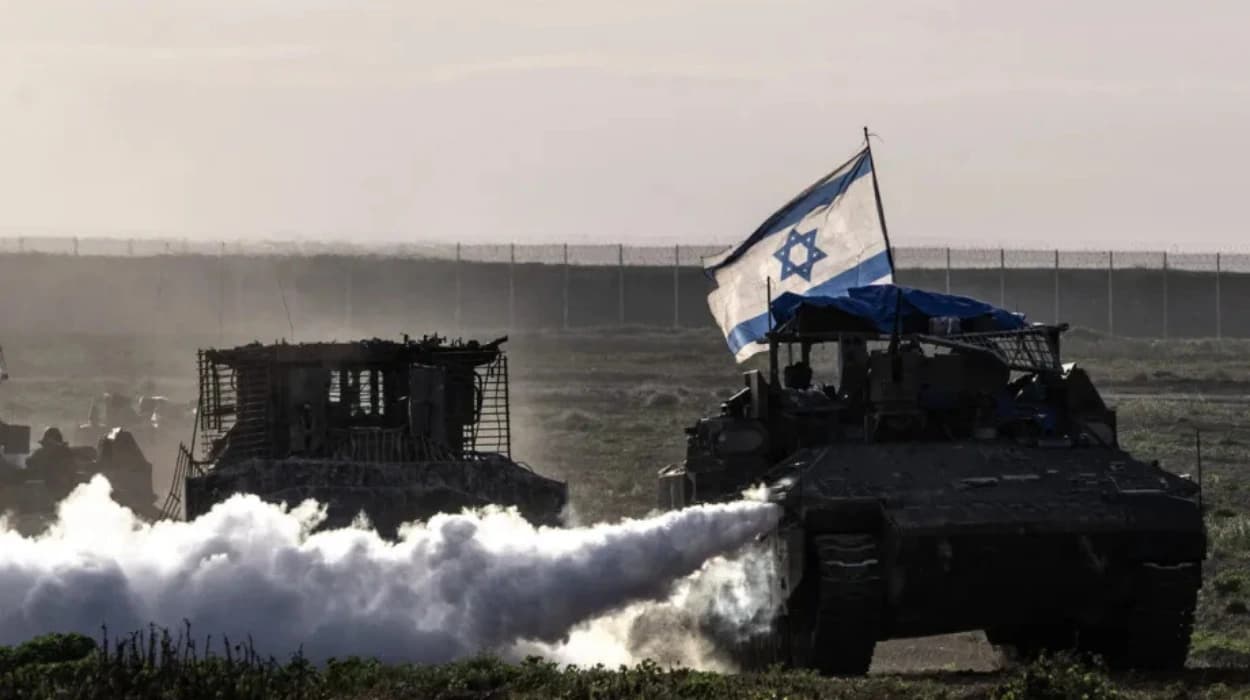
Israel is reviewing Hamas' response to a ceasefire and prisoner exchange deal proposed by Egyptian and Qatari mediators, Israeli media reported Monday.
According to an Israeli diplomatic source quoted by Israeli Channel 12, Hamas agreed to the plan "to prevent Israeli forces from entering Gaza City."
In an effort to completely reoccupy the whole territory, Israeli Chief of Staff Eyal Zamir formally approved a plan to conquer Gaza City on Sunday.
According to the source, there is no assurance that Israel will agree to a short ceasefire in Gaza or a partial prisoner exchange.
Without going into specifics, Hamas announced early on Monday that it had agreed to a ceasefire proposal for Gaza put out by mediators from Qatar and Egypt.
According to Egyptian media, the plan asks for Israeli troops to go closer to the border in order to make it easier for aid to enter Gaza.
A prisoner-hostage swap would occur during the two-month temporary suspension of military operations, according to Egyptian sources cited by the state-run Al-Qahera News station.
According to the site, the agreement calls for the repatriation of 18 bodies and the release of 10 Israeli captives who are still alive in exchange for an undisclosed number of Palestinian inmates.
Israel is detaining around 10,800 Palestinians in its prisons in appalling conditions, with rights groups reporting fatalities from torture, malnutrition, and medical negligence. Israel estimates that there are still about 50 hostages in Gaza, including 20 who are thought to be alive.
Since October 2023, Israel has murdered around 62,000 Palestinians in Gaza. The famine-stricken enclave has been decimated by the military campaign.
Israeli Prime Minister Benjamin Netanyahu and his former Defense Minister Yoav Gallant were both wanted by the International Criminal Court for war crimes and crimes against humanity in Gaza last November.
Because of its war on the enclave, Israel is also facing a genocide prosecution at the International Court of Justice.
How might Hamas's acceptance of the ceasefire influence ongoing negotiations?
Hamas’s willingness to accept the deal, reportedly without any amendments, injects fresh momentum into mediation efforts led by Egypt and Qatar. It signals a readiness on Hamas’s part to engage seriously in conflict de-escalation and negotiations toward a phased resolution.
Hamas accepting the proposal puts increased diplomatic pressure on Israel to reciprocate by formally agreeing to the ceasefire and associated terms, including the phased release of hostages and prisoner exchanges. The acceptance may strengthen the hands of mediators urging Israel to ease military operations and allow humanitarian access.
The deal closely aligns with earlier proposals, such as the “Witkoff proposal,” reaffirming the framework for a 60-day ceasefire, hostage releases, and escalation prevention.