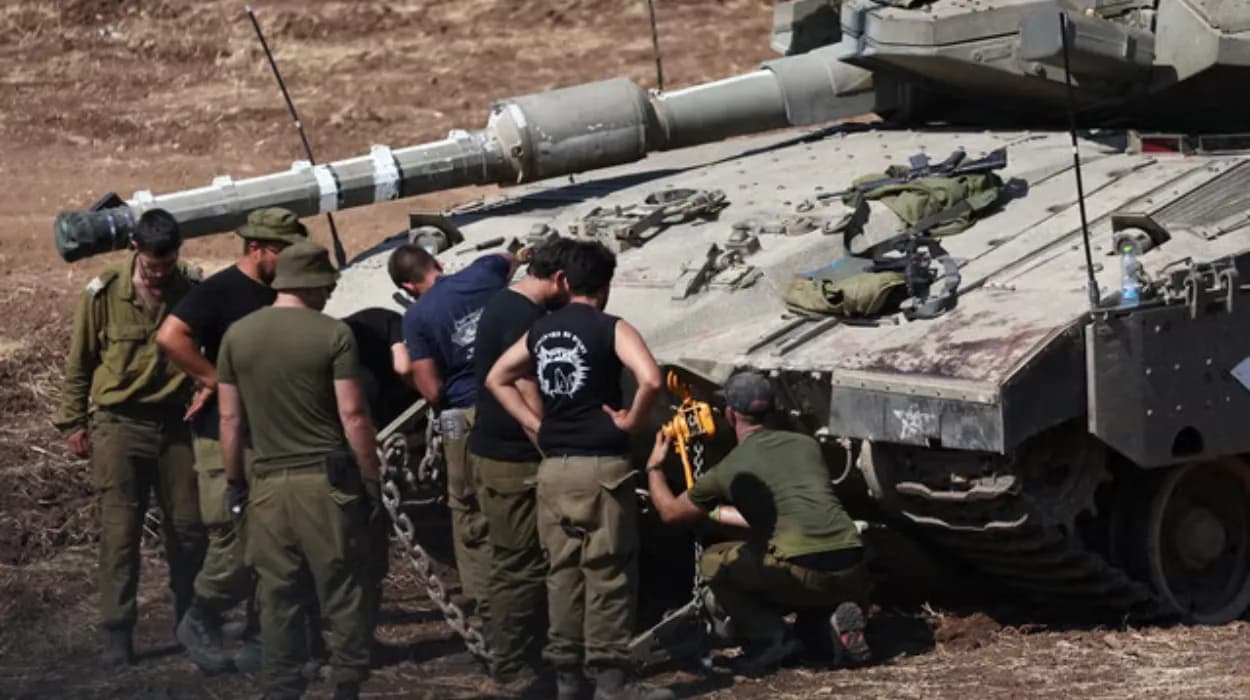
An IDF spokesperson confirmed the Israeli military has initiated steps in a planned operation to take control of Gaza City amid ongoing conflict.
IDF forces had already started to circle the borders of Gaza City, according to Brigadier General Effie Defrin, and Hamas was now a "battered and bruised" guerrilla group.
Following a clash with Hamas south of Khan Younis in the strip on Wednesday, he said:
"We will deepen the attack on Hamas in Gaza City, a stronghold of governmental and military terror for the terrorist organization."
It came as Israel announced it will mobilize up to 60,000 reservists for a fresh offensive in Gaza City and other densely populated regions of the war-torn Gaza Strip.
Israel's security council has approved preparations to assume full military control of Gaza and drive all 2.3 million people south, including a siege of Gaza City as the first step.
Tens of thousands of reservists will be called up in the upcoming month, according to an official, doubling the existing number to 120,000. When the operation will start is still unknown.
Israel already controls and has basically destroyed over 75% of Gaza. Given that experts think the region is in immediate danger of hunger, a larger offensive would compel more people to evacuate and severely impede the delivery of humanitarian goods.
Israel's preparations have also caused internal criticism. While former senior security officials claim there is little to gain militarily, the relatives of the remaining captives fear that another military escalation could end the lives of their loved ones.
Benjamin Netanyahu stated last week that before troops advance on Gaza City, which he characterized as one of Hamas' final two strongholds, Israel will first permit residents to evacuate the conflict areas.
Half of the remaining captives would be released, and a 60-day truce would be part of the latest ceasefire agreement that Arab mediators presented to Hamas earlier this week. Of the 250 prisoners that Hamas captured on October 7, 2023, it is estimated that 50 are still in Gaza, of whom just 20 are believed to be alive.
In contrast to other rounds, Hamas accepted the deal with no further demands, a source close to the negotiations told Reuters. The United States and Israel have not yet reacted to the offer.
Just hours after the initial statement, UK Prime Minister Sir Keir Starmer declared that Mr. Netanyahu's planned offensive will "only bring more bloodshed," sparking fury around the world.
It will result in "more massive forced displacement, more killing, more unbearable suffering, senseless destruction, and atrocity crimes," according to UN human rights chief Volker Türk.
The family of the Israeli captives held by Hamas referred to it as "a colossal catastrophe for both the hostages and our soldiers," while civilians in Gaza said they needed "a miracle to save us."
Israel's security control of the entire Strip, disarming Hamas, bringing the hostages back, demilitarizing Gaza, and "establishing an alternative civil administration that is neither Hamas nor the Palestinian Authority" are its five primary objectives, according to Mr. Netanyahu's office.
How might the mobilization of reservists influence the conflict’s escalation?
Mobilizing reservists swiftly expands troop numbers, allowing a country to conduct larger, more sustained operations. This can translate into more aggressive or prolonged offensives, such as Israel’s planned operation to take Gaza City.
Mobilization is often seen as a strong signal of intent and commitment to escalate a conflict. It demonstrates that a state is prepared to intensify fighting, which can trigger reactions from adversaries and external actors, potentially broadening the conflict.
While mobilization adds manpower, reservists may lack training or equipment compared to active forces. This can lead to operational challenges and potentially higher casualties. However, their involvement can also prolong conflict by sustaining force levels.