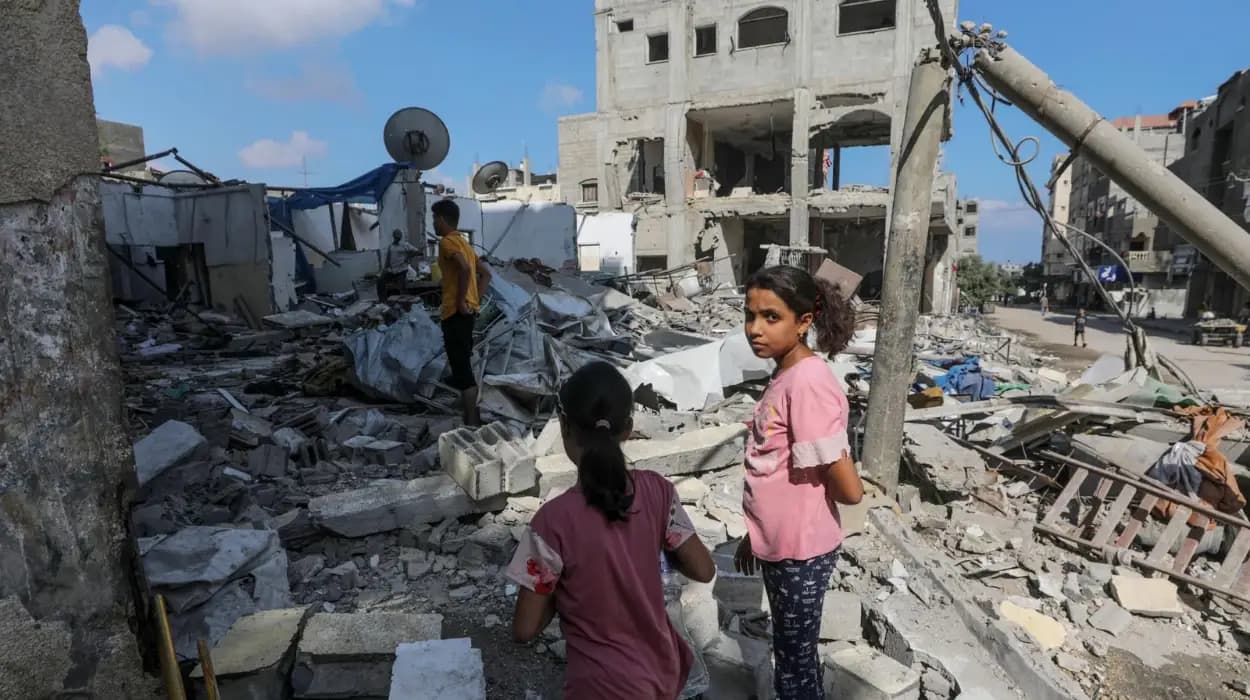
An Israeli official has asserted to The Jerusalem Post that negotiations with Hamas over Gaza have effectively collapsed and that escalation is now "likely unavoidable". Multiple sources confirm that Hamas has cut off contact, severed ties with key mediators, and that global pressure is mounting as Gaza faces a deepening hunger crisis.
Negotiations at a Standstill: What is the Current Status?
As reported by The Jerusalem Post, a senior Israeli official stated,
"There are no real negotiations taking place with Hamas at the moment and escalation is likely unavoidable in the Strip".
This bleak assessment comes amidst growing outrage over the increasing hunger crisis in Gaza—conditions blamed variously on Israeli policies and ongoing military action, with hundreds of Palestinian deaths from both starvation and violence reported by aid groups and local health officials.
According to reporting by Khaled Abu Toameh and Lahav Harkov for The Jerusalem Post, the official further explained that
"Hamas has cut off contact with Israel and there are no real negotiations with the group at the moment."
The Post also noted that Hamas appears to have partially severed ties with its main mediators, Qatar and Egypt, while focussing its diplomatic efforts on Turkey.
Why Have the Talks Collapsed?
The Times of Israel, citing a separate senior Israeli official speaking on background, reported a gap in core issues—primarily Hamas's demand for a permanent end to the war and Israel’s insistence on both the return of hostages and the removal of Hamas from power. While "a deal is attainable," this official said,
“[negotiating] with Hamas isn't easy or short, and I can't give a timeline, but it is within reach".
The official added that Israel “knows what its aim is… Hostages back, Hamas out.
” Nevertheless, confidence has waned as the same official told The Post, “It now seems that an expanded military operation in Gaza is inevitable”.
A report from Firstpost adds,
"Evidence of Israeli firing at Palestinians awaiting food supplies has ... emerged. The United Nations on Thursday published a video that showed Israeli bullets landing merely inches away from Palestinians sitting on the ground and awaiting a UN convoy carrying food".
This has heightened international scrutiny and condemnation.
What are the Implications of Escalation?
As reported by The Times of Israel, there was recently still some optimism:
“A ceasefire deal between Israel and Hamas is ‘more likely than not,’ a senior Israeli official said … The official’s comments signalled a measure of optimism amid a fresh push for a truce in Gaza that would ostensibly see the return of roughly half of the Israeli hostages”.
But both Israeli and Hamas officials now acknowledge that "gaps remain between the sides" over bringing the conflict to a permanent halt:
"The official said Israel remains committed to ending Hamas's control of Gaza and to freeing the remaining hostages".
The Jerusalem Post has detailed cabinet divisions within the Israeli government about whether to withdraw from captured Gaza territory as part of a possible deal. Some within the security cabinet oppose ceding any ground, complicating the negotiating position.
How is the Humanitarian Situation Affecting Diplomatic Moves?
Foreign Policy and Firstpost both highlight that global pressure is mounting for a ceasefire as the humanitarian situation in Gaza deteriorates. The Gaza Health Ministry says at least 113 people have died from hunger since October 2023, with more than 1,000 killed while trying to access food since the onset of Israel's military campaign. British Prime Minister Keir Starmer commented in remarks reported by Foreign Policy:
“The suffering and starvation unfolding in Gaza is unspeakable and indefensible ... We are witnessing a humanitarian catastrophe”.
These statements were made as Israel and the US temporarily recalled their negotiating teams from Qatar, further stalling progress. Hamas, meanwhile, has denounced Israel’s decision to leave negotiations, though its officials believe talks may resume.
What are the Positions of Key Players?
Israel's Stance: Complete Hostage Return and No Hamas Rule
As cited by various outlets, Israeli Prime Minister Benjamin Netanyahu remains firm, saying, as reported by Foreign Policy, “Hamas is the obstacle to a hostage release deal”. Netanyahu’s statements echo the consensus within Israel’s war cabinet that the primary goals are the safe return of all hostages and the cessation of Hamas’s governing authority.
Hamas's Position: End to Israeli Military Occupation
Hamas insists Israel has shown
"unwillingness to withdraw from the Strip or to stop the war,"
according to comments from Basem Naim of Hamas’s political bureau to AFP and The Times of Israel. Hamas has also reportedly expressed increased openness to a US-mediated ceasefire framework, as suggested by Steve Witkoff, the US Special Envoy for the Middle East, but comprehensive agreement still eludes all parties.
Are Third-Party Mediators Making Progress?
Although Qatar, Egypt, and previously the United States have acted as intermediaries, Hamas is currently most engaged with Turkey, according to sources speaking to The Jerusalem Post. Reports across multiple outlets describe mediation efforts as slowed or ineffectual, as both Israel and Hamas harden their positions or retreat from talks entirely in the face of escalating violence and humanitarian crisis.
What Comes Next: Is Further Escalation Inevitable?
"There are no real negotiations… escalation likely unavoidable,"
summarises the view of key Israeli officials, as quoted by The Jerusalem Post and echoed by several media outlets. IDF Chief of Staff Lt. Gen. Eyal Zamir said this week, as reported by The Times of Israel, that if no hostage deal is reached soon, the military will "intensify and expand" its operation against Hamas "as much as possible", even into new areas of Gaza.
United States Special Envoy Steve Witkoff met with Prime Minister Netanyahu in Israel on Thursday, according to reports in Firstpost. An official said the US and Israel were "aligned” on their next steps but did not elaborate publicly.
Statements from Parties
As reported by Khaled Abu Toameh of The Jerusalem Post,
an Israeli official said:
“It now seems that an expanded military operation in Gaza is inevitable.”
As quoted by the Times of Israel, the same Israeli
official noted:
“Israel knows what its aim is. I can simplify it very clearly in four words: ‘Hostages back, Hamas out.’”
British Prime Minister Keir Starmer’s statement, as noted
by Foreign Policy:
“The suffering and starvation unfolding in Gaza is unspeakable and indefensible ... We are witnessing a humanitarian catastrophe.”
Hamas political bureau member Basem Naim told AFP, as
quoted in The Times of Israel:
“Israel has not yet delivered any new or revised maps regarding military withdrawals from the Gaza Strip and has shown unwillingness to withdraw from the Strip or to stop the war.”
As verified across reports from The Jerusalem Post, The Times of Israel, Firstpost, Foreign Policy, and more, current diplomatic efforts between Israel and Hamas over Gaza are at a deadlock. Israeli officials openly signal that escalation is likely, with both sides blaming the other for the collapse of negotiations and deteriorating humanitarian conditions. While third-party and international mediators continue to push for progress, the prospects for a ceasefire or hostage deal remain dim as each party entrenches its position amidst a mounting crisis.