Summary
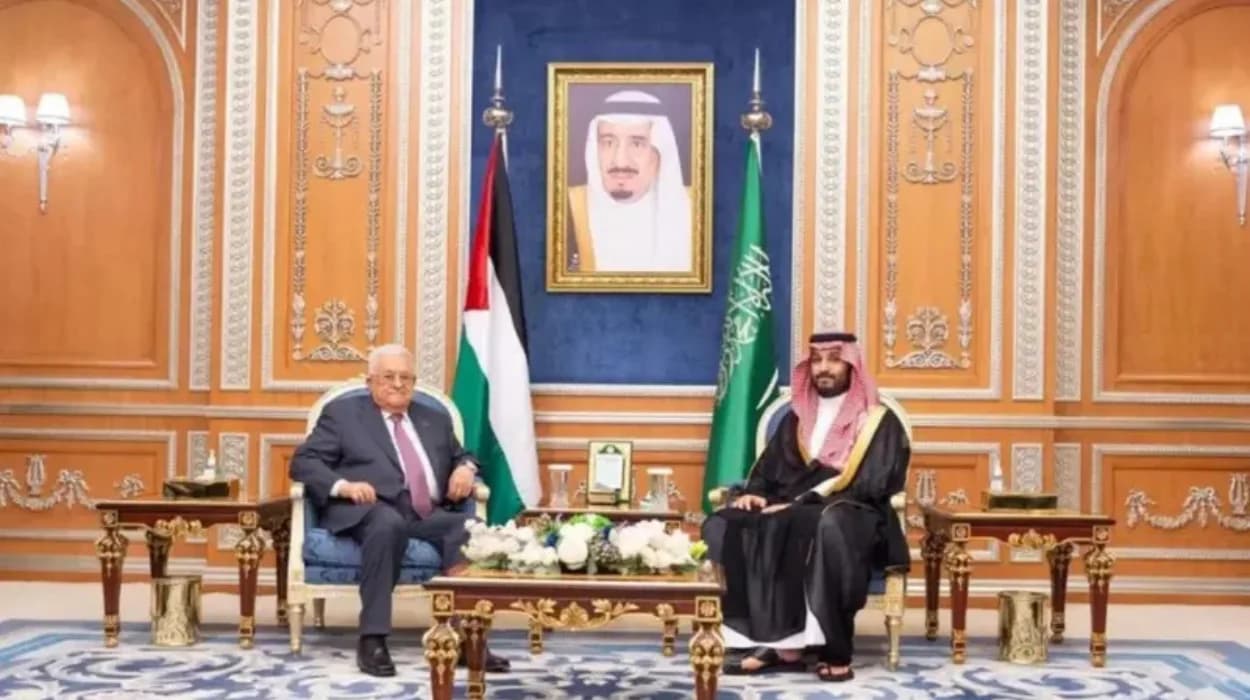
- The Saudi Crown Prince called Palestinian President Abbas.
- Abbas thanked Saudi for global Palestine support.
- Discussed Gaza security and humanitarian crisis.
- Prepared for Sept. 22 Peace Conference in New York.
- Saudi leads push for Palestinian statehood recognition.
Abbas
“expressed his deep appreciation for the Kingdom’s efforts and honorable positions, which contributed to the commitment of many countries to recognize the State of Palestine,”
according to SPA.
During last month's two-state solution summit in New York, he also praised the Saudi leadership for their "tireless efforts in coordinating positions to ensure the greatest international backing for the Palestinian cause."
The initiative has resulted in a significant international declaration known as the "New York Declaration," endorsed by the Arab League, the European Union, and around 17 other countries, outlining steps toward achieving Palestinian statehood with conditions such as Hamas disarming and relinquishing control in Gaza. Saudi Arabia's role draws on its considerable influence in the Arab and Islamic worlds and its leadership in convening support at the United Nations and other international forums.
In his phone call, Palestinian President Mahmoud Abbas thanked Saudi Arabia for this pivotal role in garnering international backing.
Abbas and Prince Mohammed also talked about the Gaza issue. According to SPA, the Crown Prince called on the international community to put an end to the "catastrophic consequences" of Israel's conflict and to safeguard civilians, while also restating the Kingdom's condemnation of "the crimes, brutal practices, and displacement attempts" against the Palestinian people.
What impact might this renewed diplomatic engagement have on future peace negotiations?
The mediation efforts help maintain open lines of communication between conflicting parties, even if formal negotiations face setbacks. This ongoing dialogue is critical for reducing hostilities and building trust necessary for durable agreements.
Early diplomatic engagement can influence the terms and structure of future talks, such as incorporating phased ceasefires, humanitarian aid access, and political governance transitions. It sets agendas and introduces innovative approaches aimed at addressing root issues.
Coordinated diplomatic initiatives involving multiple countries and organizations—like the UN, Arab League, and influential states—enhance legitimacy and pressure on parties to negotiate in good faith and consider compromises.