Summary
- Netanyahu says Israel will allow Palestinians to leave Gaza.
- The military prepares a broader offensive in Gaza Strip territory.
- Plans include control over Gaza City starting October.
- Offensive aims to defeat Hamas and seize key areas.
- Civilians expected to be displaced; humanitarian concerns rise.
Palestinians are alarmed, and the international world has condemned previous suggestions to relocate Gazans outside of the war-torn region, including those made by US President Donald Trump.
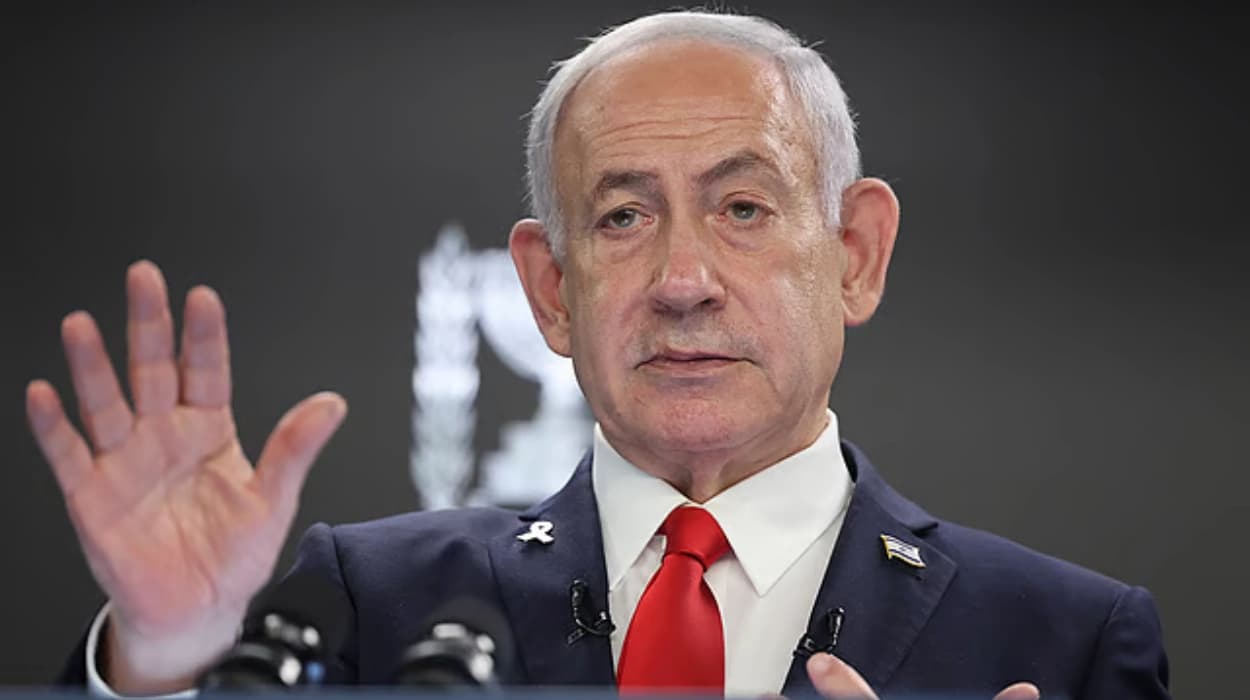
Netanyahu stated that:
"We are not pushing them out, but we are allowing them to leave"
in an interview with Israeli television i24NEWS as the IDF gets ready for a larger offensive in Gaza.
"Give them the opportunity to leave, first of all, combat zones, and generally to leave the territory, if they want,"
he said, citing refugee outflows during wars in Syria, Ukraine and Afghanistan.
In the Gaza Strip, Israel for years has tightly controlled the borders and barred many from leaving.
"We will allow this, first of all, within Gaza during the fighting, and we will certainly allow them to leave Gaza as well,"
Netanyahu said.
Any attempt to drive Palestinians off their land would bring to mind the "Nakba," or calamity, which was the mass exodus of Palestinians during the establishment of Israel in 1948.
Trump sparked controversy earlier this year when he publicly advocated for the US to annex Gaza and drive its 2.4 million residents to Jordan and Egypt.
After Trump suggested that the Gazan population be evicted and the area renovated as a vacation spot, Netanyahu earlier stated that his administration was looking for third countries to take in the people of Gaza.
The "voluntary" evacuation of Gaza's Palestinian population has been demanded by far-right ministers in Netanyahu's government.
Plans to extend the conflict into the remaining areas of Gaza that are not currently under military control were agreed by Israel's security cabinet last week.
What does Netanyahu's plan for Gaza's future mean for Palestinian civilians?
The Israeli security cabinet has approved a strategy to take full control of Gaza City, with plans to forcibly relocate tens of thousands of Palestinian civilians from the area to central camps and other regions by early October. This mass displacement affects a large portion of Gaza’s population already suffering from famine and severe humanitarian conditions due to the ongoing conflict and blockade.
Although Israel plans to provide humanitarian aid to civilians outside combat zones, the blockade and military operations have severely restricted aid access within Gaza. The forced relocation and siege around Hamas militants are expected to exacerbate the humanitarian crisis, including starvation, malnutrition, and healthcare shortages.
The UN and human rights organizations warn that the takeover will cause "massive forced displacement, more killings, more unbearable suffering, senseless destruction, and atrocity crimes."