Summary
- Israel approved the Gaza City military takeover plan.
- Global condemnation grows over Gaza escalation.
- Palestinians resist relocation, crisis worsens.
- The UN urges caution amid the 22-month war.
- No immediate change seen on ground.
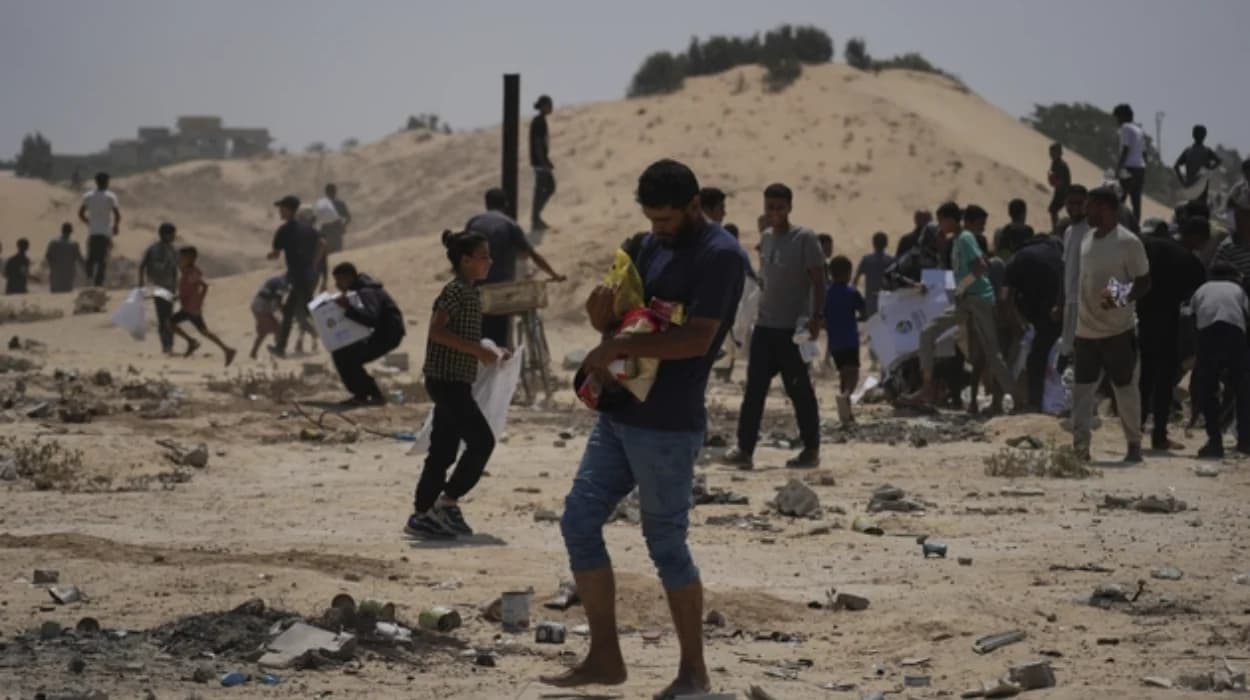
As the new criticism of Israel came with calls to allow considerably more food and other supplies to reach civilians in the besieged enclave, health officials reported that 11 adults died from malnutrition-related reasons and 11 Palestinians seeking relief were shot dead in the last 24 hours.
According to two individuals familiar with the negotiations, who spoke on condition of anonymity because they were not authorized to speak to the media, U.S. special envoy Steve Witkoff was scheduled to meet with Qatar's prime minister in Spain on Saturday to discuss a new proposal to end the crisis.
According to two Arab officials who spoke to The Associated Press, mediators Egypt and Qatar are working on a new ceasefire framework that would call for the release of all captives, dead and alive, at once in exchange for the end of the conflict and the withdrawal of Israeli soldiers.
Amid fresh concerns about the 50 captives still alive, 20 of whom are believed to be struggling, families of the hostages were once again mobilizing to put pressure on Prime Minister Benjamin Netanyahu's administration.
“The living will be murdered and the fallen will be lost forever”
if the offensive goes ahead, said Einav Zangauker, whose son Matan is held in Gaza.
She called on Israelis including the powerful Histadrut labor union to “help us save the hostages, the soldiers and the state of Israel” and appeared to call for a general strike: “Shut the country down.”
Nine nations, including Germany, Britain, France, and Canada, issued a united statement in which they declared their "strong rejection" of Israel's plan to launch the massive military operation, claiming it would aggravate the "catastrophic humanitarian situation," put hostages in danger, and increase the likelihood of mass displacement. They claimed that any attempts to settle in or conquer Gaza are illegal under international law.
More than 20 nations, including Saudi Arabia, Turkey, the United Arab Emirates, Egypt, and Qatar, who mediate ceasefires, issued a separate statement denouncing Israel's move as a "dangerous and unacceptable escalation." Russia, meanwhile, claimed that Israel's proposal will worsen Gaza's "already extremely dramatic situation."
According to Gaza's Health Ministry, since it started keeping track of adult deaths from malnutrition-related reasons in June, the number of new deaths over the last 24 hours has reached 114. It stated that since the war started with the October 7, 2023, Hamas-led offensive on southern Israel, in which militants killed almost 1,200 people and kidnapped 251, 98 children had perished from malnutrition-related reasons.
Turkish Foreign Minister Hakan Fidan said at a news conference in Egypt that Israel is "pushing Palestinians into a state of near-starvation to the point that they abandon their land voluntarily."
The 61,300 Palestinians killed in the war are not included in the ministry's death toll from hunger. The medically trained ministry, which is a part of the Hamas-run government, claims that women and children have made up around half of the dead but does not differentiate between fighters and civilians. It is regarded as the most trustworthy source of information on combat casualties by the United Nations and independent experts.
Israel has not offered its own figures, but it contests those of the ministry.
What are the key aspects of the situation?
The Israeli Security Cabinet has approved a plan to seize full control of Gaza City as part of a broader strategy to dismantle Hamas and secure the release of hostages held by the group.
The military currently controls around 75% of Gaza, but the plan seeks to extend this control fully over Gaza City, which involves evacuating residents and conducting ground operations against Hamas militants.
UN Secretary-General António Guterres and other UN officials have warned that this move represents a "dangerous escalation" risking catastrophic humanitarian consequences, including more forced displacement, killings, and destruction.