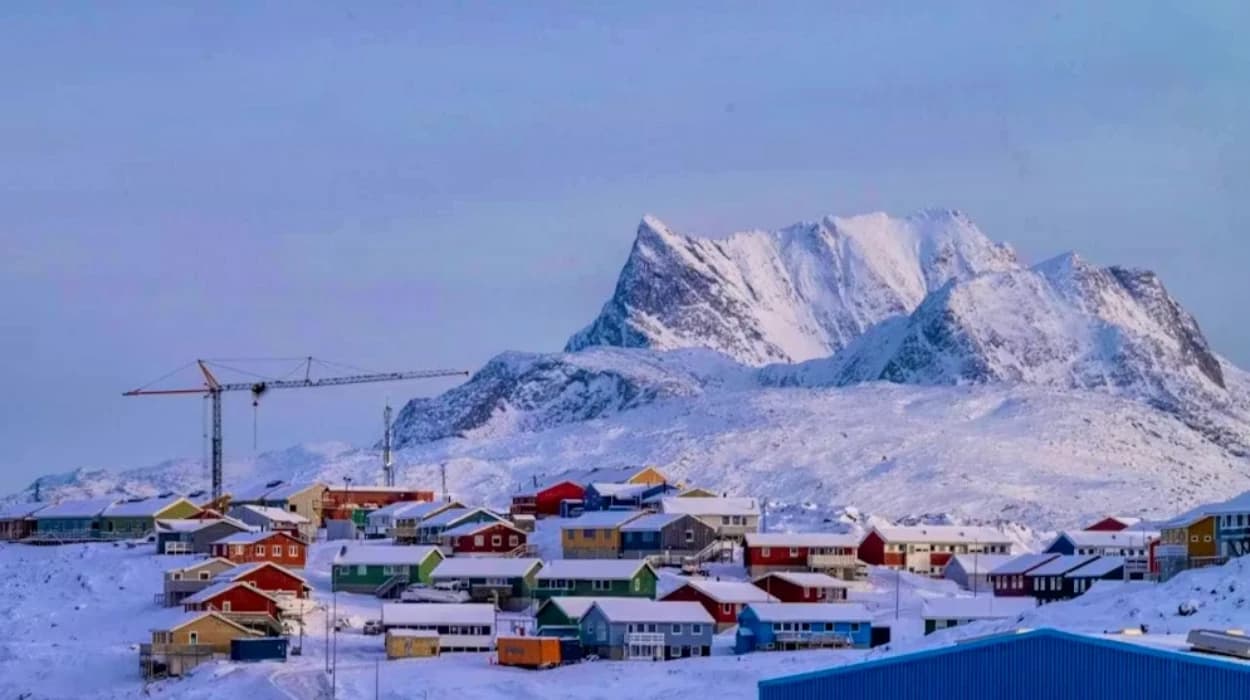
Berlin (The Palestine Telegraph Newspaper) February 07, 2026 – The German government has stated it does not plan to open a consulate in Greenland. Foreign Ministry officials cited existing diplomatic arrangements with Denmark as sufficient. The announcement follows recent discussions on Arctic interests among European nations.
A German Foreign Ministry spokesperson confirmed on 6 February 2026 that Berlin has no plans to establish a consulate in Greenland. The statement addressed speculation arising from increased European focus on Arctic resources and shipping routes. Germany maintains diplomatic relations with Denmark, which exercises sovereignty over Greenland under the Kingdom of Denmark framework.
The spokesperson emphasised that Germany's Arctic interests are served through its embassy in Copenhagen and participation in Arctic Council working groups. Greenland's capital Nuuk hosts consulates from several nations including the United States, China, and Japan, but not Germany. Danish officials welcomed the clarification, noting coordinated approaches to regional matters.
Context of Arctic Diplomatic Developments

Germany's Arctic policy, outlined in its 2021 strategy, prioritises scientific cooperation, climate research, and sustainable resource development. The Alfred Wegener Institute maintains research stations in Greenland, supported by Nuuk authorities. Berlin participates in Arctic Council projects alongside the eight permanent members, including Denmark representing Greenland.
Recent EU discussions addressed China's growing presence in Greenland, where Beijing operates research facilities and invests in mining projects. Germany supported Denmark's position during 2025 Arctic Council meetings, advocating transparent investment standards. The German announcement aligns with coordinated EU diplomatic postures toward the region.
Greenland's self-government, established by the 2009 Self-Government Act, handles internal affairs while Denmark retains control over foreign policy and defence. Nuuk has pursued economic partnerships independently, granting mining licences to international firms. Germany's decision reflects reliance on Danish channels for diplomatic access.
German Foreign Ministry Position Statement

Foreign Ministry spokesperson Steffen Hebestreit addressed the issue during a 6 February press briefing in Berlin. He stated that current embassy coverage adequately serves German citizens and business interests in Greenland. Approximately 200 German tourists visit annually, assisted through Copenhagen.
The ministry highlighted bilateral agreements with Denmark covering consular services. German businesses operating in Greenland, primarily in fisheries and renewable energy, utilise Danish trade offices. Hebestreit noted Germany's focus on multilateral Arctic forums rather than additional bilateral posts.
No formal proposals for a Greenland consulate reached the ministry's desk, according to internal records cited in the briefing. Berlin monitors Arctic developments through its polar research coordination office in Bremerhaven.
Greenland's Existing Consular Landscape
Nuuk hosts eight foreign consulates as of January 2026: Denmark, USA, UK, France, Italy, Japan, China, and Russia. Iceland maintains a representation office. These facilities support approximately 1,200 foreign workers in mining and research sectors.
The US consulate, established in 1941, focuses on Thule Air Base operations. China's diplomatic presence expanded after 2017 infrastructure bids. UK interests centre on fisheries agreements and scientific collaboration. No immediate vacancies exist for additional consulates due to space limitations in Nuuk.
Greenland's government welcomed foreign interest but prioritised economic partnerships over diplomatic expansion. Premier Múte B. Egede stated in December 2025 that Nuuk evaluates consulate requests based on economic contributions.
Denmark's Role in Greenland Foreign Relations
Denmark's Copenhagen embassy provides full consular services for Greenland residents travelling internationally. The kingdom maintains unified foreign policy representation at UN Arctic gatherings. Danish naval patrols protect Greenland's EEZ, coordinating with NATO allies.
In 2025, Denmark rejected Chinese bids for airport construction, citing security concerns. Germany supported this position during EU foreign ministers' discussions. Bilateral defence agreements ensure coordinated responses to regional challenges.
Greenlandic MPs participate in Danish parliament sessions on foreign affairs affecting the territory. The Self-Government Act preserves Denmark's authority over international agreements impacting Greenland.
European Arctic Strategies and Coordination
Germany's 2021 Arctic Policy Paper commits €300 million to research through 2030, funding projects at Ilulissat and Qaqortoq. EU member states coordinate via the European External Action Service's Arctic desk. France and Italy maintain active Greenland research partnerships.
The EU's 2021 Joint Communication on Arctic Strategy emphasises cooperation with Denmark and indigenous organisations. Germany contributes to European Space Agency satellite monitoring of Greenland ice melt. No EU member state has opened new Greenland consulates since 2019.
Nordic Council meetings in November 2025 addressed consular coordination, with Germany attending as observer. Participants affirmed existing arrangements suffice for current needs.
Economic Interests Driving Regional Attention
Greenland possesses significant rare earth deposits, attracting international mining firms. Germany's automotive sector imports processed minerals via Danish channels. Renewable energy projects, including wind farms at Nuuk, involve German engineering firms.
Fisheries represent 90 per cent of Greenland's exports, regulated through Danish-EU quotas. German trawlers operate under North-East Atlantic Fishing Commission rules. Tourism contributes 10 per cent to GDP, with Lufthansa chartering flights from Frankfurt.
China's Shenghe Resources secured rare earth rights at Kvanefjeld in 2024, prompting EU scrutiny. Germany advocated diversified supply chains during G7 discussions. No German firms hold direct mining concessions.
Background on Recent Diplomatic Speculation

Speculation arose following January 2026 reports of German naval research vessels visiting Nuuk. The FS Helmer Hanssen conducted ice mapping with Danish cooperation. Media misinterpreted the visit as prelude to consular plans.
A Berlin think tank paper suggested expanded Arctic presence, but ministry officials distanced themselves from recommendations. Danish ambassador to Germany clarified no discussions occurred on new consulates.
Greenlandic media Inuktitut initially reported potential German interest, later corrected following official statements. Nuuk government spokesperson confirmed no applications received.
Arctic Council Framework and Membership
The Arctic Council comprises eight Arctic states: Canada, Denmark, Finland, Iceland, Norway, Russia, Sweden, and USA. Germany holds observer status since 1998, funding indigenous peoples' programmes. Permanent participants include Inuit Circumpolar Council representing Greenlandic Inuit.
Recent ministerial meetings addressed climate adaptation funding, with Germany pledging €50 million for 2026-2028. Observer states coordinate positions avoiding duplication of diplomatic infrastructure.
Russia's 2022 council suspension elevated focus on western observers. Germany increased Bremerhaven research funding by 20 per cent in response.
Scientific Collaboration as Alternative
Germany's Polarstern icebreaker conducted 2025 expeditions mapping Greenland fjords. Cooperation agreements with Nuuk's Arctic Command facilitate researcher access. Alfred Wegener Institute hosts Greenlandic scientists annually.
Joint projects monitor permafrost thaw and marine ecosystems. Data sharing agreements bypass need for dedicated diplomatic posts. Virtual consulates serve EU citizens digitally.
Implications for German-Danish Relations
The announcement reinforces Berlin-Copenhagen partnership on Arctic matters. Denmark appreciates German support against external economic pressures. Joint naval exercises in Davis Strait continued through 2025.
German businesses welcomed consular clarity, preferring established Danish channels. Arctic logistics firms report smooth operations via Copenhagen embassy.
As Arctic ice diminishes, Germany maintains focus on scientific diplomacy over physical infrastructure expansion.