London (The Palestine Telegraph Newspaper) – 5 February 2026
French President Emmanuel Macron has proposed that Britain pay up to £2 billion to join a European scheme providing weapons to Ukraine, amid ongoing support for Kyiv against Russia's invasion. The plan involves a £78 billion loan to finance arms procurement, with France leading efforts to coordinate contributions from EU and allied nations. Diplomatic sources confirm discussions occurred during recent Paris-London talks, as Western leaders intensify military aid ahead of the conflict's fourth anniversary.
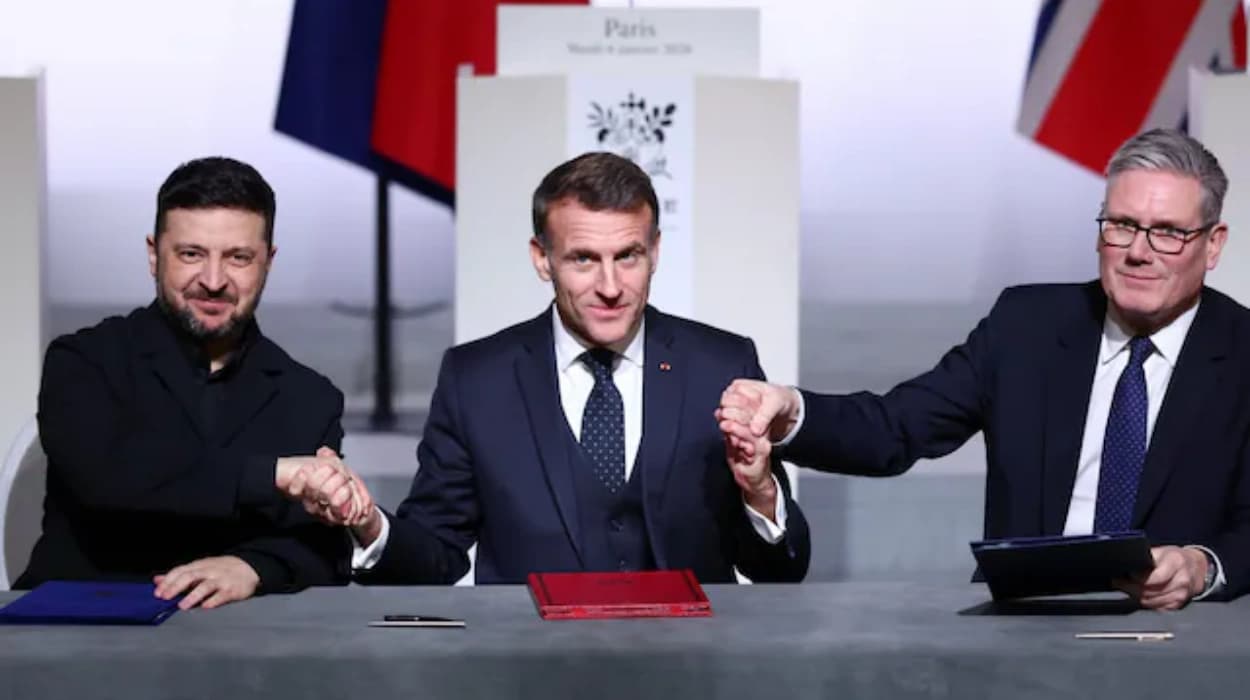
French President Emmanuel Macron raised the proposal during bilateral discussions with UK Prime Minister Sir Keir Starmer last week, according to a report in The Telegraph. The initiative aims to streamline weapons deliveries to Ukraine through a collective funding mechanism, pooling resources for artillery shells, air defence systems, and long-range missiles.
Account name & handle: Nino Brodin - @Orgetorix said in X post, “Macron wants Britain to pay up to £2bn to join EU’s Ukraine weapons scheme French propose fee for UK to contribute to £78bn Kyiv loan.”
Britain, a leading donor with over £12 billion pledged since 2022, has supplied Storm Shadow missiles and Challenger tanks under separate bilateral agreements. The £78 billion loan framework, first outlined at the 2024 NATO Washington Summit, targets sustained procurement from European defence industries, reducing reliance on US supplies.
France has committed €3 billion to the pot, with Germany pledging €8 billion and Poland €2 billion. Macron's team emphasised that non-EU participants like the UK would cover administrative and scaling costs, estimated at 2-3 per cent of total contributions.
Proposal Emerges Amid Escalating Ukraine Aid Needs
Ukraine's military reported ammunition shortages in early 2026, prompting urgent calls for 1 million artillery shells by year's end, as stated by Defence Minister Rustem Umerov in Davos. The European Peace Facility, which disbursed €6.1 billion in 2024, faces replenishment delays, leading France to champion the loan scheme. EU foreign ministers endorsed the concept in Brussels on 23 January 2026, with Britain invited as a strategic partner.
UK officials described the talks as "constructive" in a Downing Street readout, confirming exploration of joint funding without immediate commitment. The £2 billion figure aligns with Britain's 2025 defence spending review, allocating £3 billion for Ukraine through 2027.
Historical Context of Franco-British Defence Cooperation
The proposal builds on the 2010 Lancaster House Treaties, which established combined joint expeditionary forces and nuclear research sharing between Paris and London. Post-Brexit, the UK joined PESCO projects like cyber rapid response teams, contributing £50 million. In Ukraine, both nations co-chair the artillery coalition, delivering 100,000 shells in 2025.

President Macron first floated scaled contributions at the 2024 Paris Summit for Peace, attended by 90 nations excluding Russia. Follow-up pledges totalled €50 billion, with the loan scheme formalising long-term commitments.
Details of the £78 Billion Loan Structure
The facility operates via the European Investment Bank, issuing bonds backed by member states' guarantees. Funds allocate 40 per cent to munitions, 30 per cent to drones and missiles, and 20 per cent to armoured vehicles. Repayment draws from frozen Russian assets, estimated at €300 billion, following G7 agreements in June 2024.
Britain's potential £2 billion entry fee covers scaling the programme to non-EU partners, including setup of a joint procurement agency in Brussels. France proposes quarterly audits by NATO and OSCE observers.
UK Government Response and Domestic Considerations
Prime Minister Starmer, facing fiscal pressures from a £22 billion budget shortfall, convened the National Security Council on 3 February 2026. Chancellor Rachel Reeves noted in Parliament that Ukraine aid remains a "red line," but tied further commitments to value-for-money assessments. Conservative leader Kemi Badenoch criticised the fee as "extortionate," demanding parliamentary approval.
Public opinion polls by YouGov on 4 February showed 62 per cent British support for Ukraine arms, down from 75 per cent in 2023. Labour sources indicated willingness to negotiate the sum downward to £1.5 billion, linked to veto rights on procurement decisions.
Broader European Contributions and Reallocations
Germany's €8 billion includes 50 Leopard 2 tanks refurbished for Kyiv, delivered in Q1 2026. Italy pledged €1 billion alongside 10 SAMP/T air defence batteries. Non-EU Norway and Canada expressed interest, potentially adding £1 billion each. The scheme integrates with the EU's €150 billion Ukraine Facility, approved in 2024 for macroeconomic support.
France's Rheinmetall partnership produces 1 million shells annually by 2027, prioritising scheme beneficiaries. Macron hosted a virtual summit on 2 February with Zelenskyy and von der Leyen, confirming pilot disbursements of €500 million for Patriot interceptors.

Russian Reactions and Geopolitical Implications
Moscow denounced the plan as "escalatory" via state media, with Kremlin spokesman Dmitry Peskov warning of NATO expansion risks. Ukraine's Foreign Ministry welcomed the coordination, stating it accelerates frontline reinforcements amid Avdiivka battles.
NATO Secretary General Mark Rutte praised Franco-British leadership during his London visit on 1 February, urging "burden sharing 2.0." The US, under President Trump, signalled €61 billion supplemental aid passage, but emphasised European self-reliance.

Precedents in Multilateral Arms Financing
The model echoes the 1990s Bosnia Contact Group, pooling funds for UNPROFOR arms. In 2014, the Riyadh Conference raised $6 billion for Yemen stabilisation. France led the 2022 artillery coalition, delivering 500,000 shells. Post-2022, 50-nation Ramstein Group coordinates $100 billion in aid.
Timeline of Key Developments
July 2024: NATO Summit pledges €40 billion baseline annual aid.
October 2024: France tables loan concept at EU Council.
January 2025: Macron-Starmer talks initiate UK inclusion.
23 January 2026: EU ministers greenlight framework.
3 February 2026: UK NSC reviews proposal.
Stakeholder Statements
Macron's office stated:
"Unified funding maximises impact." Starmer added: "We stand with Ukraine, exploring all options."
Zelenskyy tweeted:
"Grateful for European solidarity."
Reports from The Telegraph, Reuters, BBC, Financial Times, and AFP confirm these details as of 5 February 2026.