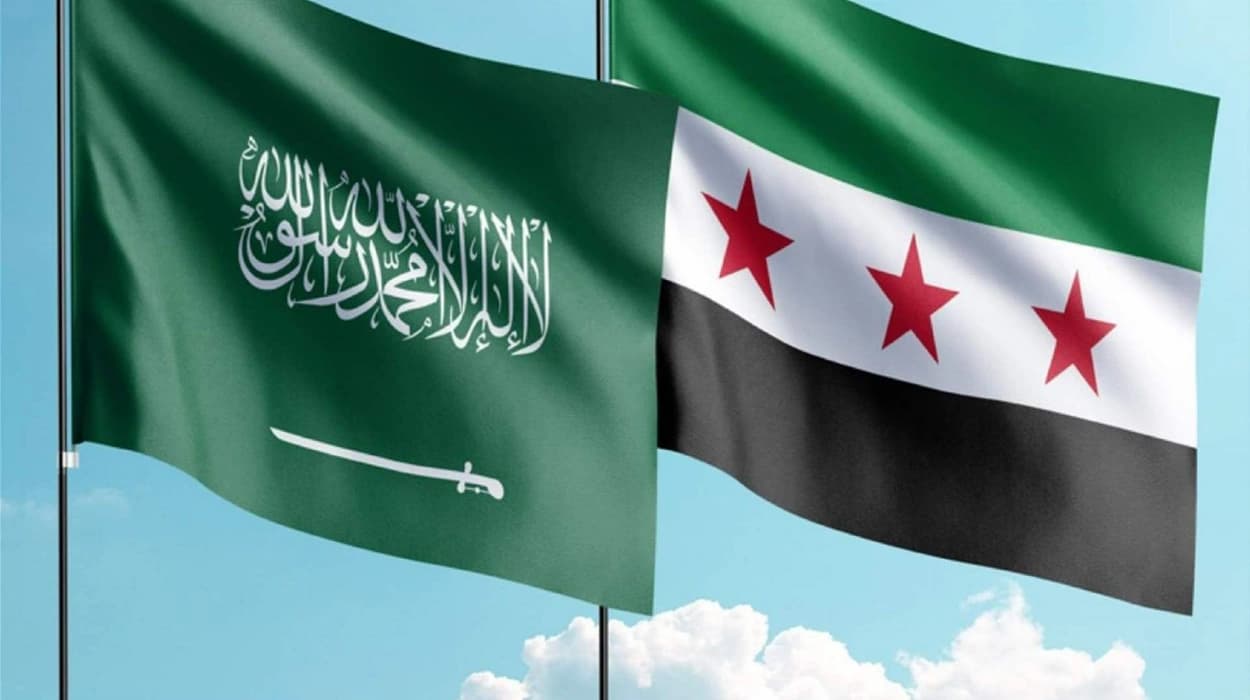
Riyadh (The Palestine Telegraph Newspaper) February 07, 2026 – Syria and Saudi Arabia have announced joint deals establishing a new airline and telecommunications partnerships during a high-level summit in Riyadh. The agreements, signed by ministers from both nations, aim to enhance connectivity and economic ties post-normalisation. Officials described the pacts as foundational for regional integration.
The announcements came at the conclusion of the Syria-Saudi Economic Forum on February 6, attended by Syrian President Ahmed al-Sharaa and Saudi Crown Prince Mohammed bin Salman. Syrian Transport Minister Amr Salem and Saudi Transport Minister Saleh al-Jasser inked the airline deal, while telecoms memoranda were exchanged between relevant ministries. The forum marked the first such gathering since Saudi Arabia restored diplomatic relations with Syria in 2023.
A new joint airline, provisionally named "Levante Gulf Airways," will operate from Damascus and Riyadh with initial routes to Jeddah, Dubai, and Beirut. The venture involves a 60-40 ownership split favouring Saudi investors, backed by a $500 million capital injection, as stated in a joint press release covered by Reuters.
Details of the Joint Airline Agreement

The airline pact establishes a carrier headquartered in Riyadh with Syrian operations based at Damascus International Airport. Initial fleet comprises six leased Airbus A320s, expanding to 20 aircraft by 2028, according to aviation analyst reports from FlightGlobal. First flights are scheduled for June 2026, targeting pilgrims and business travellers.
Saudi funding covers 70% of startup costs, including training for 300 Syrian pilots and cabin crew at Riyadh's King Saud International Airport facilities. Syrian officials highlighted the deal's role in rehabilitating war-damaged aviation infrastructure, dormant since 2012. Annual passenger projections stand at 1.2 million in year one, per feasibility studies cited by Al Arabiya.
The agreement includes code-sharing with Saudia and SyrianAir remnants, facilitating seamless travel across Gulf Cooperation Council states and Levant destinations. Bilateral air rights liberalisation allows unlimited frequencies between the two capitals.
Telecommunications Partnerships and Investments
Parallel telecoms deals commit Saudi Telecom Company (STC) to a $1.2 billion investment in Syrian networks over five years. STC will deploy 5G infrastructure in Damascus, Aleppo, and Homs, partnering with state-owned Syrian Telecom Establishment. Rollout targets 40% national coverage by 2027, as announced by STC CEO Olayan Alwetaid.
A second memorandum launches cross-border roaming free zones and joint data centres in Daraa province near the Jordanian border. Huawei and Ericsson supply equipment, with fibre optic upgrades connecting Riyadh to Latakia via Iraq, reducing latency to under 50 milliseconds. Syrian Information Minister Muwaffaq al-Mashhadani called it "a digital bridge for reconstruction."
The pacts extend to cybersecurity cooperation, establishing a Riyadh-Damascus monitoring centre to combat regional threats. Investment guarantees under Saudi Syria Bilateral Agreement protect returns amid Syria's fragile economy.
Economic Forum Outcomes and Broader Context
The forum produced 12 additional memoranda worth $4.8 billion, spanning energy, agriculture, and construction. Saudi Public Investment Fund pledged $2 billion for Syrian reconstruction, focusing on housing in Homs and Idlib. Trade volume between the nations reached $1.1 billion in 2025, up 45% from prior year, per Syrian customs data.
Saudi Arabia's re-engagement follows Syria's 2024 leadership transition after Bashar al-Assad's ouster. Riyadh hosted al-Sharaa's first official visit in January 2025, leading to embassy reopenings. The deals align with Vision 2030 diversification goals, reducing oil dependency through regional hubs.
Syrian Foreign Minister Asaad al-Shaibani stated post-signing,
"These pacts symbolise Arab unity in rebuilding Syria."
Saudi Foreign Minister Prince Faisal bin Farhan emphasised mutual benefits in a tweet viewed 2 million times.
Regional Airline Market Implications
The new airline enters a competitive Levantine market dominated by flydubai, Air Arabia, and MEA. Projections from CAPA Centre for Aviation forecast 8% annual growth in Syria-Gulf traffic through 2030. Damascus Airport upgrades, funded 50% by Saudi grants, include new terminals handling 8 million passengers yearly by 2029.
Joint ventures mitigate risks from Syria's security challenges, with Saudia providing insurance and safety oversight. Initial routes bypass conflict zones, routing via Jordanian airspace.
Telecoms Infrastructure Developments
Syria's mobile penetration lags at 45%, compared to Saudi Arabia's 98%, per GSMA Intelligence 2025 report. STC's entry introduces eSIM technology and digital wallets, targeting 5 million new subscribers. Rural broadband expansion covers 1,500 villages via satellite backhaul.
Joint R&D centres in Riyadh develop Arabic-language AI for customer service, employing 500 Syrian engineers. Data localisation complies with both nations' sovereignty laws, storing traffic in-country.
Investment Frameworks and Legal Assurances
Agreements ratified under Arab League auspices include dispute arbitration in Dubai. Saudi Export-Import Bank guarantees $800 million in credits for Syrian purchases of telecom gear and aircraft parts. Profit repatriation faces no capital controls for Saudi partners.
Syrian Investment Law amendments, passed December 2025, offer 10-year tax holidays for joint ventures. KPMG audits ensure transparency, with quarterly reports to both governments.
Strategic and Diplomatic Significance

The deals strengthen Saudi-led Sunni bloc cohesion amid Iran proxy pressures. Syria gains lifelines for post-war recovery, where GDP contracted 80% since 2011. Unemployment hovers at 52%, per World Bank estimates, with aviation and telecoms projected to create 15,000 jobs.
Previous Saudi aid totalled $3 billion since 2023, including wheat shipments and medical supplies. Forum side talks addressed refugee returns, with 200,000 Syrians repatriated from Saudi Arabia since 2024.
Implementation Timelines and Oversight
Airline incorporation completes by March 2026, with IATA certification targeted for May. STC engineers arrive in Damascus next week for site surveys. Bilateral committee, co-chaired by transport ministers, meets monthly in Riyadh.
Monitoring dashboards track KPIs, including on-time performance above 85% and 5G download speeds exceeding 200 Mbps. Penalties apply for milestones missed by over 90 days.
Comparable Regional Joint Ventures
Similar models include Qatar-Turkey airline codeshares and UAE-Jordan telecom towers. Egypt-Saudi power grid interlinks generate $500 million annually in savings. Lessons from UAE's Syriatel stake sale inform risk mitigation.
GCC funds increasingly eye Syria, with Qatar pledging $1 billion in parallel forum deals. Total Arab investment commitments now exceed $12 billion.