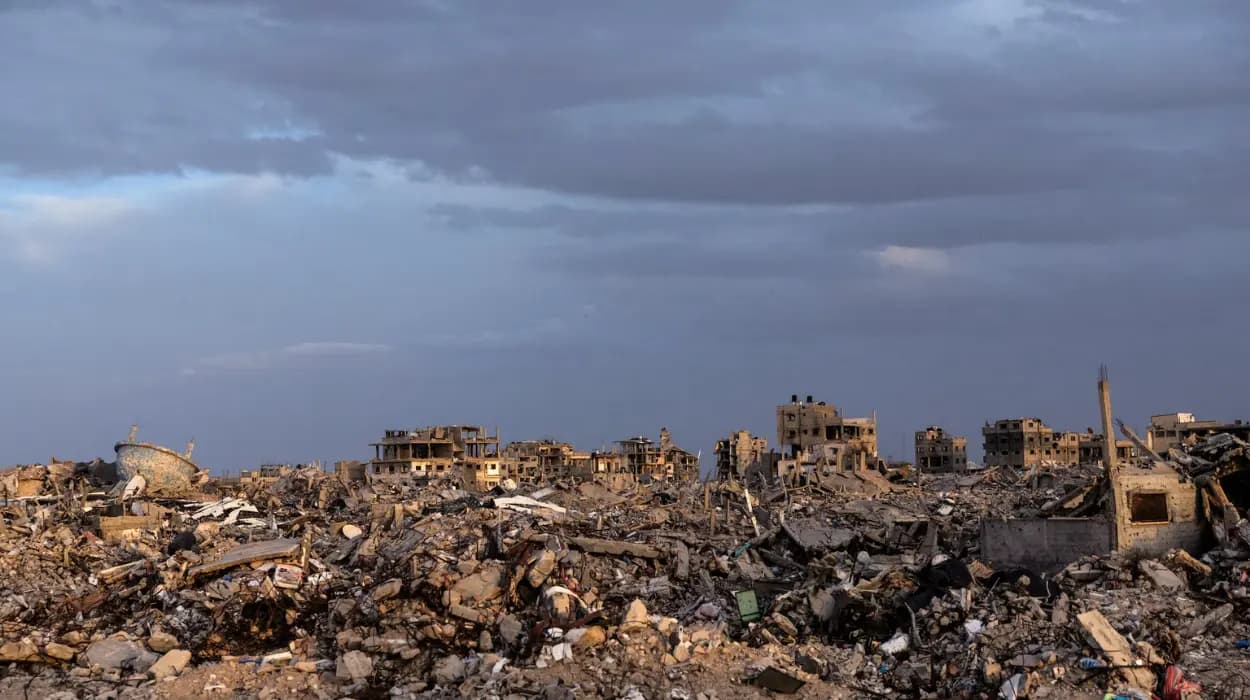
Dubai (The Palestine Telegraph Newspaper) February 05, 2026 - The United Arab Emirates has developed plans for a "UAE Temporary Emirates Housing Complex" to house thousands of displaced Palestinians near Rafah in southern Gaza, an area under Israeli military control. A planning map reviewed by Reuters shows the site's location close to the "yellow line" from an October ceasefire dividing Israeli and Hamas territories. Emirati officials reaffirmed commitment to humanitarian aid in Gaza without confirming the project details.
The United Arab Emirates has formulated plans to construct a temporary housing compound for displaced Palestinians in a portion of southern Gaza under Israeli military control, according to a map and sources cited by Reuters. The proposed "UAE Temporary Emirates Housing Complex" would be built near Rafah, a city formerly home to about 250,000 people that Israeli military operations have largely devastated and depopulated. Four diplomats familiar with the matter disclosed that UAE representatives shared details of the temporary housing and services initiative in Rafah.
Location and Layout of Proposed UAE Compound
The planning map positions the complex near Rafah, adjacent to the "yellow line" established under an October ceasefire agreement separating Israeli-controlled zones from Hamas-administered areas. Israeli forces have cleared a substantial area from the Mediterranean inland towards Rafah to facilitate temporary developments such as the UAE project, one diplomat stated. Rafah lies near the Egyptian border and aligns with U.S. President Donald Trump's vision for Gaza reconstruction as the initial phase in achieving lasting peace after two years of conflict.
Diplomats described the UAE plan as echoing a U.S. proposal for temporary Palestinian housing in Israeli-held Gaza areas, initially called "Alternative Safe Communities" and later "Planned Communities." The compound aims to provide shelter for thousands amid ongoing displacement in the coastal enclave.
Context of Rafah and Southern Gaza Developments
Rafah, once Gaza's southernmost city with a quarter-million residents, has suffered extensive destruction from Israeli military actions. The area remains under Israeli oversight following operations linked to efforts against Hamas. An October ceasefire introduced the "yellow line" to delineate control zones, with southern sections allocated for initiatives like reconstruction.
U.S. strategies under President Trump include a multinational mission in southern Gaza, where the UAE compound fits within broader humanitarian and stability plans. Potential donors express caution over funding due to uncertainties around Hamas disarmament, fearing renewed fighting.
Official UAE Response to Reports
An Emirati official responded to Reuters inquiries by stating the UAE "remains dedicated to enhancing its humanitarian efforts to assist Palestinians in Gaza," refraining from confirming or denying the temporary housing plans. The UAE established diplomatic relations with Israel in 2020 through a Trump-brokered agreement and views Hamas and similar groups as regional stability threats.
No further specifics on construction timelines, capacity, or services emerged from official channels in the reports.
Diplomatic and Political Considerations
Diplomats highlighted political challenges, noting many Palestinians might resist moving to an Israeli-controlled zone while most civilians remain in Hamas-governed areas. The initiative requires navigating ceasefire terms and post-conflict governance. One diplomat emphasised that limited housing projects alone cannot neutralise Hamas influence, calling for a larger-scale effort.
Trump's peace framework positions southern Gaza, including Rafah, as the reconstruction starting point. Hesitation among donors stems from disarmament disputes potentially reigniting hostilities.
Broader Humanitarian Efforts in Gaza
The UAE has positioned itself as a key player in Gaza aid, with plans aligning to Israeli-cleared zones for water and services. Reports indicate coordination for desalinated water supply in the same humanitarian-designated area. Israeli military statements underscore minimising civilian harm during operations.
UN officials have urged increased aid access amid restrictions, including at Rafah crossing. Egypt has denied coordinating solely with Israel on crossings, advocating bidirectional passage.
Historical Background on Rafah Operations
Israel issued major evacuation orders for Rafah in prior months, the largest since resuming offensives, citing Hamas use of civilian areas. Operations followed Hamas rejection of U.S. ceasefire extension proposals involving hostage releases. Forensic confirmations and body recoveries via intermediaries occurred amid tensions.
Destruction has affected over 70,000 Palestinian lives and three-quarters of Gaza infrastructure in campaigns post-October 7, 2023, attacks.
Related Reconstruction Proposals
Separate reports mention UAE funding for a "planned community" in Rafah ruins, offering education, healthcare, and water, per blueprints. Timelines include land deed reviews from late October, needing six months preparation. Questions persist on security screenings at entry points.
Land ownership verification aims to avoid displacement claims, potentially war crimes if unsubstantiated.
Strategic Ties and Regional Dynamics
UAE-Israel ties, normalised in 2020 Abraham Accords under Trump, frame the humanitarian push. Plans coincide with U.S.-led missions for Gaza stability. Hamas disarmament remains central to donor confidence.
The compound's proximity to cleared zones supports "strangling Hamas" through development, per sources.