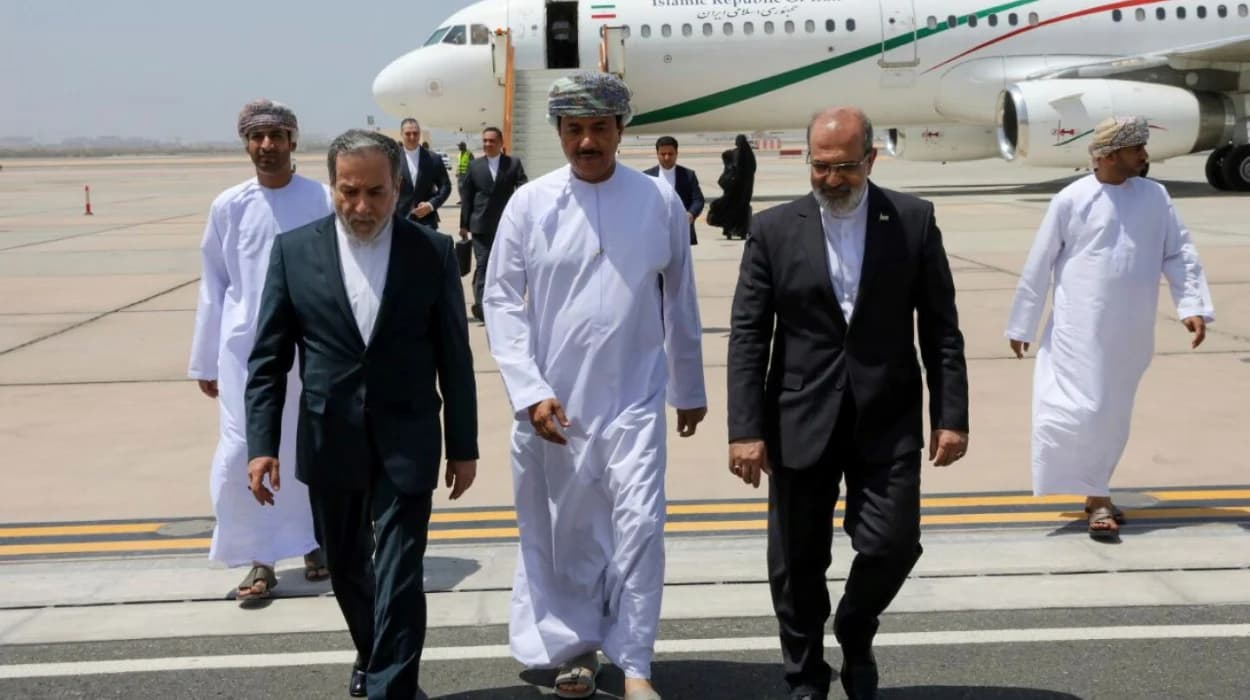
Muscat (The Palestine Telegraph Newspaper) - The United States and Iran have confirmed indirect talks on Tehran’s nuclear programme scheduled for Friday, February 6, 2026, in Oman’s capital, marking the first formal engagement since heightened regional tensions. Omani mediators will facilitate separate meetings between US Mideast envoy Steve Witkoff and Iranian Foreign Minister Abbas Araghchi amid disagreements over the agenda. The discussions follow US military deployments and Iran’s uranium enrichment advances reported by the IAEA. Both sides exchanged threats before agreeing to the Muscat venue after an initial cancellation.
Oman announced the talks will occur at a Muscat hotel with delegations in separate rooms, allowing written exchanges and mediator briefings. A US State Department official confirmed the meeting responds to IAEA reports documenting Iran’s 60% enriched uranium stockpile exceeding 140kg. Iran’s foreign ministry stated the focus remains nuclear issues and sanctions relief, rejecting US demands to include ballistic missiles or regional activities.
Think tanks tracking the developments noted the talks proceeded despite earlier disruptions.
Institute for the Study of War - @TheStudyofWar said in X post,
“NEW: Iran and the United States are expected to hold talks in Oman on February 6, despite the brief cancellation of the meeting on February ...”
Confirmation and logistics of Oman talks
Iranian Foreign Minister Abbas Araghchi posted on X confirming the 10am Muscat start, thanking Omani counterparts for arrangements. White House officials verified the schedule to reporters, noting earlier plans for Turkey shifted after Iran’s venue request. Regional diplomats reported Qatar, Turkey and Egypt proposed principles guiding the dialogue after Arab leaders urged de-escalation.
The single-day session aims to establish a workplan amid US naval deployments including the USS Abraham Lincoln carrier group. US Central Command reported intercepting an Iranian drone near the carrier Tuesday and IRGC vessels approaching a US-flagged tanker in the Strait of Hormuz. No injuries occurred in the incidents.

Agenda disputes between Washington and Tehran
US Secretary of State Marco Rubio stated discussions must address Iran’s nuclear programme alongside ballistic missiles, Middle East proxies and human rights concerns from recent protests. Iran insists on nuclear-only focus, with a senior official telling Reuters the missile programme constitutes a non-negotiable red line. Tehran shows flexibility on enrichment limits but demands parallel sanctions waivers.
President Trump warned Supreme Leader Ali Khamenei during an NBC interview: “He should be very worried.” Trump referenced US strikes on Iranian nuclear sites during June’s Israel conflict and Iran’s consideration of a new enrichment facility, stating “we’re going to do very bad things” if pursued.
Iran’s nuclear programme status per IAEA
IAEA Director General Rafael Grossi reported January 31 Iran’s 60% enriched uranium reached 142kg, sufficient for three devices if further processed to 90%. Total enriched stocks exceed JCPOA caps by 30 times. Iran deactivated IAEA cameras at Natanz in December 2025 before granting replacement access following censure.
Tehran operates 16 IR-6 centrifuge cascades at Natanz and Fordow alongside thousands of IR-1 models. Breakout time estimates range from two weeks to one month. Iran expelled UN inspectors in autumn 2025 citing bias, prompting E3 censure threats.

Recent military tensions prompting diplomacy
US F-35 jets downed a Shahed-139 drone approaching the Abraham Lincoln Tuesday, with Iran’s Tasnim agency reporting lost contact in international waters. IRGC fast boats approached the tanker Stena Imperative, ordering it to halt for boarding before it accelerated away. Central Command described the actions as harassment.
Trump dispatched naval assets following Iran’s crackdown on nationwide protests, the deadliest since 1979. US threats of intervention over protester deaths accompanied nuclear pressure after June airstrikes disrupted prior Rome and Muscat rounds.
Omani mediation history and neutral role
Oman facilitated 2013 secret US-Iran contacts, 2015 JCPOA talks and 2022 prisoner swaps. Sultan Haitham’s government maintains arms purchases from Washington and trade with Tehran. Foreign Minister Badr Albusaidi coordinates shuttling in past sessions, preserving deniability.
Muscat hosted five 2025 rounds disrupted by Israel’s June campaign against Iranian sites. Friday’s talks revive that format after Istanbul plans collapsed over agenda and venue disputes.
US demands and Iranian red lines
Washington seeks centrifuge dismantlement, 60% stockpile removal, Additional Protocol ratification for anytime inspections and one-year breakout extension. Trump outlined three preconditions: zero enrichment, missile curbs and proxy funding halt—all rejected by Tehran as sovereignty violations.
Iran conditions engagement on oil export sanctions lifted, SWIFT banking access and $10 billion frozen asset release. President Pezeshkian requires relief for economic stabilisation after 8% contraction, 45% inflation and 800,000-rial dollar rate.
Regional actors urging de-escalation
Arab leaders from Saudi Arabia, UAE, Qatar, Egypt and Pakistan engaged Iranian ministers post-June war, per Axios. Gulf states pursue China-brokered normalisation including flights and patrols while buying $50 billion US arms since 2020. Normalisation enables $200 billion regional projects.
E3 (France, Germany, UK) welcomes talks, offering verification experts. EU’s Kaja Kallas stands ready for P5+1 reengagement. Israel receives US briefings, with Defence Minister Katz affirming vigilance.
Economic pressures influencing Iran
China buys 90% of Iran’s discounted oil but seeks better terms. Russia’s war limits aid. Trapped $100 billion euro reserves require SWIFT. Pezeshkian’s reforms need $50 billion investment for rial stabilisation and 30% youth unemployment reduction.
Oil prices fell on talk confirmation, reviving de-escalation hopes despite Trump’s military threats.

Previous negotiation rounds and collapse
2021 Vienna indirect talks produced drafts capping enrichment at 3.67%, cutting centrifuges to 5,060 and redesigning Arak. Progress stalled over US elections and Iranian sequencing demands. 2025 Rome-Muscat rounds yielded no deal before June war.
Trump’s 2018 JCPOA exit triggered Iran’s stepwise breaches from July 2019, shrinking breakout from one year to weeks.
Trump administration strategic calculus
Congressional Republicans back “peace through strength,” linking deal to terrorism delisting. Democrats support engagement with midterm scrutiny February 10. Trump balances campaign pledges preventing “Iranian nukes” against avoiding “endless wars.”
Jared Kushner may join Witkoff per sources. Success bolsters non-proliferation; failure risks sanctions or strikes.
IAEA verification technical hurdles
Restoring full access requires Additional Protocol ratification. Vienna foresaw 15-year centrifuge limits, phased stockpiles to zero. Fordow’s underground site challenges seals and satellites—Iran resists overflights.
US offers advanced monitoring; IAEA Board meets February 24 on compliance.
Gulf security guarantees sought
Saudi Arabia and UAE request explicit US protection against Iranian retaliation. Qatar mediates Hamas-Israel parallel to nuclear track. Kuwait and Bahrain back Oman to secure oil routes.
Post-Oman next steps anticipated
Friday establishes workplan addressing December 2025 US proposal modifying Vienna terms. Monthly follow-ups possible in Oman or Geneva. E3+China+Russia rejoin if warranted.
Historical precedent: 2002 exposure of covert enrichment led to six UN sanctions pre-JCPOA. Friday tests reversible escalation.