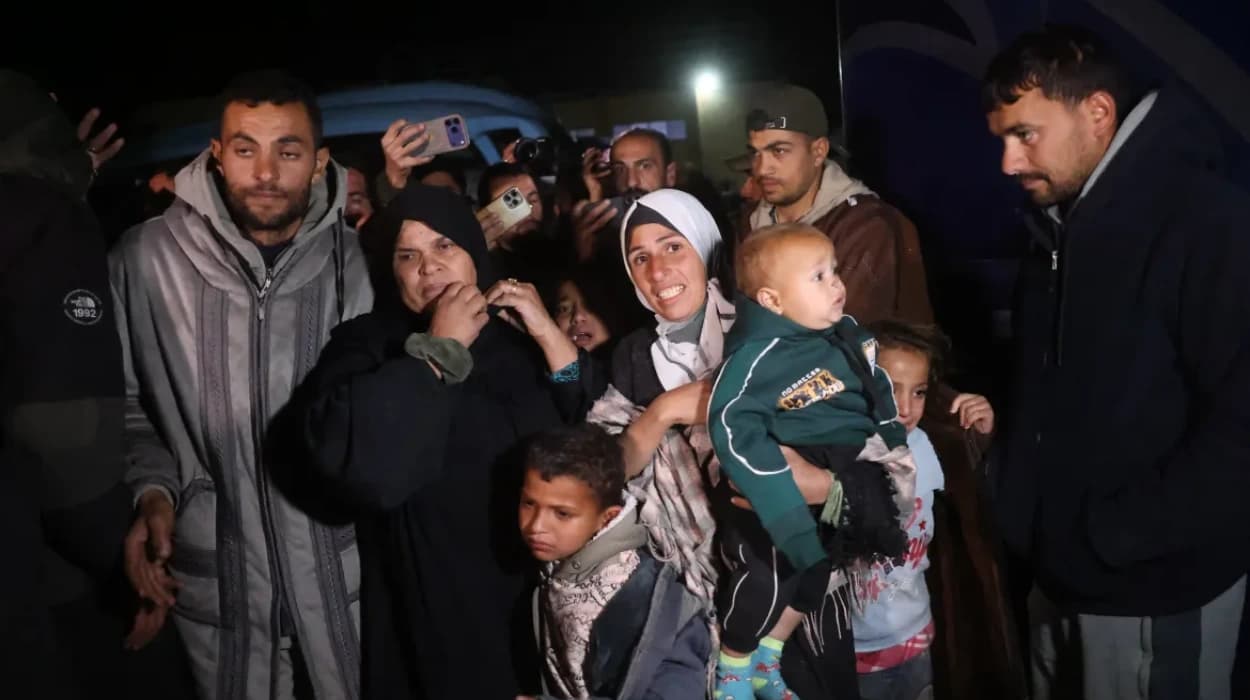
Gaza (The Palestine Telegraph Newspaper) February 07, 2026 – The partial reopening of the Rafah crossing has resulted in widespread confusion, leaving thousands of Palestinians stranded on both sides of the Egypt-Gaza border. Egyptian authorities imposed sudden restrictions on entrants, while Gaza officials reported inadequate coordination. Aid trucks waited for hours amid conflicting directives from Cairo and Israeli overseers.
The crossing, Rafah Border Crossing officially reopened on February 5 after a 14-month closure linked to the Gaza conflict. Egyptian officials allowed 120 aid lorries through on the first day, but only 37 Palestinians exited, far below expectations of 500 daily, according to UNRWA logs reported by Reuters. Crowds gathered since dawn, with many turning away after learning of new documentation requirements.
Egyptian Red Crescent workers distributed water to those queued, as temperatures reached 22°C. Gaza's Hamas-run interior ministry blamed
"Israeli vetoes"
for the bottlenecks, while Cairo cited security screenings.
Initial Reopening Announcements and Expectations
Egypt announced the reopening on February 4 via state media, stating operations would resume "in phases" under a tripartite agreement with Israel and the Palestinian Authority. The deal permitted limited humanitarian passage, excluding permanent exits initially. Al-Ahram newspaper detailed that passports and medical approvals were mandatory, catching many without papers off-guard.
Over 5,000 Palestinians massed at the Gaza side terminal by midday February 5, per eyewitness accounts to AFP correspondents. Women and children prioritised under the plan, but Egyptian border guards turned back groups lacking Egyptian guarantor letters, a pre-war norm reinstated abruptly.
Israeli forces maintained oversight from the Kerem Shalom side, inspecting outgoing cargo. Cogatre military terminal processed 80 trucks, delaying the convoy until 4pm, as documented by Israeli media Ynet.
Specific Incidents of Stranding and Frustration
A mother of four from Khan Younis, carrying a wounded child, waited 12 hours before rejection for missing hospital stamps.
"We sold everything for this chance,"
she told BBC Arabic, joining dozens sleeping rough overnight. Similar stories emerged from northern Gaza evacuees seeking Rafah relatives.
On the Egyptian side, 200 Palestinians who crossed early faced immediate return orders due to Sinai curfew zones. Tents sprouted near Arish transit camp, where Egyptian security restricted movement, per Associated Press footage.

Aid organisations reported spoilage: 20 lorries of dairy products discarded after 36-hour waits. World Food Programme coordinator stated,
"Perishables lost mean children go hungry longer,"
in a briefing covered by The Guardian.
Coordination Failures Between Authorities
The Palestinian Authority's crossing manager issued conflicting lists: one for 300 medical cases, another for 200 students. Hamas overrode priorities, leading to fistfights among supplicants, as filmed by Al Jazeera crews.
Egypt's Foreign Ministry spokesman Ahmed Abu Zeid clarified on February 6 that
"only verified humanitarians"
allowed, excluding dual nationals without residency. This shifted from verbal assurances of open medical passage, sparking diplomatic cables between Ramallah and Cairo.
Israel approved 400 exits daily but enforced biometric scans, slowing processing to 50 per hour. Coordinator of Government Activities in the Territories (COGAT) logs showed 18 rejections for "security flags," mostly resolved by evening.
Humanitarian Impact and Aid Delivery Disruptions
UN agencies estimated 1.9 million Gazans face acute shortages, with Rafah vital for 500,000 tons of monthly aid needs. Only 10% capacity achieved on reopening day, per OCHA dashboard updates.
Medical evacuations stalled: 150 cancer patients barred pending Israeli clearance. European Gaza Hospital reported ventilator rationing without resupplies, as per Doctors Without Borders dispatches to CNN.
Egyptian ambulances idled, treating heatstroke cases on-site. Six Palestinians hospitalised for exhaustion, with one elderly fatality from dehydration, according to Gaza Health Ministry figures relayed to Anadolu Agency.

Historical Role of Rafah Crossing Operations
Rafah, sole non-Israeli Gaza gateway, handled 120,000 crossings monthly pre-2023 war. Egypt controlled the Sinai terminal since 2007, balancing security against blockade critiques.
Past reopenings followed truces: 2014 saw 40,000 exits in weeks; 2021 COVID variant closures stranded 12,000. Current iteration stems from January 2026 Cairo talks, extending fragile ceasefire.
Israeli inspections intensified post-October 2023, scanning for dual-use goods. Egypt added Sinai buffer zone checks after 2014 attacks.
Statements from Key Stakeholders Involved
Hamas spokesman Basem Naim accused Egypt of
"complicity in siege"
via X post, viewed 1.5 million times. Egyptian President Abdel Fattah al-Sisi responded indirectly, prioritising
"national security"
in parliament address.
UNRWA chief Philippe Lazzarini called for
"unfettered access"
in Geneva presser.
"Bureaucracy kills,"
he stated, citing child malnutrition spikes.
US envoy Steve Witkoff mediated, securing Israeli nod for 20% aid increase. State Department readout confirmed
"technical glitches"
addressed by February 7 morning.
Palestinian Authority President Mahmoud Abbas dispatched envoys, threatening legal action at Arab League.
Technical and Logistical Challenges Encountered
Terminal upgrades incomplete: Egyptian side scanners offline, forcing manual checks. Power outages halted Israeli conveyor belts thrice daily.
Crowd control faltered without pre-announced queues. Fencing breaches occurred twice, with guards firing warning shots, per security cam footage obtained by Times of Israel.
Digital manifests mismatched: Gaza lists omitted photos; Egyptian database flagged duplicates. Resolution required hotline calls between terminals.
Broader Regional Reactions and Diplomatic Moves
Qatar pledged $50 million emergency aid, airlifting via Arish Airport. Turkey sent 100 medics, landing February 6.
EU foreign ministers convened virtually, approving €100 million package conditional on 80% capacity. Germany and France fast-tracked visa quotas for Gazan students.
Arab League summit in Cairo February 8 tabled Rafah as agenda item. Saudi Arabia offered logistical support, dispatching coordinators.
Hamas interior ministry reported 300 spontaneous crossings via smuggling tunnels, intercepted by Egyptian patrols.
Updates on Subsequent Days' Operations
February 6 saw 250 exits and 200 trucks, improvement noted by COGAT. Queues shortened to 3,000 after triage.
Medical priority list finalised: 400 approved, 50 crossed by dusk. Insulin convoy delivered to Nasser Hospital.
Egypt eased guarantor rules for under-18s, allowing 120 family reunifications. Israeli throughput hit 300 trucks.
Ongoing bottlenecks persist: fuel shortages limit Egyptian scanners. Forecasts predict full capacity by February 10 pending weather.
International monitors from ICRC embedded since February 5, verifying neutral passage.

Long-term Access Proposals Under Discussion
US-backed plan envisions 24/7 operations with 1,000 daily exits. Egypt demands demilitarised buffer; Israel seeks permanent scanners.
Kerem Shalom expansion planned, diverting 60% cargo. Rafah focus shifts to passengers post-aid ramp-up.
Abbas-Sharaa rift emerges: PA claims Rafah rights; HTS interim authority asserts control.