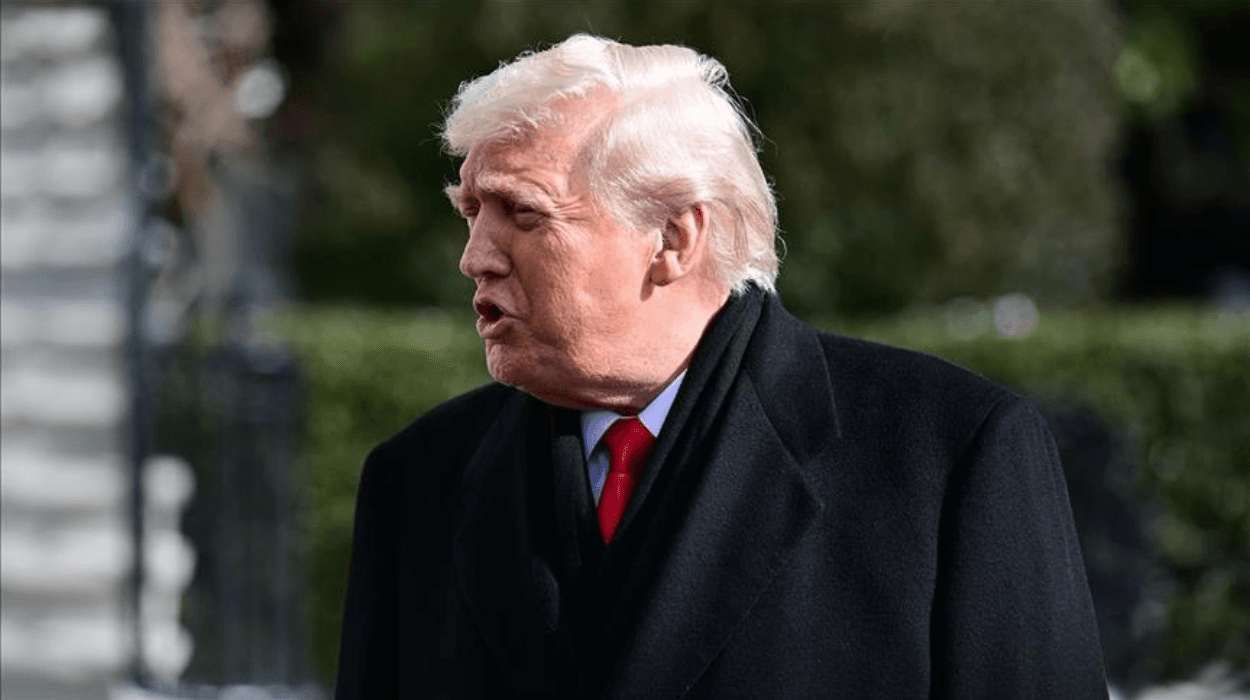
United States (The Palestine Telegraph Newspaper) February 5, 2026 – US President Donald Trump stated that Iran is engaging in nuclear negotiations because it does not want American military strikes. The remarks highlight ongoing indirect talks mediated by regional powers ahead of potential meetings in Oman and Turkey. Tensions persist with US naval deployments in the region as leverage.
President Trump made the comments as backchannel discussions between Washington and Tehran show signs of progress. Iranian officials confirmed indirect exchanges via mediators like Oman and Saudi Arabia. The US has positioned aircraft carriers and fighter jets within striking range, underscoring the stakes.
Context of Trump's Remarks on Iran Negotiations
Trump's statement reflects the administration's dual track of diplomacy and military pressure. On February 2, he told reporters at the White House that talks were ongoing despite high tensions, noting US ships en route to the area. Iranian Foreign Ministry spokesperson Esmaeil Baghaei confirmed several issues had been addressed in mediated message exchanges.
Open Source Intel reported Trump's direct words on the matter. Open Source Intel - @Osint613 said in X post,
“Trump on Iran: “They’re negotiating because they don’t want to be hit…. Haha” “They don’t want us to hit them.””
This aligns with reports of planned nuclear talks in Muscat, Oman. Defense Eye highlighted the context of US force buildups. Defense Eye - @defense_eye said in X post,
“BREAKING: Trump Says Iran “Doesn’t Want Us to Strike Them” as Talks ContinuePresident Trump said Iran is negotiating with the United States and “they don’t want us to hit them,” ahead of planned nuclear talks in Muscat, Oman, even as U.S. forces build up in the region”
President Masoud Pezeshkian instructed diplomats to pursue equitable negotiations as tensions eased slightly. Foreign Minister Abbas Araghchi held phone talks with counterparts in Saudi Arabia, Egypt, and Turkey on recent developments.
Recent Developments in Nuclear Discussions
Indirect talks restarted in early 2025 after Trump's reelection, focusing on uranium enrichment limits and sanctions relief. US special envoy Steve Witkoff is scheduled to meet Araghchi, possibly in Istanbul alongside Arab representatives from Qatar, Saudi Arabia, UAE, and Egypt. No firm date has been set, but progress on details is under review.

Trump expressed hope for a deal on February 1 at Mar-a-Lago, responding to Supreme Leader Ali Khamenei's warning of regional war if attacked. He dismissed the remarks as expected, emphasising US naval power including the largest ships deployed near Iran. White House officials state no final decision on strikes has been made, keeping diplomacy open.
IAEA reports confirm Iran's stockpiles exceed JCPOA limits, with concerns over weaponisation potential. Tehran insists its programme is civilian, seeking sanctions lift and enrichment rights under safeguards. US conditions include halting enrichment, curbing missiles, and ending proxy support, which Iran views as non-negotiable.
Historical Background of US-Iran Tensions
Strains trace to the 1979 revolution and 2018 JCPOA withdrawal under Trump's first term. Sanctions reimposed led to Iranian breaches, Gulf shipping attacks, and proxy clashes. In 2025, June talks in Oman faltered after US and Israeli strikes on nuclear sites.
Trump's March 2025 letter to Khamenei proposed new talks with military warnings and oil export curbs. Protests in January 2026, sparked by economic woes and currency collapse, prompted US threats shifted to deal demands. Iran cracked down harshly, with reports of thousands killed.
US Military Posture and Regional Deployments
The US has deployed carrier strike groups and F-35s in the Indian Ocean, within range for strikes. Pentagon assessments follow Houthi Red Sea actions attributed to Iran. Exercises with allies simulate threat responses, maintaining 40,000 troops in bases across Qatar, Bahrain, and Jordan.
Trump convened national security meetings in January to review protest support and regime pressure options. He noted Iran proposed talks days before, with a meeting under arrangement despite considering strong responses. No mobilisations ordered as of February 5.
Iranian Official Positions and Conditions
Araghchi stated Iran agrees with Trump on opposing nuclear arms, offering peaceful guarantees for sanctions relief. He cautioned against broadening talks to missiles or allies, warning of actors pushing wider conflict. Tehran prepares for strike possibilities amid economic strain.

IRNA and Fars reported Pezeshkian's order to revive nuclear discussions. State media frames US rhetoric as acknowledging Iranian deterrence. Khamenei warned of regional war, while diplomats review phased diplomatic particulars.
Stakeholder Reactions Across the Region
Israel's Netanyahu is set to meet Witkoff, urging vigilance on missiles. Saudi and UAE back de-escalation via strength. Gulf News notes Omani backchannels and Qatar's balancing role hosting CENTCOM.
EU expresses non-proliferation concerns, with potential snapback sanctions. Russia and China criticise US actions but join P5+1 formats. UN's Guterres calls for restraint.
Economic Pressures Driving Diplomacy
Sanctions halved Iran's oil exports to under 500,000 bpd, freezing over $100 billion in assets. Rial depreciation fuels 40% inflation and subsidy protests. IMF notes 10% GDP contraction, pushing Tehran towards concessions.
US Treasury enforces secondary sanctions, deterring banks. Trump links relief to verifiable steps like IAEA-monitored halts at Natanz and Fordow.
International Mediation and Monitoring Efforts
Oman, Turkey, and Arab states mediate messages. IAEA's Grossi verifies compliance quarterly, with cameras at key sites. US intelligence tracks proxies in Yemen, Lebanon, Syria.
State Department briefings and congressional resolutions affirm Israel defence. Multinational patrols secure sea lanes. Talks aim to avert escalation into 2026 summer deadlines.