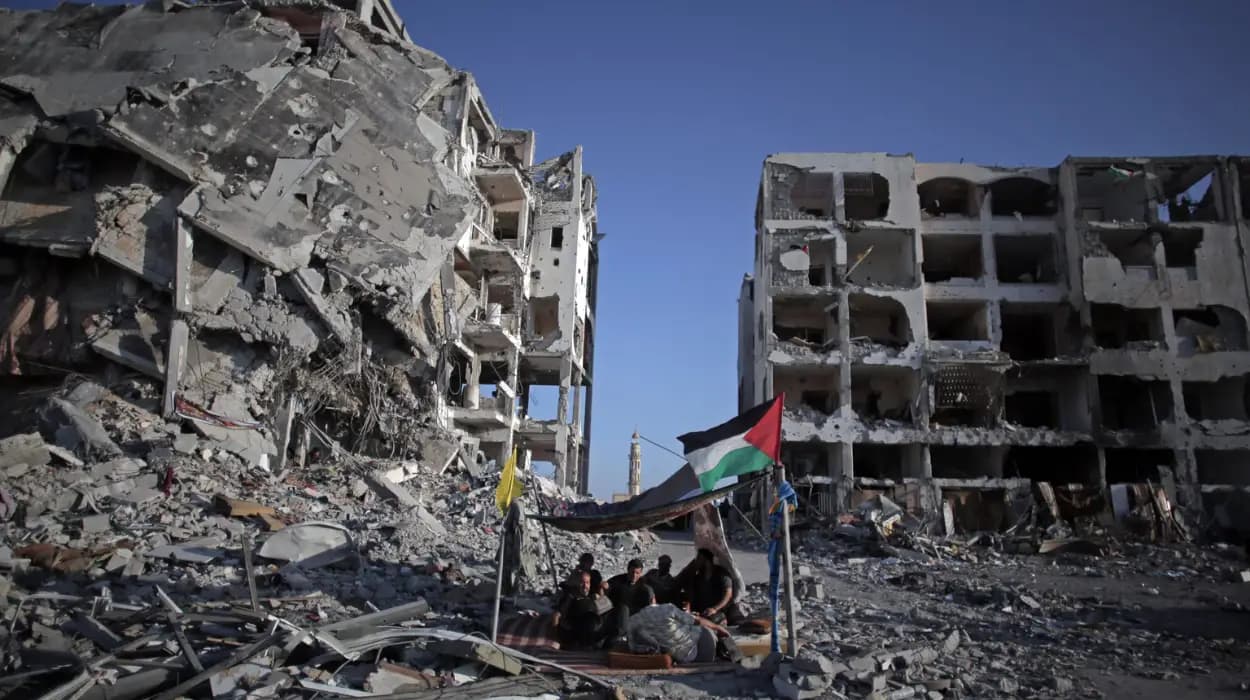
Brussels (The Palestine Telegraph Newspaper) - Most European Union member states have rejected invitations from the United States to participate in a proposed Gaza 'Board of Peace' initiative led by President Donald Trump. The diplomatic outreach sought European involvement in a consultative body addressing post-conflict reconstruction and security arrangements in Gaza. Several EU governments cited concerns over mandate clarity, recognition of Palestinian representation and alignment with established multilateral frameworks as reasons for declining.
The US State Department extended formal invitations last week to foreign ministers from all 27 EU capitals, framing the board as a high-level advisory mechanism to coordinate international support for Gaza stabilisation. Responses received by Tuesday indicate only four EU countries expressed willingness to engage, while 20 issued polite refusals and three deferred decisions pending internal consultations. The initiative follows US-brokered discussions on Gaza governance involving regional stakeholders.
US invitation details and European response patterns
 Credit: REUTERS
State Department cables described the Gaza Board of Peace as a forum for sharing reconstruction expertise, security coordination and humanitarian aid planning. Invitations specified non-binding participation with quarterly virtual meetings and annual Washington summits. European responses varied by national priorities, with eastern flank states prioritising Ukraine commitments and Mediterranean members emphasising North African stability.
France, Germany and Italy coordinated a joint response emphasising exclusive competence of Quartet mechanisms comprising UN, EU, US and Russia. Spain and Ireland requested clarification on Hamas representation and settlement freeze preconditions. Baltic republics cited resource constraints from NATO enhanced forward presence rotations. Scandinavian governments referenced existing Oslo framework obligations.
Rationale cited by declining EU member states
Foreign ministries communicated decisions through standard diplomatic channels, avoiding public statements during the initial phase. Leaked cables reveal recurring themes of procedural legitimacy, funding transparency and exclusion of non-state actors. Several capitals referenced 2024 European Council conclusions prioritising Palestinian Authority reform ahead of new governance structures.
Germany's Auswärtiges Amt noted alignment with G7 Gaza reconstruction working group as preferred format. French Quai d'Orsay emphasised UN Security Council Resolution 2735 parameters. Italian Farnesina highlighted Mediterranean Union commitments precluding parallel structures. Portuguese and Greek responses stressed Cyprus proximity talks continuity.
Participating EU countries and conditions attached
Poland, Hungary, Slovakia and Czech Republic confirmed attendance at preparatory consultations. Warsaw cited trilateral cooperation experience from Abraham Accords implementation. Budapest referenced Visegrád Group coordination on Middle East policy. Prague and Bratislava emphasised practical reconstruction expertise from post-conflict Balkans missions.
Participants specified limitations excluding binding commitments or deviation from Common Foreign and Security Policy positions. Vienna, Sofia and Bucharest indicated observer status pending full membership decisions. Dublin and Helsinki scheduled parliamentary briefings before finalising positions.
Context of Trump administration's Gaza policy framework
 Credit: AFP
President Trump's January 2025 executive order established the Board of Peace as component of broader Middle East realignment strategy. Previous iterations addressed Abraham Accords expansion and Syria stabilisation. Gaza chapter emphasises security sector reform, deradicalisation programming and economic reconstruction tied to demilitarisation benchmarks.
State Department allocated $500 million initial funding through USAID mechanisms. Regional partners Saudi Arabia, UAE and Jordan committed matching contributions. Israeli government welcomed European technical expertise while maintaining security veto authority. Palestinian Authority received parallel invitation through Oslo liaison channels.
Historical precedents for US-led Middle East peace initiatives
Roadmap for Peace (2003) secured EU Quartet membership through UN facilitation. Annapolis Conference (2007) featured 49 nations including full EU troika representation. Trump Abraham Accords (2020) excluded traditional Quartet format, prompting European reservations. Madrid Conference (1991) established multilateral track precedents referenced in current declinations.
European External Action Service maintains Gaza reconstruction database from 2009-2024 operations. Previous EU contributions totalled €2.1 billion across UNRWA, COGAT and PA ministries. Current non-participation preserves leverage for comprehensive settlement negotiations.
Implications for transatlantic coordination on Gaza file
High Representative Kaja Kallas scheduled informal Gymnich format discussions for February. European Parliament foreign affairs committee requested US ambassador testimony on board objectives. NATO Brussels consultations addressed security implications for eastern Mediterranean stability.
US Mission to EU expressed regret over limited participation while affirming bilateral channel availability. Quint format (US, UK, France, Germany, Italy) continues weekly coordination calls. UK, post-Brexit, accepted observer invitation maintaining traditional alignment.
Palestinian Authority and regional Arab state positions
Ramallah coordination unit welcomed European restraint as affirmation of two-state parameters. Saudi Foreign Minister Prince Faisal bin Farhan referenced Arab Peace Initiative continuity during Jeddah consultations. Egyptian presidency emphasised Rafah crossing management exclusivity. Jordanian Foreign Ministry stressed custodianship of Jerusalem holy sites.
Qatari Prime Minister Mohammed bin Abdulrahman hosted parallel reconstruction conference excluding Board of Peace framework. Turkish Foreign Minister Hakan Fidan proposed alternative Istanbul format with Organisation of Islamic Cooperation participation.
UN and multilateral organisation responses
UN Special Coordinator for Middle East Peace Process Tor Wennesland affirmed Quartet exclusivity. UNRWA Commissioner-General Philippe Lazzarini confirmed continuity of €1.2 billion 2026 appeal. World Bank Gaza Needs Assessment Update excludes alternative governance scenarios.
Organisation for Economic Co-operation and Development maintains Gaza reconstruction toolkit under Middle East and North Africa regional programme. International Committee of Red Cross preserves neutrality across parallel initiatives.
US domestic political context influencing outreach
Senate Foreign Relations Committee hearings examined European responses Wednesday morning. Republican leadership praised Visegrád engagement as counterweight to French-German dominance. Democratic ranking members requested State Department reporting on funding safeguards.
House Foreign Affairs Europe subcommittee scheduled closed briefings with intelligence community. American Israel Public Affairs Committee welcomed Polish-Czech participation. J Street advocated comprehensive settlement preconditions.
Funding mechanisms and reconstruction priority areas
Proposed board budget identifies water infrastructure (€800 million), power generation (€600 million) and housing reconstruction (€1.2 billion) as initial focus. European Investment Bank maintains separate €400 million Gaza envelope. European Bank for Reconstruction and Development assesses private sector recovery feasibility.
USAID mission Gaza coordinates with COGAT on project vetting. World Food Programme confirms food security programming independence. UN Office for Project Services manages €300 million schools rehabilitation portfolio.
Timeline for board operationalisation and future meetings
 Credit: United Nations
Preparatory virtual session scheduled February 15th with confirmed participants. Washington plenary anticipated June 2026 coinciding with NATO summit. Quarterly progress reports target UN General Assembly submission. Mid-term review planned December 2026 assessing reconstruction benchmarks.
US Special Envoy Steve Witkoff confirmed Gulf state co-chairing arrangements. Israeli security coordination cell established parallel vetting mechanism. Palestinian technical teams maintain liaison through Cairo talks framework.