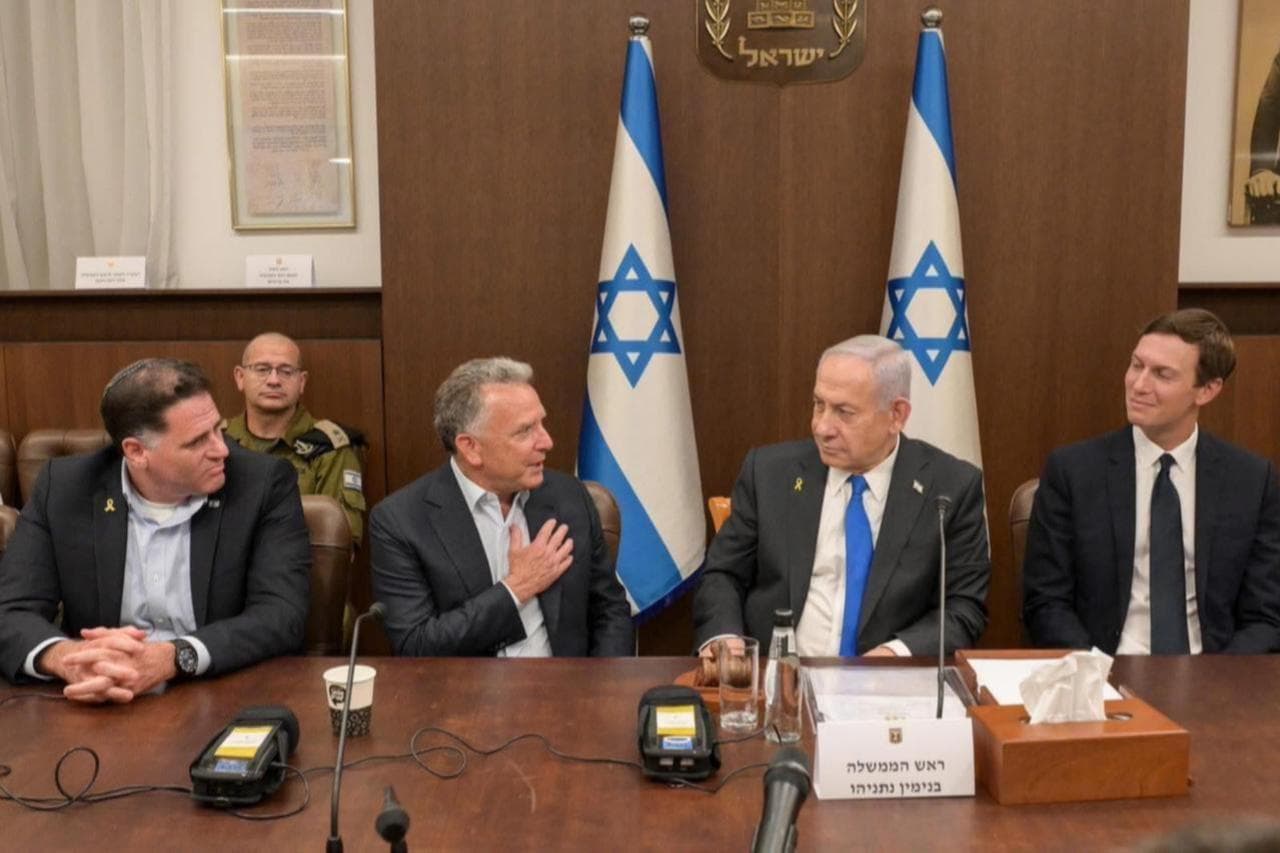
Jerusalem (The Palestine Telegraph Newspaper) February 3, 2026 – US Special Envoy Steve Witkoff was scheduled to meet Israeli Prime Minister Benjamin Netanyahu on Tuesday as Washington and Tehran prepare to resume talks over Iran’s nuclear programme in Turkey later this week, according to Israeli and US officials. The meeting in Jerusalem, expected to include Israel’s military chief and other senior security officials, comes amid heightened tensions between Iran and the United States following a build-up of US military assets in the region and public warnings from President Donald Trump about potential military action if diplomacy fails.
Iranian officials say Trump has set conditions for the resumption of nuclear talks that include a halt to uranium enrichment, limits on ballistic missiles and an end to support for regional proxies, demands Tehran has long rejected as infringements of its sovereignty. Witkoff is then due to travel to Turkey, where he is expected to hold high-stakes talks with Iranian Foreign Minister Abbas Araqchi aimed at restarting negotiations and easing fears of a wider conflict.
Witkoff’s Jerusalem talks focus on Iran and regional security
US Special Envoy Steve Witkoff was expected to arrive in Israel on Tuesday for talks with Netanyahu and senior Israeli security officials, two Israeli officials told international media. The visit was due to begin in Jerusalem and include a meeting with Israel Defense Forces Chief of Staff Lieutenant-General Eyal Zamir, described by officials as preparatory discussions ahead of possible renewed nuclear talks with Iran.
Israeli and regional outlets have reported that Witkoff’s meetings will focus on Iran’s nuclear activities, its ballistic missile programme and its support for allied armed groups, alongside broader regional security issues. One Israeli-focused account framed the planned encounter as raising a series of unresolved questions about US intentions on the use of force. Mossad Commentary, a social media account that frequently comments on Israeli security affairs, highlighted uncertainty over Washington’s military posture, saying in an X post,
“HEADLINE WITH LOTS OF UNASWERED QUESTION Netanyahu to meet Witkoff amid report Trump ‘really doesn’t want to’ strike Iran.”
Reports say Witkoff’s visit follows recent contacts between Israeli and US security officials, including a meeting in Washington between Zamir and US General Dan Caine, which Israeli officials described as part of preparations for possible renewed dialogue with Tehran. Israel has long opposed arrangements that would allow Iran to retain uranium enrichment capabilities and has repeatedly pressed for more stringent constraints on Tehran’s nuclear and regional activities.
Renewed US–Iran nuclear talks planned in Turkey
The Jerusalem talks are taking place days before planned US–Iran discussions on Iran’s nuclear programme, expected to be held in Turkey later this week, according to Iranian and Western officials. Witkoff and Iranian Foreign Minister Abbas Araqchi are expected to meet in Istanbul to explore whether the sides can establish a framework for renewed negotiations, several outlets reported, citing diplomatic sources.
Officials from Iran told international media that President Trump has set three core conditions for resuming negotiations: a complete halt to uranium enrichment in Iran, restrictions on Tehran’s ballistic missile programme and an end to its support for regional proxy groups. These demands broadly align with publicly stated Israeli positions, which call for removing enriched uranium from Iran, halting enrichment and curbing Iran’s regional military footprint.
Iran has repeatedly stated that such conditions would violate what it regards as its sovereign rights and obligations under international agreements. At the same time, Iranian officials cited in reports have indicated that the missile programme, rather than enrichment alone, represents a major sticking point for Tehran in any revived talks. Coverage in regional and international media suggests that the timing and exact format of the Istanbul meeting could still be subject to change, with one source quoted as describing the current plans as a “best-case scenario” pending final confirmation.
Heightened tensions and military build-up in the region
The diplomatic moves come amid heightened tensions between Tehran and Washington, with the United States increasing its military presence in the Middle East while sharpening rhetoric over Iran’s nuclear and regional activities. Reports say US warships, including an aircraft carrier, have been deployed near Iran, enhancing Trump’s capacity to order military action if he decides to do so.

President Trump has issued public warnings of unspecified “bad things” if no agreement is reached with Iran and has threatened intervention in response to both Iran’s nuclear advances and its domestic crackdown on protests. Iranian officials have responded with their own warnings of retaliation against the United States and Israel in the event of any attack, according to Iranian and international outlets.
Rights groups and witnesses cited by news organisations say Iranian security forces used lethal force to suppress anti-government demonstrations last month, in what has been described as the deadliest domestic unrest since the 1979 revolution. Iranian authorities have blamed the violence on “armed terrorists” and foreign adversaries, including the United States and Israel, allegations that Western governments have rejected. This volatile backdrop has intensified concern that any miscalculation could escalate into broader confrontation even as diplomatic channels are being explored.
Israeli concerns over Iran’s nuclear and missile programmes
Israeli leaders have consistently voiced alarm over Iran’s nuclear programme, arguing that continued enrichment and the development of long-range missiles present a significant regional security challenge. Media reports say the government in Jerusalem has sought to ensure that any new nuclear understanding addresses uranium stockpiles, enrichment levels and delivery systems, as well as Iran’s support for armed groups in neighboring countries.
Commentary from analysts and activists online has reflected these concerns. Providing a view of how some observers interpret the high-level meeting in Jerusalem, Liza Rosen, who has written frequently on Iran and regional politics, framed the talks as a sign of intensified pressure on Tehran. Liza Rosen said in an X post,
“Iran’s rulers are panicking.
Prime Minister Benjamin Netanyahu is meeting in Jerusalem with U.S. envoy Steve Witkoff, alongside the heads of Israel’s security services.This is not a routine briefing. Netanyahu is expected to push Washington toward a hard, uncompromising line.When security chiefs join the table, decisions are no longer theoretical. Tehran understands exactly what that means.”
Reports from regional outlets state that senior Israeli security officials have engaged in multiple rounds of discussions with their US counterparts in recent weeks, both in Israel and in Washington, to coordinate positions ahead of any US–Iran talks. According to these accounts, Israel has reiterated its longstanding position that Iran should not be allowed to maintain substantial enrichment capabilities and has urged close monitoring and robust enforcement mechanisms in any future agreement.
Parallel discussions on Gaza and broader regional issues
Witkoff’s visit to Israel is also linked to wider US efforts to address other regional crises, including the ongoing conflict in Gaza. Earlier in January, a US delegation led by Witkoff met Netanyahu in Jerusalem to discuss implementation of what US officials described as the second phase of President Trump’s 20-point plan for Gaza, according to Israeli and regional media.
In that earlier meeting, Witkoff said the United States and Israel were working together “in close partnership” on Gaza and regional issues, focusing on ceasefire implementation and humanitarian arrangements, according to a statement reported in Israeli media. Current coverage indicates that Gaza, hostage issues and border arrangements remain part of Witkoff’s agenda alongside Iran during his latest trip.
Broadcaster reports from Israel note that Witkoff’s meetings with Netanyahu, Zamir and Mossad chief David Barnea are intended to coordinate Israel’s “red lines” before he meets Araqchi in Turkey. At the same time, developments in Gaza, including crossing arrangements and the role of international actors, continue to be closely linked to wider regional diplomacy in which Washington plays a central role.
International reactions and diplomatic expectations
International coverage suggests that many governments see the planned meeting in Turkey as a key test of whether Washington and Tehran can rebuild even a limited framework for dialogue amid persistent mistrust. Diplomats quoted in these reports have described the timetable as tight and stressed that dates and venues for talks could still shift, reflecting the fragility of the process.
A US official cited by major news agencies said Trump wants to “hear what they have to say” and continues to urge Iran to “make a deal”, framing the prospective talks as an opportunity to assess Tehran’s willingness to accept stricter constraints. Iranian media, meanwhile, have highlighted Tehran’s insistence that any agreement must recognise its rights under international law, particularly in relation to civilian nuclear energy and self-defence.
Governments across Europe and the Middle East are reported to be monitoring both the Jerusalem meetings and the prospective Istanbul talks, amid concern that diplomatic failure could fuel further instability. Analysts quoted in various outlets say current efforts by the United States and its partners are focused on maintaining communication channels, clarifying red lines and reducing the risk that heightened military activity in the region might trigger unintended escalation.
Background to the long-running dispute over Iran’s nuclear programme
The present diplomatic push follows years of tensions between Iran and Western powers over the scope and transparency of Tehran’s nuclear activities. Previous agreements, designed to limit enrichment levels and stockpiles in exchange for sanctions relief, were undermined by political changes and reciprocal allegations of non-compliance, leading to the collapse or partial suspension of the deal architecture.

Israel has consistently opposed arrangements that it believes leave Iran with significant nuclear capabilities, arguing that even restricted enrichment shortens the time needed to accumulate weapons-grade material. Israeli officials have also frequently cited Iran’s ballistic missile development and support for armed groups in Lebanon, Syria, Iraq and Yemen as core concerns that they say must be addressed in parallel with nuclear restrictions.
For its part, Iran has maintained that its nuclear programme is for peaceful purposes and that it is entitled to pursue civilian nuclear energy under the Nuclear Non-Proliferation Treaty. Tehran has rejected demands that it sees as going beyond those treaty obligations, particularly on enrichment and missile issues, while signalling conditional openness to talks that provide sanctions relief and formal recognition of its rights.
Witkoff’s role in the current initiative builds on his previous involvement in back-channel and formal contacts over Iran’s nuclear programme, including meetings in Oman and Europe before talks were suspended following Israeli strikes in 2025, according to publicly available biographical and news records. The latest round of meetings in Jerusalem and the planned encounter in Turkey place him once again at the centre of efforts to navigate one of the region’s most enduring security disputes.