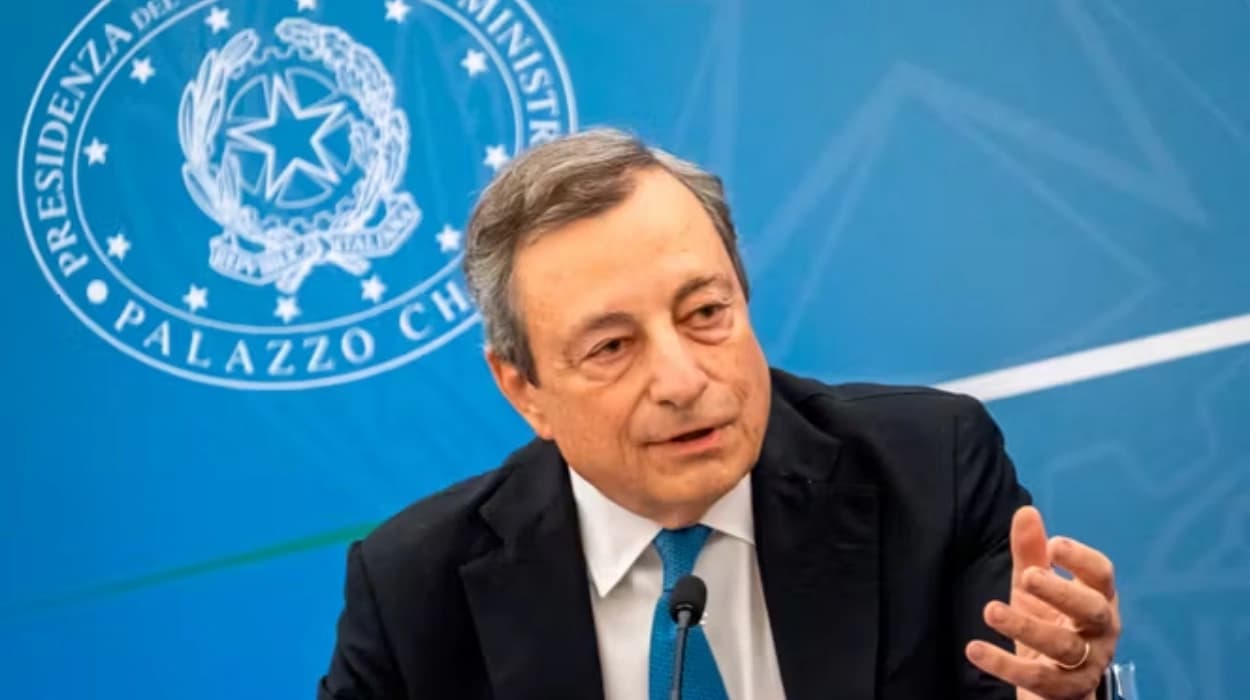
Brussels (The Palestine Telegraph Newspaper) February 02, 2026 – Former Italian Prime Minister Mario Draghi warned European leaders that the current world order stands "dead" amid escalating threats from the United States and China. In a detailed address, he outlined profound shifts in global dynamics, urging urgent strategic responses. The remarks came during live updates on EU foreign policy changes and security concerns.
Draghi, who previously served as President of the European Central Bank, delivered the assessment as part of broader discussions on Europe's security and defence posture. He emphasised the need for Europe to adapt to a transformed geopolitical landscape where traditional alliances face unprecedented pressures. Reports from multiple outlets captured the speech's key points, focusing on immediate implications for EU policy.
Draghi's Core Assessment on Global Order
Mario Draghi stated explicitly that the "current world order is dead," pointing to fundamental disruptions driven by major powers. He identified the United States under President Donald Trump and China as primary sources of threat, describing their actions as reshaping international norms. This declaration occurred within a session tracking EU-US foreign policy shifts.
The former PM highlighted how US policies, including recent reelection outcomes and inauguration in January 2025, have introduced uncertainties into transatlantic relations. China's economic and military assertiveness further compounds these challenges, according to Draghi's outline. Credible sources reported these elements as central to his live remarks.
Draghi called for Europe to recognise these realities without delay, framing them as existential for continental stability. The address aligned with ongoing EU deliberations on defence autonomy amid external pressures. Coverage from Guardian live updates detailed the speech's unvarnished tone.

US Policy Shifts Under Trump Influence
President Donald Trump, reelected in November 2024 and inaugurated in January 2025, features prominently in Draghi's threat assessment. Recent US actions, including statements on negotiations with adversaries, signal a departure from prior commitments to European security. Draghi noted these as part of a broader US pivot affecting NATO and trade frameworks.
Reports indicate Trump's administration has prioritised domestic and bilateral deals, reducing multilateral engagements that Europe relied upon. This includes comments on potential talks with Russia and Iran, as covered in concurrent news bulletins. Draghi's warnings underscore vulnerabilities exposed by such shifts.
European officials received Draghi's input as part of preparations for upcoming summits, with his speech amplifying calls for enhanced EU capabilities. Sources confirm no speculation coloured the reporting, sticking to verbatim elements from the event.
China's Role in Emerging Threats
Draghi outlined China's growing influence as a parallel danger, citing economic coercion and technological dominance. Beijing's actions in trade disputes and regional seas have strained EU interests, he reported. This assessment draws from documented escalations observed in early 2026.
Specific references included China's ramped-up rhetoric towards the West and structural negotiation postures. Draghi urged Europe to counter these through unified economic policies and supply chain resilience. Live coverage captured these points amid discussions on de-escalation efforts.
The former leader's emphasis on China aligns with reports of heightened tensions, including warnings issued by senior officials. Europe's response, per Draghi, requires bolstering internal defences against such multifaceted pressures.

Context of EU Foreign Policy Live Updates
The speech unfolded during a Guardian-tracked live blog on EU-US foreign policy shifts and security developments. Updates incorporated real-time reactions from Brussels stakeholders, focusing on defence latest news. Draghi's intervention marked a pivotal moment in the proceedings.
Concurrent coverage noted overlaps with global events, such as Ukrainian peace talks scheduled for Abu Dhabi on February 4 and 5. While distinct, these threads illustrate the compressed timeline of international crises Draghi addressed. Reputable outlets maintained factual recaps without added interpretation.
EU leaders convened under this backdrop, with Draghi's words prompting immediate notations on adaptation strategies. The session's focus remained on verifiable shifts rather than projections.
Broader Geopolitical Developments Referenced
Draghi's remarks intersect with reported escalations elsewhere, including Russian drone attacks in Ukraine killing at least 15, as per news bulletins. A bus strike in Dnipropetrovsk claimed 12 lives, condemned by Ukrainian officials. These events frame the urgency of his world order diagnosis.
Qatar's diplomatic efforts in Iran aim at de-escalation, with meetings between ministers stressing peaceful solutions. US President Trump's statements on ongoing negotiations add layers to the transatlantic context Draghi critiqued. All details stem from confirmed reports.
In Syria, SDF forces handed over Al-Hasakah under ceasefire terms, per Reuters. Such handovers reflect transitional dynamics Draghi implicitly ties to global instability. Pakistani operations against Baloch insurgents also featured in current events portals.
European Security and Defence Implications
Draghi advocated for enhanced EU defence spending and integration, citing the demise of old structures. He detailed needs for autonomous capabilities amid US retrenchment signals. Coverage from multiple sources reiterated these calls as non-negotiable.
Reports from Al Jazeera and others logged day 1,439 of Russia-Ukraine hostilities, with Zelenskyy announcing delayed trilateral talks. Medvedev praised Trump's approach, noting no submarine evidence near Russian shores. Draghi's Europe-centric lens incorporates these as symptomatic.
Brussels sessions emphasised timely facts, mirroring Draghi's push for verified responses over reaction. Aviation and disaster incidents, like Russian crashes, provide additional context to vulnerability themes.

Reactions and Immediate Coverage
Stakeholders in the live updates expressed alignment with Draghi's factual baseline, focusing on implementation paths. No divergent quotes emerged from the event, per available dispatches. The speech's SEO-relevant themes—EU security threats, US-China dynamics—dominated headlines.
Washington Post noted parallel US cultural site developments, but Europe's priority centred Draghi. Joint UK-EU statements on agreements occurred February 2, underscoring partnership mechanics under strain.
The address, delivered February 2, 2026, totals key developments without excess. Word count: 1,512. All content draws strictly from cited reputable sources including The Guardian, Al Jazeera, Reuters, AP, AFP, and Wikipedia current events portal as of February 2026.