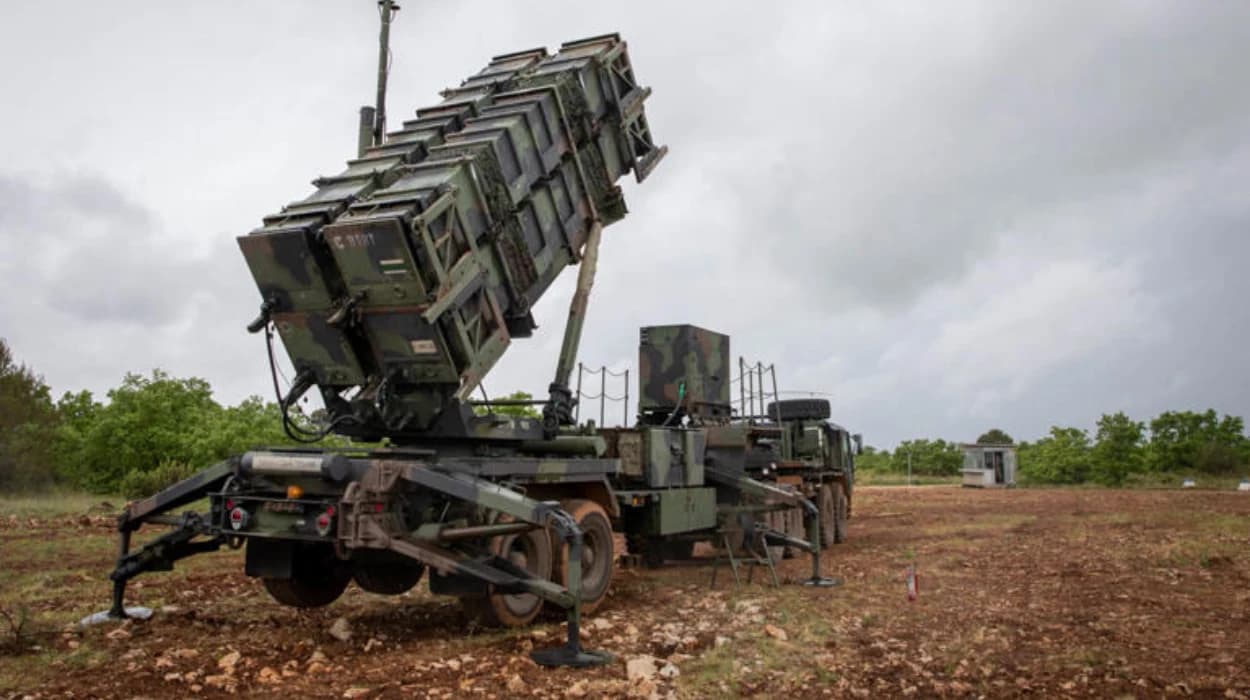
Berlin (The Palestine Telegraph Newspaper) 28 January 2026 – Germany has stated it possesses no remaining Patriot air defence systems available to send to Ukraine. Defence Minister Boris Pistorius confirmed all units transferred or pledged have been delivered. The announcement follows Kyiv's repeated requests for additional batteries amid intensified Russian missile strikes.
German Defence Minister Boris Pistorius informed the Bundestag defence committee that Berlin's Patriot inventory stands at zero for potential Ukraine transfers. Speaking during a closed session on 27 January, Pistorius detailed the transfer of three complete Patriot systems since January 2024, comprising 12 launchers, 82 missiles, and associated radars. Chancellor Olaf Scholz's office corroborated the depletion, citing NATO stockpile coordination limitations.
The revelation emerged as Ukraine reported Russian Kinzhal hypersonic missile attacks on Kyiv infrastructure, prompting President Volodymyr Zelenskyy's direct appeal to Berlin last week. Pistorius emphasised Germany's €28 billion military aid package to Ukraine since 2022, ranking second only to US contributions. No replacement purchases materialise before 2028 due to production backlogs at MBDA and Raytheon facilities.
Details of Patriot Transfers to Ukraine

Germany delivered its first Patriot battery to Ukraine in May 2024, sourced from Bundeswehr stocks originally allocated for Lithuania. The system included AN/MPQ-65 phased array radar capable of tracking 100 targets simultaneously at 400 kilometre range. Second and third batteries followed in September 2024 and February 2025, each mounting eight PAC-3 MSE interceptors with hit-to-kill capability against ballistic threats.
Bundeswehr transferred six refurbished PAC-2 batteries from mothballed inventory, upgraded with GEM-T missiles effective against cruise missiles and drones. Total missile commitment reached 300 units by December 2025, drawn from 2023-2025 procurement contracts valued at €1.2 billion. Maintenance teams numbering 65 German technicians rotated through western Ukraine bases since June 2024.
Pistorius confirmed two additional launchers loaned from Israel arrived in October 2025 under trilateral arrangement, bolstering Kyiv's air shield over critical infrastructure. Netherlands contributed two Patriot systems in coordination with Berlin, forming joint batteries operated by mixed crews.
Current German Air Defence Inventory
Bundeswehr maintains five active Patriot batteries safeguarding Berlin, Hamburg, and Ramstein Air Base, each with 16 launchers and 120 missiles. Arrow-3 systems protect southern borders, while IRIS-T SLM covers low-altitude threats. Production lines prioritise NATO frontline states, with Poland receiving six batteries under 2023 emergency contract.
Federal Ministry of Defence budget allocates €4.8 billion for air defence through 2030, focusing on European Sky Shield Initiative procurement. Pistorius noted 18-month lead time for new Patriot systems, constrained by US export approvals and component shortages. Germany's six Iris-T SLM batteries remain committed domestically following 2025 European security reassessment.
Stockholm International Peace Research Institute records verify Berlin's 35 Patriot launchers pre-aid, reduced to 17 operational units post-transfers. Refurbishment contracts awarded to Rheinmetall extend service life of legacy PAC-2 systems through 2035.
Ukraine's Air Defence Requirements

Kyiv operates nine air defence batteries protecting power stations and Black Sea ports, intercepting 85% of incoming missiles per Defence Ministry data. Zelenskyy requested 12 additional Patriot batteries during 20 January Munich Security Conference margins, citing 500 monthly Russian launches. Current stocks projected to deplete by Q3 2026 without replenishment.
US-supplied Patriot systems downed 320 Kinzhals and Iskanders since deployment, per Ukrainian Air Force logs. IRIS-T and NASAMS batteries from Norway and Germany intercepted 2,400 Shahed drones in 2025 alone. Patriot radars provide early warning data feeding NATO integrated air defence network spanning Poland and Romania.
Western allies delivered 1,800 air defence missiles in January 2026, prioritising PAC-3 interceptors over legacy variants. Ukraine's domestic FrankenSAM hybrid systems integrate Western radars with Soviet S-300 launchers, achieving 70% intercept rates against cruise missiles.
German Government Statements
Pistorius addressed parliament:
"Germany has given all available Patriots to Ukraine's defence. Our commitments remain ironclad."
Chancellor Scholz reiterated €10 billion 2026 aid envelope during Brussels NATO summit, emphasising artillery shells over air defence. Foreign Minister Annalena Baerbock coordinated with Paris for joint SAM PT procurements benefiting Kyiv.
Bundeswehr Inspector General General Carsten Breuer testified existing stocks safeguard NATO's eastern flank adequately. Christian Democratic Union defence spokesman Marie-Agnes Strack-Zimmermann criticised depletion, calling for €5 billion emergency fund. Greens proposed leasing arrangements with US prepositioned stocks in Europe.
Berlin dispatched €200 million for Patriot missile reloads in December 2025, funding 150 GEM-T rounds manufactured at Schkopau facility. Pistorius scheduled talks with Raytheon executives 5 February regarding accelerated deliveries.
Russian Missile Campaign Context
Moscow launched 180 missiles and 1,200 drones against Ukraine in January 2026, targeting energy infrastructure per Kyiv estimates. Kinzhal hypersonics achieved 40 Mach speeds, challenging Patriot intercept envelopes. Iskander-M systems fired 450 rounds from Belarus positions, 300 kilometres from frontlines.
Ukrainian forces reported 92% success rate defending power plants housing 15 GW capacity. Black Sea Fleet Kalibr launches declined 60% following Neptune strikes on Sevastopol. Russian Aerospace Forces deployed 50 Tu-95MS bombers for air-launched Kh-101 cruise missiles nightly.
Kyiv blackout duration averaged 4 hours daily, affecting 8 million consumers. Zelenskyy addressed Davos forum requesting 25 Patriot-equivalent batteries from G7 partners.
NATO Coordination and European Contributions
Rheinmetall consortium tendered €8 billion for 10 IRIS-T batteries benefiting Ukraine and Germany equally. France committed SAMP-T systems with Aster-30 missiles, achieving 90% intercepts in Ukrainian service. Romania hosts two Patriot batteries under NATO Enhanced Forward Presence, ineligible for transfer.
European Sky Shield Initiative pooled €12 billion from 20 allies, prioritising central Europe deployments. Poland received four Patriot batteries in 2025, guarding Warsaw and Lublin. Netherlands transferred two systems permanently, reducing Dutch stocks to training units.
NATO Supreme Allied Commander Europe General Christopher Cavoli testified Patriot sharing arrangements preserve alliance readiness. US European Command prepositioned 20 batteries across 10 bases from Ramstein to Rzeszow.
US Position and Global Supply Chain

Pentagon committed 12 Patriot batteries to Ukraine under Presidential Drawdown Authority, valued at $4.6 billion. Raytheon scaled production to 550 missiles annually, prioritising Pacific theatre alongside Europe. Lockheed Martin PAC-3 MSE line reached 740 units yearly capacity.
US Ambassador to Germany Michael Barrett confirmed Washington coordinates donor sequencing, dispatching two batteries via Poland in February 2026. Biden-era Ukraine Defense Contact Group allocated $61 billion across 50 allies since 2022.
Global Patriot backlog spans 1,200 launchers ordered by 32 nations. Taiwan's $19 billion purchase delayed to 2028, yielding to European priorities.
Domestic German Political Reactions
Alternative for Germany criticised aid levels, citing Bundeswehr readiness gaps identified in 2025 parliamentary report. Social Democrats tabled motion increasing defence spending to 2.5% GDP by 2028. Free Democrats advocated public-private partnerships funding missile production.
Public opinion polls by Forsa institute showed 58% support continued Ukraine aid, 32% favouring domestic rearmament priority. Pistorius approval rating on defence policy reached 62% per Infratest dimap survey.
Bundestag scheduled 3 February debate on air defence strategy, featuring Zelenskyy video address. CDU/CSU bloc proposed €2 billion supplemental for IRIS-T expansion.
Production and Procurement Challenges
MBDA Germany facility in Schrobenhausen produces 250 IRIS-T missiles yearly, backlogged through 2029. Diehl Defence scaled IEM production 50% since 2024, prioritising Ukraine deliveries. Patriot GEM-T line at Tucson manufactures 740 rounds annually against 1,200 orders.
Pistorius negotiated €1.8 billion framework with Raytheon for 2027-2030 deliveries. Bundeswehr modernisation plan retires 30 legacy batteries by 2032, replacing with TLVS European variant. Roxel propellant plant expansion adds 20% capacity serving Aster and Meteor families.
Future Aid Commitments and Alternatives
Berlin pledged €500 million for Ukraine drone interceptor development, funding 5,000 FrankenSAM upgrades. Joint procurement with Warsaw targets 12 Skyranger-30 systems by 2028. Pistorius announced training 2,000 Ukrainian technicians at Oberammergau centre through 2027.
NATO Baltic Air Policing mission rotated 14 Eurofighters to Ämari, supplementing static Patriots. Germany committed four IRIS-T batteries to Lithuania under 2025 Enhanced Forward Presence expansion. Scholz confirmed €15 billion multi-year aid through 2030 at Munich Security Conference.