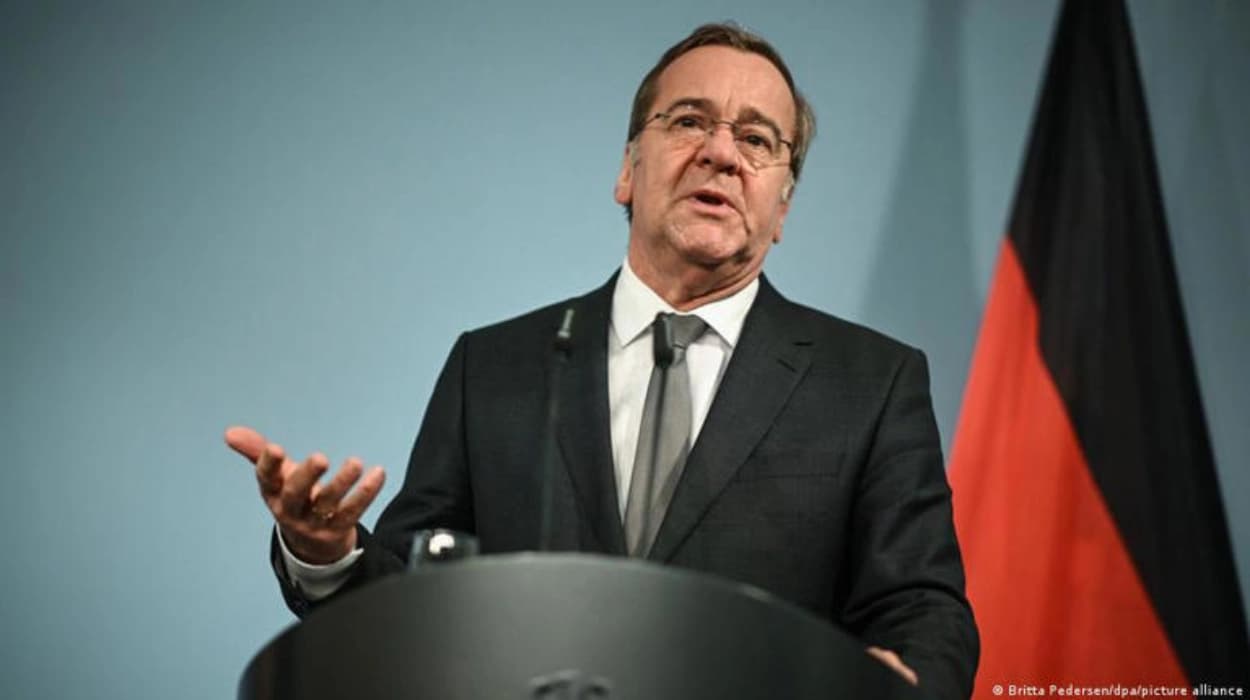
Berlin (The Palestine Telegraph Newspaper) January 31, 2026 – German Defence Minister Boris Pistorius has stated that the United States needs Europe just as much as Europe needs the United States, underscoring the importance of transatlantic defence cooperation. He made the remarks in the context of ongoing debates about European defence spending, NATO commitments and security challenges on the continent. Separately, new research figures in Germany indicate that about one in two people in the country will develop cancer at some point in their lives. The findings are prompting renewed attention to early detection, prevention and healthcare planning.
Pistorius’s comments reflect Berlin’s efforts to highlight Europe’s role as a security partner rather than a security consumer, while German health authorities and research centres are assessing how projected cancer incidence will affect hospital capacity and long-term care resources. Both developments come as Germany continues to balance its defence obligations with domestic social and health priorities.
Pistorius Highlights Mutual Security Reliance in Transatlantic Alliance

German Defence Minister Boris Pistorius has emphasised that the security relationship between Europe and the United States is one of mutual dependence, arguing that Washington benefits from strong European allies just as Europe relies on US capabilities. He made the point in recent interviews and public appearances in Germany, where questions about the future of US engagement in Europe and burden-sharing within NATO have featured prominently.
Pistorius has repeatedly argued that European countries, including Germany, must do more to meet defence spending commitments while also underlining that American security interests are closely tied to stability on the European continent. The minister has said that Europe provides key strategic depth, bases and political support for US operations, and that this cooperation strengthens both sides.
His remarks form part of a wider German government message that seeks to reassure domestic and international audiences about Berlin’s commitment to NATO’s collective defence clause, while also signalling that Europe intends to be a more capable and credible partner.
Debate Over Defence Spending and Strategic Autonomy
Pistorius’s comments come amid ongoing debate in Germany and across the European Union about defence budgets and strategic autonomy. Since Russia’s full-scale invasion of Ukraine in 2022, Berlin has launched a special defence fund and pledged to meet NATO’s target of spending at least 2 percent of gross domestic product on defence.
Government figures and parliamentary reports have tracked increases in German defence outlays, including investments in new equipment, infrastructure and personnel. At the same time, officials have acknowledged that procurement processes and industrial capacity will determine how quickly these funds translate into operational capabilities.
Discussions within the EU have also focused on developing more coordinated European defence initiatives, including joint procurement, improved interoperability and support for Ukraine. However, leaders have generally framed these efforts as complementary to, rather than a substitute for, the transatlantic alliance, consistent with Pistorius’s assertion that the United States and Europe remain interdependent.
US-German Relations and NATO Commitments

In recent months, German and US officials have held regular consultations on NATO planning, support for Ukraine and broader security issues. Joint statements have typically reaffirmed the importance of NATO as the cornerstone of European and transatlantic security and have highlighted specific areas of cooperation, such as air and missile defence, logistics and training.
Germany hosts significant US military infrastructure, including command facilities and logistics hubs that support operations in Europe, the Middle East and Africa. American officials have noted that these assets are central to US global posture, while German authorities frequently cite them as evidence of the close security partnership.
Pistorius’s assertion that “the US needs Europe just as much as Europe needs the US” fits within this context, reinforcing the message that both sides derive tangible strategic benefits from the alliance and that neither can easily replicate the other’s role.
New Cancer Research Data Shows High Lifetime Risk in Germany
Alongside defence and security developments, new research figures in Germany indicate that about one in two people in the country will develop cancer at some point during their lifetime. The data, drawn from national cancer registries and epidemiological studies, reflect trends seen in other high-income countries with ageing populations.
German health researchers and institutions report that improvements in life expectancy and better detection contribute to higher recorded incidence, even as outcomes for many cancer types have improved due to advances in treatment and early diagnosis. The figures underscore the importance of sustained investment in cancer screening, prevention programmes and oncology services.
Health authorities have highlighted that certain cancers remain particularly common, including breast, prostate, colorectal and lung cancers. Public health campaigns in Germany continue to focus on modifiable risk factors such as smoking, diet, physical activity and participation in screening programmes.
Implications for Healthcare Capacity and Policy Planning
The expectation that roughly half the population may be diagnosed with cancer at some point places significant demands on Germany’s healthcare system. Hospitals, specialised oncology centres and outpatient clinics must plan for sufficient capacity in terms of staffing, equipment and facilities to manage both treatment and follow-up care.
Policy documents and planning papers from German health ministries and research institutes have emphasised the need for integrated cancer care pathways that combine prevention, early detection, timely treatment and rehabilitation. There is growing attention to regional disparities in access to specialised care and clinical trials, prompting calls for more uniform standards across federal states.
The projected burden of cancer also features in broader discussions about healthcare financing, insurance coverage and support for patients and families. As the population ages, policymakers are examining how to ensure sustainable funding while maintaining high-quality care.
Research and Innovation in German Oncology
Germany hosts several major cancer research centres and participates in European and international research collaborations aimed at improving understanding of cancer biology and developing new treatments. Recent initiatives include efforts to expand personalised medicine approaches, whereby treatments are tailored to the genetic and molecular characteristics of individual tumours.
German researchers contribute to clinical trials across a range of cancer types, testing new drugs, immunotherapies and combination regimens. Data from national and European cancer registries support studies on survival trends, treatment effectiveness and long-term side effects.
The publication of updated lifetime risk figures has prompted renewed discussion of research priorities, including the need to address cancers with poorer prognoses and to reduce inequalities in outcomes between different patient groups.
Public Health Campaigns and Early Detection Efforts
Public health agencies in Germany continue to promote participation in established cancer screening programmes, including mammography for breast cancer, colonoscopy or stool tests for colorectal cancer and cervical cancer screening. Uptake rates have varied by region and demographic group, leading authorities to explore targeted outreach and information strategies.
Campaigns also emphasise the importance of recognising early symptoms and seeking timely medical advice, as earlier-stage detection generally improves prognosis. In parallel, anti-smoking initiatives and measures to reduce environmental and occupational exposures form part of broader cancer prevention strategies.
The new research figures indicating that one in two Germans may develop cancer at some point have been used to reinforce messages about the value of prevention and early diagnosis, alongside ongoing improvements in treatment options.
Balancing Security Priorities and Social Challenges
Germany’s dual focus on strengthening defence commitments and addressing long-term health challenges illustrates the range of policy issues currently facing the federal government. On the one hand, officials such as Defence Minister Pistorius are seeking to reassure allies and the domestic public about Germany’s role in European security and the transatlantic alliance.
On the other, health authorities and researchers are planning for the significant and growing impact of cancer on individuals, families and the healthcare system.
Both areas involve substantial financial commitments and long-term planning horizons, with debates over budget allocations, institutional reforms and international cooperation likely to continue. The latest statements from Pistorius and the newly published cancer data provide a snapshot of how Germany is positioning itself in relation to external security responsibilities and internal social and health needs.