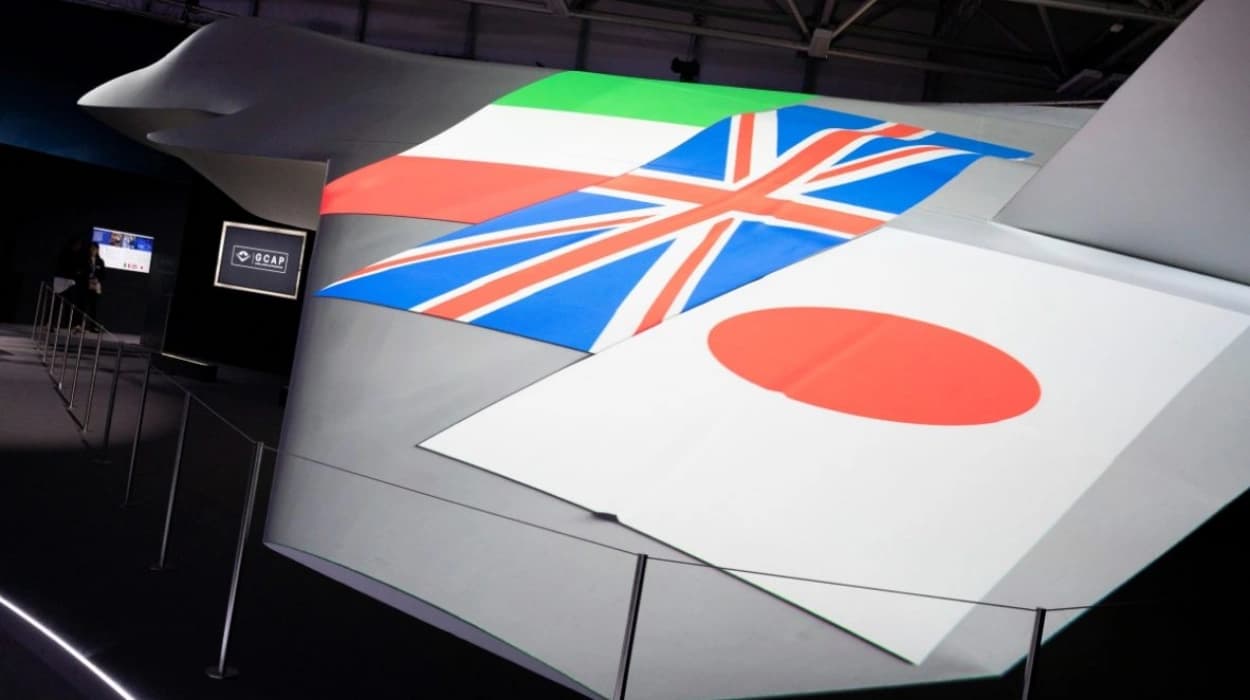
Italy defence minister said Germany and Australia could join the next-generation GCAP fighter jet program, signalling expanding international cooperation.
Discussions regarding alternative projects and possibilities have taken center stage in Germany as the €100 billion Future Combat Air System (FCAS) is on the verge of failure owing to a conflict between the French and German industries.
The UK, Italy, and Japan are involved in a competing initiative to create a sixth-generation fighter jet system known as GCAP.
"Germany could possibly join this project in the future,"
according to Crosetto, and "Australia could also be interested."
A disagreement between France and Germany's aviation behemoths has caused the French-German-Spanish FCAS project to stop. The top contractors, France's Dassault and Germany's Airbus Defence, have made their differences public.
Prior to working together on the Eurofighter with Italy and the UK, Germany and Spain are now engaged in competing projects that will compete for the same future market sector.
“The more countries participate, the greater the critical mass in which to invest, the more bright minds can be brought together, the higher the economic return and the lower the costs for us,”
Crosetto said.
What kind of collaboration and transparency the founding members of GCAP would anticipate is still up for debate. Experts previously concurred that Germany and others would have limited industrial returns and minimal impact if they joined GCAP at this point.
According to Crosetto, the three GCAP members are negotiating terms that would allow other nations to participate in the initiative.
According to Bloomberg, the future of FCAS will be decided by the defense ministers of Germany, France, and Spain on December 11. This is because German Chancellor Friedrich Merz and French President Emmanuel Macron want a position on the issue before the next EU meeting on December 18.
How would Germany joining GCAP affect European defence collaboration?
Germany joining the Global Combat Air Programme( GCAP) led by the UK, Italy, and Japan would scrap Europe's core Franco- German defence collaboration, potentially undermining common systems like FCAS and the Main Ground Combat System( MGCS) tank program due to simulated trust and workshare controversies.
A German shift from FCAS to GCAP could signal the end of the €100 billion FCAS action, as France views it as a treason amid ongoing Airbus- Dassault dissensions over intellectual property and leadership, leading to reduced amenability for unborn bilateral cooperation. This move might complicate divergences on energy, air defence, and arms exports, weakening thepost-Brexit vision of unified European strategic autonomy.
While GCAP expansion could enhance interoperability via participating norms between programmes, it risks dividing Europe's limited coffers across two contending sixth- generation fighters, complicating NATO alignment and artificial connection.