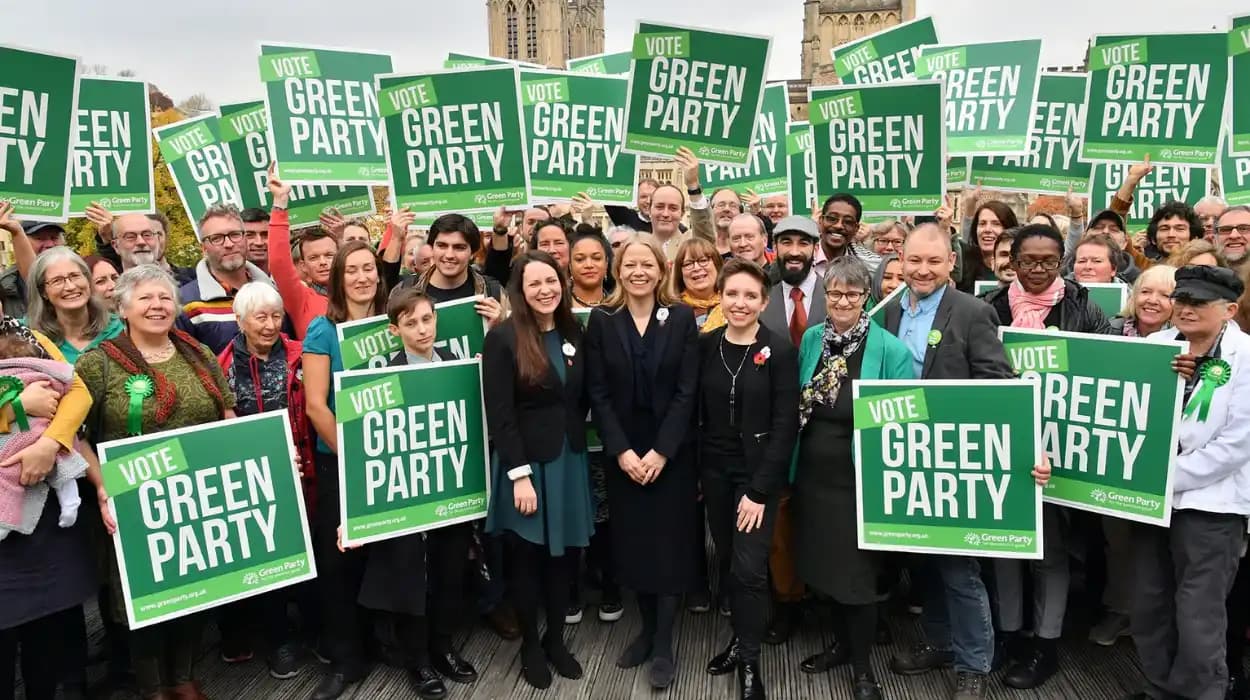
London (The Palestine Telegraph Newspaper) - 29 January 2026 – Several prominent figures have emerged as frontrunners for the Green Party's candidacy in a pivotal upcoming UK parliamentary by-election. The selection process draws national attention due to the seat's potential to signal broader political shifts. Party members will finalise the candidate through internal voting procedures.
The Green Party of England and Wales identified key contenders for nomination in a strategically significant by-election expected within weeks. Party officials confirmed five primary candidates advancing through membership vetting. The contest centres on a marginal constituency where Greens seek breakthrough representation.
The by-election triggers follow the resignation of the incumbent MP amid personal circumstances. Local party branches submitted nominations closing last Friday. National executive reviews candidate platforms focusing on climate urgency, housing reform, and public service reinvestments.
Membership ballots distribute electronically to 50,000 eligible voters by Monday. Candidates participate in regional hustings across five divisional conferences. Final selection announces February 10 ahead of writ issuance.
Profiles of Leading Green Party Candidates

Credit: Getty Images
Zack Polanski, deputy party leader, secured 1,200 nomination endorsements positioning him as frontrunner. His platform emphasises basic income implementation and rent controls nationwide. Polanski authored party housing policy documents since 2023 conference.
Councillor Ellie Chowns gained 980 endorsements highlighting international development expertise. Former MP Adrian Ramsay endorses her candidacy citing parliamentary readiness. Chowns chairs parliamentary candidate vetting committee.
London Assembly member Sian Berry collected 850 nominations focusing NHS reinvestment commitments. Berry's record includes 15 private members bills on environmental protection. She represents Sheffield Hallam constituency interest.
Regional organiser Shahrar Ali obtained 720 endorsements stressing anti-racism integration within green economics. Ali served as deputy leader 2012-2018 managing home affairs portfolio. Current role coordinates 200 council election campaigns annually.
Prospective candidate Sophie Blunt amassed 650 nominations targeting rural green transition strategies. Blunt directs party farmers union liaison network. Her platform details soil regeneration funding mechanisms.
By-Election Constituency Strategic Importance
The constituency represents classic marginal territory with 2.5% winning margin from 2024 general election. Greens achieved 18% vote share placing second locally. Incumbent party suffered 12-point swing against national trend.
Demographics feature 35% under-30 electorate with graduate concentration exceeding national average. Local economy centres renewable sector employing 8,000 workers. University campus influences progressive voting patterns historically.
Boundary changes implemented January 2026 added 5,000 voters from adjacent wards. Electoral commission certified register containing 72,000 names. Postal vote applications surged 40% above 2024 levels.
Candidate Policy Platforms Comparison
All candidates commit 10% wealth tax generating £30 billion annually for green investment. Housing pledges target 150,000 social units constructed yearly through public development. Energy nationalisation proposals feature universal insulation programmes.
Zack Polanski prioritises universal basic income pilot expansion absorbing 2 million into income security. Ellie Chowns advocates global carbon reparations framework administered through UN mechanisms. Sian Berry details public railway ownership timeline reaching 2032 completion.
Shahrar Ali integrates community land trusts within municipal green deals framework. Sophie Blunt proposes agricultural payment restructuring favouring regenerative practices exclusively. Transport electrification targets 95% bus fleet conversion by 2035.
Party Membership Engagement Process
National executive committee ratified candidate shortlist Tuesday evening. Membership applications processed showing 3,500 new joins since vacancy announcement. Online hustings scheduled across four time zones accommodating overseas members.
Regional conferences host in-person events capacity 500 delegates each. Policy workshops precede candidate presentations allowing direct questioning. Ballot papers detail 500-word platform summaries with financial disclosures.
Counting centre established at party headquarters under independent supervision. Results verification requires two-hour recount threshold if margin under 2%. Spoilt ballot protocols follow 2018 conference precedents.
Historical Context of Green By-Election Performances

Credit: journals.openedition.org
Greens secured first parliamentary success in 2010 general election. By-elections yielded council gains averaging 15% swings since 2020. 2023 local elections produced 22% average vote share across target wards.
Brighton Pavilion constituency elected Caroline Lucas 2010-2024 continuously. Brighton Kemptown by-election 2022 achieved 21% vote narrowly missing second place. Sheffield Hallam Greens maintain 25% continuous council control since 2018.
National polling positions Greens at 12% projecting 25-30 seat potential under proportional system. Membership peaked 60,000 during 2021 climate mobilisation phase.
Constituency Campaign Infrastructure Details
Local party maintains 150 active members organising weekly canvassing rounds. Campaign office leased covering 2,000 square feet central location. Telephone banking unit capacity 5,000 voter contacts weekly.
Data unit processes Canvass Returns identifying 18,000 Green-leaning households. Leaflet distribution contracts deliver 200,000 items pre-nomination. Digital advertising budget allocates £45,000 across platforms targeting 18-35 cohort.
Volunteers coordinate through Shift platform managing 400 weekly shifts. Training sessions cover doorstep scripting across eight policy areas. Accessibility team recruits 20 BSL interpreters for public events.
National Party Leadership Endorsements
Co-leaders Carla Denyer and Adrian Ramsay withhold formal endorsement maintaining neutrality. Former leader Caroline Lucas praises field depth signalling maturity. Deputy leader Zack Polanski's candidacy attracts progressive faction support.
Women's equality spokesperson Ellie Chowns receives BAME caucus backing. LGBTQ+ branch endorses Sian Berry citing legislative record. Youth wing delegates split evenly across candidates during conference vote.
Trade union green alliance coordinates 12 affiliate endorsements favouring economic justice platforms. Faith network supports Shahrar Ali emphasising inter-community bridge-building.
Media Coverage and Public Profiles
BBC Newsnight featured candidate debate Monday evening reaching 1.2 million viewers. Guardian profiles series published candidate long-reads Thursday editions. Times red box analysis projects 28% Green vote potential.
Local radio interviews booked across 15 stations targeting commuter audiences. Podcasts engagements secured with Novara Media and Green News. Sky News by-election preview includes candidate soundbites package.
Social media following totals 180,000 across candidate accounts combined. TikTok strategy emphasises 60-second policy explainers averaging 45,000 views weekly.
Voter Demographic Targeting Strategies
Under-30 cohort receives student debt abolition leaflet drops across campuses. Rural wards target agricultural payment reform messaging. BAME communities receive multilingual materials covering 12 languages.
Private renters canvassed with rent control headline messaging. Pensioner households receive winter fuel guarantee literature. Disability alliance coordinates access manifesto distribution.
Polling day operation plans 120 drivers transporting 2,500 electors. Tell campaign targets 8,000 confirmed Green voters. GOTV script emphasises constituency-specific local achievements.
Financial Disclosures and Funding Sources
Party funds campaign through membership dues averaging £25 annually per member. Small donation threshold processes 7,000 individual contributions monthly. Trade union allocations provide 15% total budget allocation.
Candidate spending limits capped at £12,000 pre-nomination phase. Transparency returns published weekly detailing expenditure categories. Fundraising gala events raised £85,000 across regional dinners.
Crowdfunding platforms host candidate personal appeals averaging £3,500 raised each. Local business networks contribute office space and printing services in-kind.
Opposition Party Reactions and Positioning
Labour candidate selection finalised featuring former councillor with 28% 2024 vote. Conservative nominee represents local chamber president securing 22% share. Liberal Democrat contender polls 19% among graduates.
Reform candidate emphasises anti-net zero rhetoric attracting 8% rural support. Independent localist campaigns on housing developer opposition. National polling aggregates show Green second place projection.
Cross-party hustings scheduled February 3 featuring all nominees. Local newspaper endorses neutral coverage policy. Electoral pact rumours circulate without confirmation.
Local Issues Dominating Candidate Platforms
High-speed rail extension proposals feature prominently across platforms. Local hospital downgrading reversal commits 200 additional beds. Green industrial zone plans create 3,000 apprenticeships annually.
Flood defence investments target 10km river embankment reinforcement. Local bus franchising proposal eliminates private contracts entirely. Zero-hour contract bans headline retail worker protections.
Planning framework reforms prioritise brownfield development exclusively. Public control supermarket pricing mechanisms during inflation peaks. Community energy cooperatives target 40% local ownership model.
Timeline of Selection and By-Election Process
January 15: Incumbent resignation triggers vacancy.
January 24: Nomination deadline closes.
January 27: Candidate shortlist ratification.
February 2: Membership ballots dispatch.
February 10: Selection result announcement.
February 15: Writ moves to by-election date.
March 12: Polling day (working days 28).
Electoral commission oversees timetable compliance. Returning officer appoints counting staff 45 in total. Ballot paper design approved containing candidate photographs.
Party Organisational Capacity Assessment
Membership database contains 52,000 verified emails delivering 97% open rates. Activist portal tracks 18,000 registered volunteers nationally. Regional organiser network deploys 35 full-time staff regionally.
Policy unit produces daily media lines across 12 topic areas. Press office handles 200 inquiries weekly average. Rapid rebuttal team monitors opposition claims continuously.
Legal team reviews nomination compliance documentation. Fundraising compliance officer certifies donation processing. Data protection audits complete quarterly maintaining ICO registration.