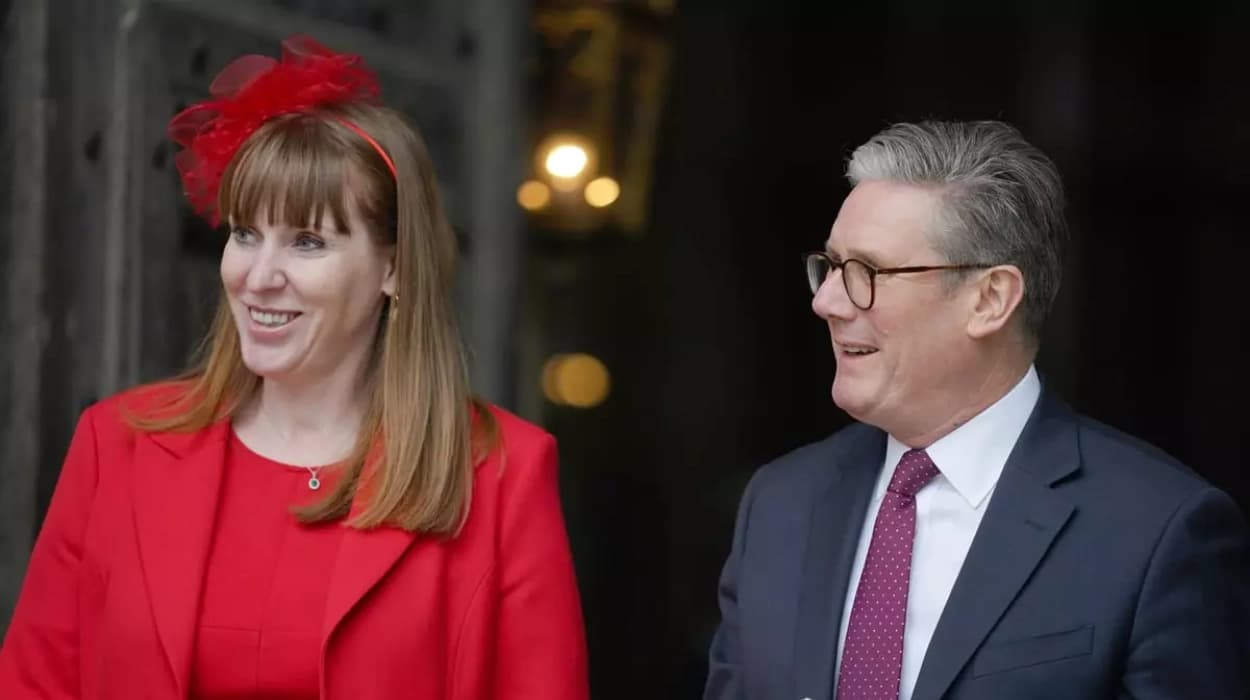
London (The Palestine Telegraph Newspaper) – February 05, 2026 – Angela Rayner, Labour's Deputy Leader, has spearheaded a significant revolt within the party against Prime Minister Keir Starmer. The conflict revolves around the delayed release of files linked to Peter Mandelson and his past associations with Jeffrey Epstein. Rayner has rallied MPs and union leaders, accusing Starmer's team of potential cover-up, intensifying internal divisions.
Labour Deputy Leader Angela Rayner has positioned herself at the forefront of a burgeoning revolt against Prime Minister Keir Starmer's leadership. The immediate trigger is the handling of sensitive documents related to Peter Mandelson, a longtime Labour strategist and close advisor to Starmer. Reports indicate Rayner's demand for immediate full disclosure of these files, which reportedly touch on Mandelson's interactions with the late Jeffrey Epstein.
Standard reporter Nicholas Cecil provided key coverage on the unfolding revolt. Nicholas Cecil said in X post,
“Angela Rayner leads Labour revolt against Keir Starmer on Mandelson files release amid ‘cover-up’ warning.”
Origins of the Mandelson Files Controversy
The dispute traces back to archival documents from Mandelson's tenure in the Blair government during the early 2000s. These files, held in party and government repositories, detail Mandelson's attendance at events hosted by Epstein, who was later convicted of sex trafficking. Labour's internal compliance reviews, initiated post-2024 election, unearthed references to these associations.
Rayner first raised concerns during a January 2026 shadow cabinet meeting, where she questioned why the files had not been proactively released. Party sources report that Starmer's office cited ongoing legal assessments under data protection regulations. Rayner's intervention prompted a wave of support from backbench MPs, particularly those from left-leaning constituencies.
The Evening Standard's reporting outlined how the files include correspondence and event logs, none of which have been publicly verified as implicating wrongdoing by Mandelson. However, their existence has fuelled demands for transparency, echoing broader calls for accountability in political circles.
Rayner's Strategic Leadership in the Revolt
As Deputy Prime Minister, Rayner oversees key domestic portfolios including employment and equalities. Her role has allowed her to leverage official channels to press for document release. She held private briefings with over 40 Labour MPs last week, where attendees voiced distrust in Starmer's handling of the matter.
Rayner's grassroots appeal, rooted in her background as a former care worker and union organiser, bolsters her position. She secured re-election in Ashton-under-Lyne in 2024 with a substantial majority, maintaining strong ties to northern voters. Union leaders from Unite and the Communication Workers Union attended her sessions, pledging organisational support.

Public sentiment within party ranks views Rayner as a counterweight to Starmer's centrist approach. Her speeches at regional conferences have repeatedly emphasised working-class priorities, contrasting with recent government fiscal policies.
Starmer's Defence and Internal Counter-Moves
Prime Minister Starmer responded during Prime Minister's Questions on February 4, 2026, affirming that all documents would undergo independent review. He described the process as standard for historical records involving third parties. Starmer avoided naming Rayner, instead highlighting the government's focus on economic recovery.
Mandelson issued a statement through intermediaries, reiterating that his Epstein encounters were limited to charitable gatherings in New York and London. He served as a Labour MP from 1992 to 2004 and later as a European Commissioner, building a network that included global elites.
Starmer's chief supporters, including Home Secretary Yvette Cooper and Chancellor Rachel Reeves, have rallied to defend the review process. No. 10 sources indicate plans for a dedicated transparency unit to handle similar future disclosures.
One commentator captured the perceived severity of Rayner's actions. Richard said in X post,
“This might actually be the straw that breaks the camel's back with Starmer, FINALLY. Rayner has just fired the first shots to replace him. She's basically said she doesn't trust Starmer to not cover more stuff up.”
Historical Ties Between Mandelson and Epstein
Jeffrey Epstein's associations with prominent figures surfaced extensively during his 2008 plea deal and 2019 arrest. Mandelson's name appeared in flight logs and event invitations, though he has consistently denied knowledge of Epstein's crimes. These links were first reported by outlets like The Times in 2019, prompting Mandelson's clarifications.
Epstein hosted philanthropy summits attended by politicians, academics, and business leaders. Mandelson participated in at least two such events in 2003 and 2005, per available records. Epstein's 2019 death by suicide in a New York jail cell ended prospects for further testimony.

Labour's post-Corbyn reforms included vetting advisors for past connections to controversial figures. Mandelson's informal advisory role to Starmer bypassed formal scrutiny until recent audits.
Union and Grassroots Backing for Rayner
Major unions have amplified Rayner's position. Unite general secretary Sharon Graham stated that Labour must lead on openness, warning against perceptions of elite protectionism. The CWU echoed this, citing member mandates for accountability.
Grassroots organisations like Momentum, though diminished since 2020, have circulated petitions supporting Rayner's transparency demands. Over 5,000 members signed an online pledge by February 4, 2026. Regional party branches in the North West and Yorkshire reported heightened activity.
Rayner's parliamentary interventions have been measured, focusing on procedural questions rather than personal attacks. She tabled a written question on advisor disclosures, receiving a holding response from the Cabinet Office.
Parliamentary and Procedural Ramifications
Labour holds 412 seats following the July 2024 election, providing Starmer with a buffer against rebellions. However, the revolt has seen 25 MPs publicly call for file publication. Whips report challenges in maintaining discipline ahead of the upcoming budget vote.
Opposition parties have seized on the row. Conservative leader Kemi Badenoch demanded an emergency Commons statement. The Liberal Democrats' Ed Davey proposed a cross-party inquiry into political-Epstein links.
Commons procedure allows select committees to summon documents. The Public Administration Committee has signalled interest in reviewing Labour's internal processes.
Rayner's Broader Political Profile
Elected Deputy Leader in April 2020, Rayner narrowly defeated candidates backed by Starmer's centrist faction. Her manifesto emphasised union rights and public ownership. As MP for Ashton-under-Lyne since 2015, she navigated Brexit divisions and the 2019 election loss.
Post-2024, Rayner assumed Deputy Prime Minister responsibilities, chairing key cabinet committees. Her handling of employment tribunals and equal pay disputes earned praise from advocacy groups.
Rayner's oratory at Labour conferences consistently draws crowds, with delegates favouring her over Starmer in preference polls. Recent surveys by YouGov show her leading Starmer by 12 points on trust among party members.
Starmer's Leadership Trajectory Under Strain
Starmer's premiership began with a landslide, securing 34 percent of the vote. Early challenges included winter fuel payment cuts and farmer protests. Approval ratings dipped to 28 percent in January 2026 polls.
Former chief of staff Morgan McSweeney departed in autumn 2025, reportedly over strategy clashes. Peter Mandelson filled the advisory vacuum, drawing on his 1997 election expertise.
Starmer's legal background as Director of Public Prosecutions informs his methodical style, but critics within Labour cite it as overly cautious.

Media Coverage and Public Discourse
BBC News and The Guardian have filed extensive reports, interviewing anonymous MPs on both sides. Sky News aired a special segment on February 4, featuring archival Epstein footage. Coverage remains factual, pending file contents.
Social media discussions spiked, with hashtags like #RaynerRevolt trending. Verified accounts from Labour figures urged unity without specifics.
International outlets such as The New York Times noted parallels to U.S. political scandals involving Epstein documents.
Potential Pathways Forward
Starmer's team plans a full party conference address in spring 2026 to reset messaging. Rayner is scheduled to speak immediately after, per current roster.
Legal timelines suggest file reviews could conclude by mid-February. Publication would likely occur via the National Archives.
If the revolt sustains, Labour rules permit leadership challenges with 46 MP nominations (20 percent). Rayner's network exceeds this threshold based on 2020 patterns.
Stakeholder Statements and Reactions
Cabinet Office Minister Pat McFadden defended the process, stating compliance with Freedom of Information Act protocols. Shadow equivalents from opposition benches welcomed scrutiny.
Women's rights groups monitored Rayner's involvement, given Epstein's crimes against women. No formal complaints have linked to current Labour figures.
City analysts observed minimal market impact, with gilt yields stable amid the political noise.
Comparative Historical Precedents
Labour leadership tensions peaked in 2016 when Corbyn faced no-confidence votes. Deputy leader disputes arose in 2010 under Brown. Rayner's moves resemble Harriet Harman's interim leadership in 2015.
Union nominations proved decisive in past contests, favouring candidates like Rayner.
Current Status and Monitoring Points
As of February 5, 2026, no resignations or censure motions have materialised. Rayner attended cabinet as usual yesterday. Starmer's diary includes union bilaterals next week.
Whips' logs show fluid loyalties among 50 marginal seat holders. By-elections remain hypothetical absent major escalations.