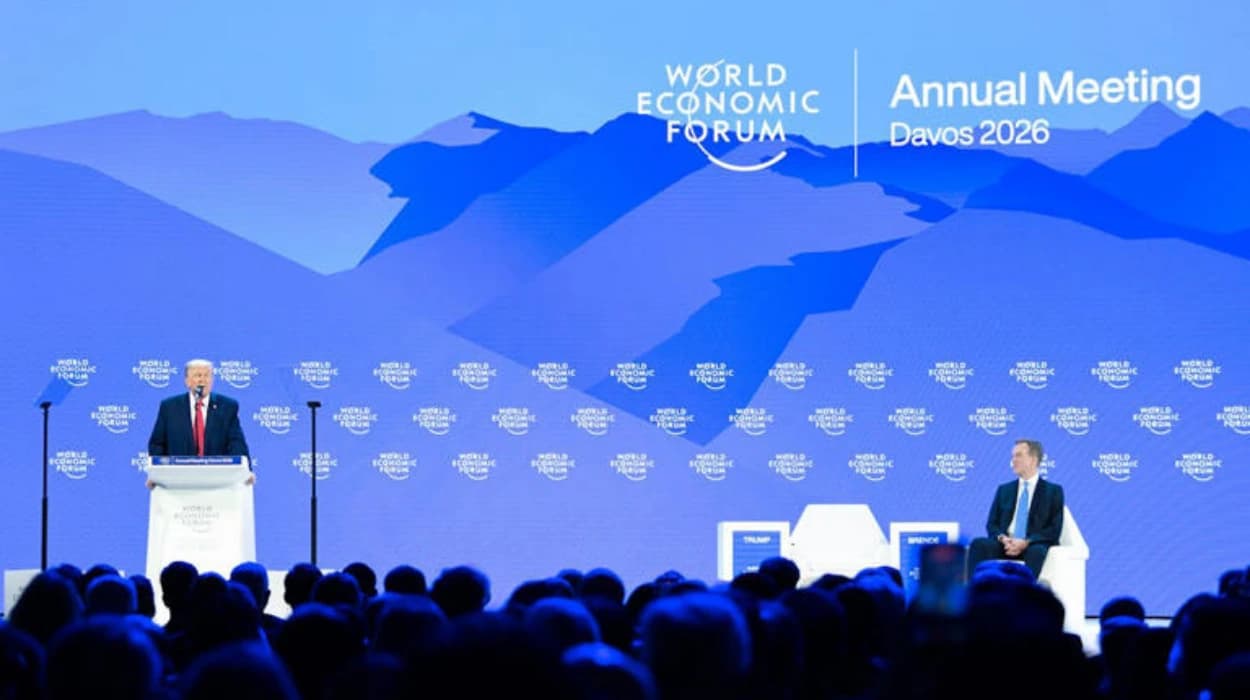
Copenhagen (The Palestine Telegraph Newspaper) 30 January 2026 – US President Donald Trump has reiterated threats to reclaim Greenland from Danish control, stating during a 28 January White House address that America requires the territory for national security. Danish Prime Minister Mette Frederiksen rejected the demands, affirming Greenland's self-determination rights under the Kingdom of Denmark. The exchange underscores tensions in transatlantic relations as NATO allies grapple with burden-sharing disputes.
European leaders called for de-escalation while NATO Secretary General Mark Rutte emphasised alliance unity. Greenland's government expressed concern over external pressures affecting local autonomy.
Trump's Statements on Greenland Acquisition Rationale

President Trump declared during a press conference following his State of the Union address that
"Greenland is vital to US defence interests"
due to its strategic Arctic position and Thule Air Base operations. He referenced historical US interest dating to 1946 and suggested Denmark lacks capacity to defend the territory.
White House Press Secretary Karoline Leavitt confirmed Trump raised the issue in recent calls with European leaders, linking it to NATO spending commitments. Trump stated Denmark must increase defence budgets or negotiate Greenland's status, warning of potential economic measures.
The comments followed Denmark's 25 January announcement of a 15 billion kroner Arctic defence package, including F-35 patrols over Greenland. US officials noted Thule hosts 600 personnel monitoring ballistic missiles and Russian submarine activity.
Danish and Greenlandic Government Responses
Prime Minister Frederiksen responded on 29 January, stating "Greenland is not for sale" and belongs to the Danish realm per international law. She convened an emergency cabinet meeting and contacted NATO headquarters.
Greenland Premier Múte B Egede emphasised Inuit self-governance, noting the 2009 Self-Government Act grants control over resources while Denmark handles foreign policy. Nuuk officials reported no direct US communications.
Danish Defence Minister Troels Lund Poulsen detailed enhanced surveillance, including two frigates deployed to Arctic waters. Parliament approved Greenland's first long-range missiles under the kingdom's defence.
NATO and European Alliance Reactions

NATO Secretary General Mark Rutte described the situation as a "bilateral matter" but stressed Article 5 collective defence covers Greenland. He noted Denmark met 2 per cent GDP spending target in 2025.
European Council President António Costa urged dialogue, while French President Emmanuel Macron affirmed Denmark's sovereignty. German Chancellor Friedrich Merz offered logistical support for Arctic patrols.
UK Defence Secretary John Healey confirmed HMS Prince of Wales would join Nordic exercises near Greenland. Baltic states expressed concern over precedent for Russian territorial claims.
Strategic Importance of Greenland's Geopolitical Position
Greenland spans 2.1 million square kilometres, hosting the world's largest island and critical rare earth deposits. Thule Air Base tracks 90 per cent of US early-warning radar coverage for North America.
Melting Arctic ice opens new shipping routes, contested by Russia, China, and NATO. US Space Force expanded Thule facilities in 2025, investing $1 billion in runway upgrades.
Denmark maintains Pituffik Space Base under hosting agreement, providing refuelling for B-52 bombers. Greenland's 56,000 residents rely on fishing, with mining concessions granted to Australian and Canadian firms.
Historical Context of US-Greenland Relations
President Truman offered $100 million for Greenland in 1946, rejected by Denmark. US established Thule during Cold War without Copenhagen's full consent, leading to 1951 Defence of Greenland agreement.
1982 saw US F-16s violate Danish airspace, prompting compensation. Trump first raised purchase in 2019, cancelled state visit after Frederiksen's rebuff. Biden administration pursued basing rights renewal in 2023.
Greenland voted 75 per cent for self-rule in 2008 referendum, receiving 3.9 billion kroner annual block grant. Independence discussions accelerated post-Ukraine invasion.
Arctic Defence Infrastructure Developments
Denmark activated Raven radar network across Greenland in 2024, linking to NORAD. F-35A jets based at Skrydstrup rotate Arctic missions, achieving 200 sorties monthly.
US renewed Pituffik lease through 2035, funding Greenlandic infrastructure. Russia maintains Nagurskoye base 1,000 km from Greenland with S-400 systems.
Canada announced Polar Icebreaker procurement, eyeing Thule cooperation. Norway increased Svalbard presence, hosting US P-8 Poseidon deployments.
Economic Dimensions of Greenland Resources
Greenland holds 11 per cent global rare earth oxides, essential for F-35 magnets and wind turbines. Kvanefjeld project, paused by environmental lawsuits, valued at $1.4 billion annually.
Royal Greenland A/S, state-owned, exports $500 million shrimp yearly. Tourism reached 80,000 visitors in 2025 despite climate challenges. Chinese firm Shenghe Resources secured vanadium rights before Danish veto.
US Export-Import Bank offered $500 million mining finance in 2025, matched by EU Critical Raw Materials Act funding.
Implications for Transatlantic Burden Sharing
Trump linked Greenland to NATO's 2 per cent pledge, noting Denmark's $8.1 billion 2026 budget meets threshold. US contributes 68 per cent alliance spending, hosting 100,000 European troops pre-2025.
European Defence Agency reported €15 billion Arctic investments since 2022. France deployed Rafales to Keflavik, Iceland, for Greenland gap coverage.
Lithuania's foreign minister warned Russian exploitation of alliance divisions. Poland offered Danish brigade integration into Arctic response force.
Diplomatic Channels and Next Steps
Danish Foreign Minister Lars Løkke Rasmussen scheduled Washington talks for 5 February. US Ambassador to Denmark Cara Brown sought meetings with Nuuk leaders.
White House confirmed Trump extended invitation to Frederiksen, tied to defence cooperation. NATO defence ministers meet 13 February in Brussels, Arctic security on agenda.
UN General Assembly discussed self-determination resolutions affecting Greenland. Inuit Circumpolar Council demanded consultation rights.
Military Capabilities Comparison Arctic Theatre

Denmark fields 6,000 active personnel, F-35 fleet of 27 aircraft by 2026. US Space Force commands 1,500 at Thule, supported by 10 KC-135 tankers.
Russia's Northern Fleet includes 40 submarines, 15 icebreakers. China's Xisha research vessel mapped Greenland approaches in January.
Sweden, non-NATO until 2024, contributed Gripen patrols. Finland hosts US Army pre-positioned stocks for rapid Arctic deployment.
Public Opinion and Media Coverage
Pew Research found 68 per cent Danes oppose sale, 22 per cent support under conditions. Greenland polls show 81 per cent independence preference within five years.
DR Danish Broadcasting aired special coverage, interviewing Thule workers. CNN featured satellite imagery of base expansions. Al Jazeera highlighted resource colonialism concerns.
Social media amplified Trump's comments, #Greenland trending globally with 3.2 million mentions.
Legal Framework Governing Territory Status
UN Charter Article 73 recognises Denmark's administering authority. 1951 treaty grants US defence rights without sovereignty transfer. International Court of Justice advisory opinions affirm self-determination precedence.
Nordic Council passed resolution supporting Danish position. EU Parliament debated strategic autonomy clause activation.