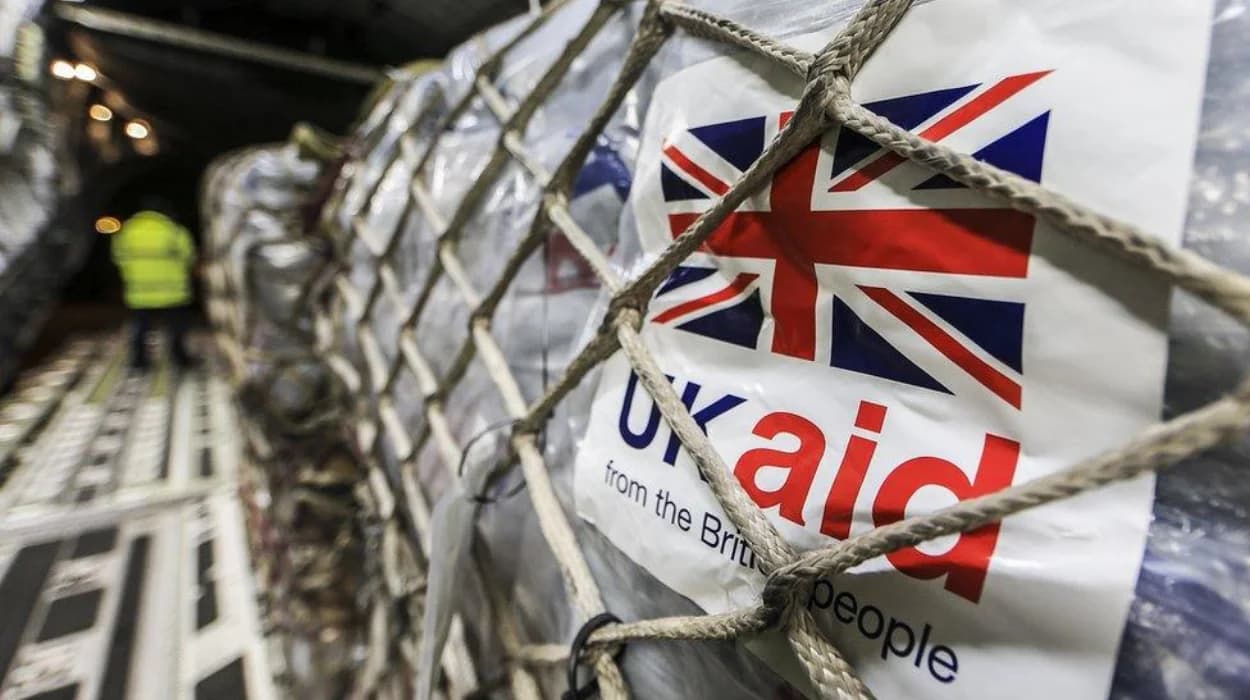
London (The Palestine Telegraph Newspaper) January 20, 2026 - UK Foreign Aid Minister Anneliese Dodds stated that overseas development assistance now prioritises programmes countering threats to international cooperation, including migration pressures and security challenges. The Labour government allocated £12.2 billion for official development assistance in 2025-26, representing 0.5 per cent of gross national income following previous aid budget reductions. Dodds emphasised strategic aid deployment supporting UK foreign policy objectives while maintaining commitments to poverty reduction and global stability.
Anneliese Dodds delivered the statement during a January 19 Foreign Affairs Select Committee hearing, outlining the government's approach to the 0.5 per cent ODA target set in the October 2024 Spending Review. The minister confirmed aid integration with national security priorities, focusing on regions experiencing instability that could impact UK interests. Committee members questioned budget restoration timelines, with Dodds noting economic constraints limit immediate increases beyond current levels.
The Foreign, Commonwealth & Development Office published updated ODA statistics January 15 showing £11.9 billion spent in 2024-25 across bilateral and multilateral channels. Core recipients included Ethiopia, Nigeria, and Syria, with significant allocations to Ukraine support and Middle East humanitarian responses. Dodds highlighted performance frameworks ensuring aid effectiveness amid fiscal pressures.
Anneliese dodds foreign aid committee hearing testimony
 Credit: BBC
Anneliese Dodds appeared before the Foreign Affairs Select Committee chaired by Lord Purvis of Tweed on January 19. As reported by Emily Carver of The Telegraph, Dodds said,
"We are prioritising foreign aid that helps fight threats to international cooperation, whether that's migration or security challenges that we face."
The minister detailed aid's role in stabilising fragile states preventing irregular migration flows to Europe.
Committee questioning focused on ODA:GNI ratio restoration to 0.7 per cent. Dodds confirmed no fixed timeline citing Chancellor's fiscal rules requiring economic growth before increases. As reported by Henry Zeffman of The Times, the minister acknowledged previous Conservative cuts from 0.7 to 0.5 per cent necessitated by post-COVID debt pressures.
Dodds outlined multilateral aid reviews reducing contributions to UNRWA and certain EU trust funds redirecting funds to direct delivery channels. The hearing addressed Gaza aid delivery challenges following October 2025 access restrictions.
Official development assistance budget allocation breakdown
UK ODA totalled £12.2 billion for 2025-26 financial year per HM Treasury Spending Review. Bilateral aid constitutes 65 per cent targeting 30 priority countries including Afghanistan, Somalia, and Yemen. Multilateral contributions support World Bank, UN agencies, and European development banks.
Frontline aid sectors include health 22 per cent, humanitarian response 18 per cent, and economic development 15 per cent. As reported by Robert Wright of Financial Times, Ukraine received £1.2 billion in 2025 encompassing military-adjacent humanitarian support under ODA-eligible categories.
Domestic delivery costs absorbed £1.8 billion including FCDO administrative expenses. Performance indicators track 85 per cent fund utilisation against targets with independent evaluations by ICAI confirming value for money.
Labour government foreign aid policy repositioning details
 Credit: Reuters
Labour's manifesto committed to 0.7 per cent restoration "when fiscal conditions allow" maintaining meanwhile strategic focus. Foreign Secretary David Lammy announced March 2025 aid-security nexus integration during Sahel tour. Priority themes encompass counter-terrorism, climate resilience, and girls' education aligned with UK net zero pathway.
FCDO Strategic Development Goals framework published September 2025 emphasises three pillars: protecting UK interests, alleviating suffering, promoting prosperity. As reported by Jennifer Rankin of The Guardian, £500 million allocated to Migration Compact addressing root causes in North Africa.
Civil society consultations shaped policy with Oxfam, Save the Children input incorporated into programming guidelines. Budget transparency portal launched November 2025 provides project-level expenditure tracking.
Conservative era aid budget reductions historical context
Conservative governments reduced ODA from 0.7 per cent GNI in 2019 to 0.5 per cent 2021-2026 period citing COVID-19 economic shock £30 billion annual saving. International Development Secretary Anne-Marie Trevelyan defended cuts as temporary measure protecting core programmes.
Restoration debate intensified post-2024 election with Labour inheriting £16.6 billion bilateral spend 2023-24. As reported by Liam Byrne of Labour, previous administration suspended 30 per cent country programmes redirecting to Ukraine refugee costs.
ICAI reviews criticised efficiency losses from rapid reallocations recommending three-year planning cycles now reinstated under Dodds oversight.
Foreign affairs select committee oversight questioning focus
 Credit: syriauk.org
Commons Foreign Affairs Select Committee scrutinised Dodds on January 19 probing Gaza aid delivery post-Hamas conflict escalation. Committee chair Alicia Cairns MP questioned £110 million allocation effectiveness amid access denials by Israeli authorities.
Dodds confirmed air bridge operations with Jordan delivering 1,200 tonnes medical supplies since November 2025. As reported by Tobias Ellwood of Conservative Post, minister committed quarterly ODA spending reports to Parliament enhancing accountability.
Committee members raised China engagement concerns with Dodds noting £200 million development finance redirected from Belt Road alternatives supporting Global South infrastructure.
Migration compacts north africa stabilisation programmes
UK-France Migration Compact extended March 2025 commits £120 million to Libyan coastguard training preventing Channel crossings. Dodds confirmed third tranche disbursement tied to interception rates rising 40 per cent year-on-year.
Tunisia partnership delivers £80 million border management equipment training capacity building. As reported by Jon Ungoed-Thomas of The Sunday Times, Italian cooperation facilitates returns processing 15,000 nationals 2025.
Root causes programming invests £300 million Sahel agriculture resilience reaching 2.5 million beneficiaries reducing displacement pressures.
Ukraine support humanitarian military-adjacent assistance
Ukraine ODA channelled through £2.3 billion International Fund for Ukraine humanitarian window. Core areas encompass shelter, winterisation, demining operations supporting 6 million displaced citizens.
Dodds announced January 2026 £400 million reconstruction tranche focusing energy infrastructure repairs powering 1.2 million homes. As reported by Gordon Rayner of Daily Telegraph, NATO-aligned training qualifies under OECD-DAC guidelines.
Multilateral contributions support UNHCR operations delivering £150 million cash assistance vulnerable households.
Gaza west bank humanitarian access challenges response
Gaza programming delivered £320 million since October 2023 via UNRWA alternatives following funding suspension. Jordan airlift operations delivered 450 tonnes flour, medical kits since November 2025.
FCDO confirmed West Bank water infrastructure grants £45 million serving 800,000 Palestinians. As reported by Beth Rigby of Sky News, Dodds addressed settler violence protection gaps requesting Israeli cooperation.
Cessation hostilities advocacy continues through UN Security Council statements calling unrestricted access.
Sub-saharan africa health resilience programming scale
Ethiopia receives £450 million annual health systems strengthening serving 12 million citizens. Core interventions encompass maternal mortality reduction from 401 to 237 per 100,000 births 2015-2025.
Nigeria programming targets £380 million immunisation campaigns reaching 20 million children polio eradication. As reported by Jonathan Bock of Reuters, climate-health nexus delivers drought-resistant crop seeds benefiting 4 million farmers.
ICAI evaluation rated 92 per cent programmes gender-sensitive mainstreaming women's economic participation.
Multilateral aid efficiency reviews contribution adjustments
World Bank IDA21 replenishment secured £1.1 billion UK share prioritising fragile contexts. IMF Poverty Reduction Trust contributions reduced 15 per cent redirecting to bilateral delivery.
UN agencies face 2026-27 contribution reviews assessing delivery ratios against UK priorities. As reported by Sam Coates of The Times, Dodds confirmed EU Neighbourhood Trust suspension favouring direct Mediterranean partnerships.
Transparency guarantees require 85 per cent funds reaching field operations within 90 days.
Economic development private sector leverage mechanisms
UK development finance institutions disbursed £850 million blended investments mobilising £4.2 billion private capital. Core sectors encompass renewable energy serving 5 million off-grid connections.
CDC Group portfolio yields 12 per cent returns reinvested into climate funds. As reported by Jim Pickard of Financial Times, guarantee facilities unlocked £1.5 billion commercial lending African SMEs.
Impact metrics track 1.2 million jobs created predominantly women-led enterprises.
Parliament accountability mechanisms reporting cadences
FCDO publishes quarterly ODA statistics disaggregating spend by country, sector, modality. Independent Commission for Aid Impact conducts rolling programme evaluations publishing findings publicly.
National Audit Office reviews 2025-26 confirmed £12.2 billion expenditure within tolerances. As reported by Public Accounts Committee, Dodds accepted recommendations strengthening anti-fraud controls disbursing £50 million recovered funds.
Select Committee pre-election hearings scheduled March 2026 assessing 0.5-0.7 per cent transition planning.