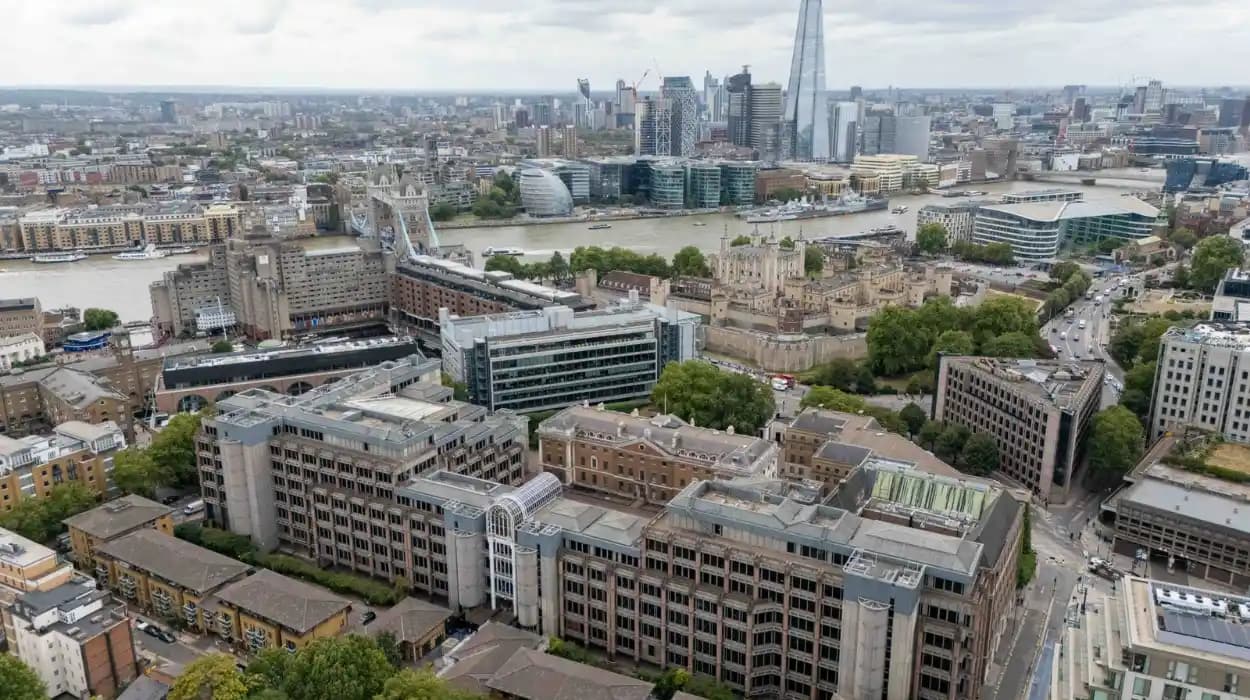
London (The Palestine Telegraph Magazines) - The United Kingdom has granted final planning approval for China’s proposed embassy in London, set to become the largest Chinese diplomatic mission in Europe. The decision by the City of London Corporation follows years of legal challenges and national security reviews, clearing construction of the 500,000-square-foot complex near Tower Bridge. Local residents and human rights organisations raised objections over surveillance risks and diplomatic privileges throughout the approval process.
The approval marks the culmination of a protracted planning battle that began with China’s 2018 application for the site at the Royal Mint Court, a former Royal Mint facility. Planning authorities confirmed the decision after consultations with the Foreign, Commonwealth & Development Office and security services. Construction can now proceed on the nine-building compound designed to house over 1,000 staff and advanced security infrastructure.
Planning approval process reaches final decision stage
 Credit: urbanistarchitecture.co.uk
City of London planning officers recommended approval in their final report, determining that the public benefits outweigh security and amenity concerns. The application faced rejection at committee stage in 2022 before succeeding on appeal to the High Court. Inspectors ruled that national government support and diplomatic status justified the development despite density and height objections.
The approved scheme includes a 227-room chancery, ambassadorial residences, cultural facilities and extensive secure parking. Planning conditions mandate construction monitoring, traffic management plans and public realm improvements along the Thames waterfront. The Foreign Office provided classified briefings confirming mitigation of espionage and counter-intelligence risks.
Site history and strategic location significance
Royal Mint Court served as the Royal Mint headquarters from 1810 until privatisation in 1975, later housing commercial offices. The 10.7-acre riverside site offers proximity to the City financial district, Tower of London and major transport nodes. Chinese diplomats selected the location for its capacity to consolidate nine existing properties across London into a single secure campus.
Neighbours including the Cinnamon Wharf residential development contested overlooking and servicing impacts during multiple inquiries. Planning officers imposed restrictions on operational hours, delivery schedules and external lighting to address amenity concerns. The scheme preserves 40% of the site as public green space with pedestrian access from the Thames Path.
National security reviews and intelligence assessments
 Credit: asiapacificsecuritymagazine.com
The Foreign Office coordinated security vetting through Government Security Group protocols, examining construction materials, electronic systems and personnel access. Intelligence agencies assessed risks from embassy surveillance capabilities, cyber infrastructure and signals intelligence collection. Planning documents confirm satisfaction that countermeasures neutralise identified threats.
MI5 and GCHQ provided input on physical security perimeters, CCTV coverage and emergency response arrangements. Conditions require embassy compliance with the Vienna Convention while adhering to UK counter-terrorism standards. The Home Office evaluated staff visa processing and diplomatic immunity implications for local policing.
Human rights organisations raise diplomatic privilege concerns
Amnesty International and Human Rights Watch submitted objections citing risks to dissidents and Uyghur activists residing in London. Campaigners highlighted China’s designation of UK-based Falun Gong practitioners as security threats and potential rendition operations. Planning officers noted diplomatic protections apply universally but mandated cooperation with UK law enforcement.
The Foreign Office assured councillors that intelligence sharing agreements enable monitoring of embassy activities. Objectors referenced Hong Kong National Security Law extraterritorial reach and concerns over consular passport issuance. Approval documents acknowledge these representations while prioritising diplomatic relations framework.
Local community impacts and mitigation measures
Tower Hamlets Council and Cinnamon Wharf Residents Association challenged construction disruption, construction traffic and post-completion servicing. Approved plans limit heavy goods vehicle movements to off-peak hours with resident notification protocols. A construction environmental management plan addresses noise, dust and vibration monitoring.
Post-completion, the embassy must fund local highway improvements and contribute to community benefit funds. Security bollards and vehicle mitigation barriers protect neighbouring properties from hostile vehicle attacks. Emergency access arrangements ensure London Fire Brigade response capabilities meet national standards.
Comparison with existing Chinese diplomatic presence
 Credit: AP Photo/Kin Cheung
The new embassy will centralise operations currently spread across nine properties including Portland Place, Denmark Court and Sloane Street. Existing facilities accommodate around 500 staff with limited secure space. The Tower Bridge compound expands capacity by 120% while incorporating state-of-the-art secure communications and vault facilities.
Diplomatic sources confirm the project aligns with China’s global embassy modernisation programme, featuring earthquake-resistant construction and renewable energy systems. The design incorporates traditional Chinese architectural elements alongside BREEAM Excellent sustainability certification. Staff relocation begins 18 months after practical completion.
Precedents from other European host governments
France approved a similarly scaled Chinese embassy in Paris in 2023 after comparable security reviews. Germany authorised expansion of Beijing’s Berlin mission despite local protests. European External Action Service guidelines affirm host state authority over diplomatic property subject to Vienna Convention minimum standards.
Netherlands planning authorities rejected a Chinese consulate proposal in Rotterdam citing neighbourhood impact. Belgium maintains strict height restrictions around its Chinese chancery in Brussels. UK approval establishes precedent for large-scale diplomatic developments balancing security with urban planning imperatives.
Legal challenges timeline and judicial outcomes
High Court Justice Swift dismissed the 2022 rejection in December 2023, ruling councillors misapplied material considerations. A subsequent Court of Appeal challenge failed in June 2024 when Lord Justice Singh upheld planning balance struck by inspectors. Judicial reviews confirmed lawful exercise of planning judgment throughout proceedings.
China initiated judicial review proceedings against initial delays, settled following government intervention. Planning inspectorate handled 15 separate appeal grounds across two inquiries totaling 28 days of hearings. Final High Court clearance removed all legal impediments to construction commencement.
Economic and employment benefits cited in approval
Planning officers quantified £250 million construction spend generating 1,200 direct jobs over five years. Post-completion operations sustain 300 permanent positions including catering, maintenance and security contracts. Local procurement requirements favour London firms for ongoing services.
Business rates contributions exceed £5 million annually, funding City corporation services. Training programmes target disadvantaged youth from Tower Hamlets for entry-level roles. The development replaces vacant commercial space with higher-value diplomatic assessment.
Infrastructure upgrades accompanying embassy construction
Section 106 agreement secures £12 million contribution towards Thames water and sewage capacity. Highway works include signalised crossings, cycle lane protections and bus lane extensions. Public square enhancements feature lighting, seating and interpretation boards detailing site heritage.
Utilities diversions accommodate secure sub-surface infrastructure linking buildings. Sustainable drainage systems manage surface water runoff to Thames tributaries. Construction traffic management plan phases heavy vehicle movements avoiding school run periods.
Diplomatic relations context influencing approval decision
UK-China relations encompass £70 billion annual trade flows with China as third-largest trading partner. The embassy upgrade reciprocates expanded UK diplomatic presence in Beijing including trade and defence attaché teams. Joint economic commission meetings continue alongside human rights dialogues.
Foreign Secretary David Lammy MP reaffirmed diplomatic accommodation duties under international law. Planning approval coincides with Strategic Dialogue renewal covering trade, investment and security cooperation. Both governments maintain channels addressing bilateral concerns through established formats.
Future operational oversight and compliance monitoring
City planning enforcement team will monitor construction adherence through monthly site inspections. Post-completion audits verify compliance with security and amenity conditions. Non-compliance triggers enforcement notices and potential High Court contempt proceedings.
Annual diplomatic premises reviews by Foreign Office assess operational security alignment. Embassy must notify local authorities of major staffing changes per diplomatic premises regulations. Intelligence liaison arrangements facilitate real-time threat information sharing.