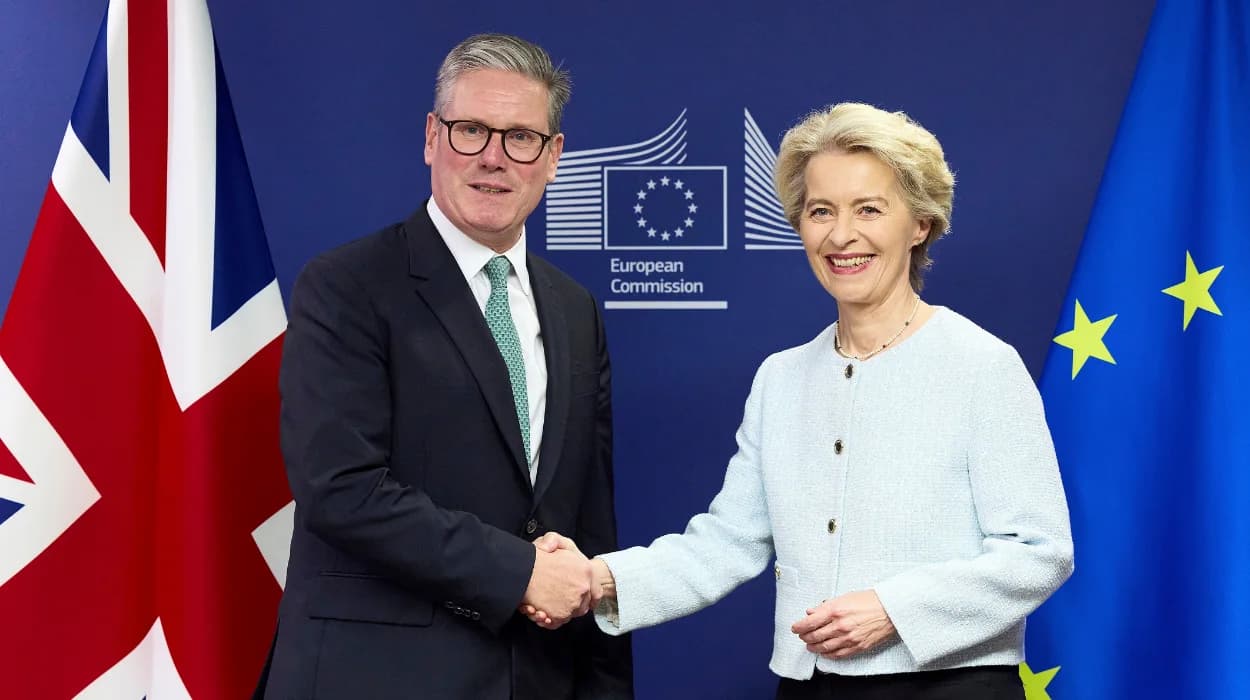
London (The Palestine Telegraph Newspaper) – 1 February 2026 – UK Prime Minister Keir Starmer stated that Brexit inflicted significant damage on the British economy as he prepared for a key meeting with European Union leaders. The comments, made ahead of negotiations aimed at resetting post-Brexit relations, underscored ongoing tensions over trade and regulatory alignment.
Reports from multiple outlets detailed Starmer's position amid efforts to improve economic ties with the EU.
Prime Minister Keir Starmer delivered the remarks during a speech and interviews on 1 February 2026, emphasising that leaving the EuropeanUnion had led to reduced growth and higher costs for businesses. He highlighted specific impacts such as barriers to trade, increased bureaucracy for exporters, and a shortfall in economic performance compared to projections if the UK had remained in the bloc.
According to statements attributed to Starmer, the UK economy is approximately 4% smaller than it would have been without Brexit, based on analyses cited in his address.
The timing of the comments coincided with preparations for an upcoming EU summit, where Starmer is scheduled to meet with European Commission President Ursula von der Leyen and other leaders. Discussions are expected to cover potential easements in trade rules, veterinary agreements, and youth mobility schemes. Starmer's office confirmed that the government seeks a "pragmatic reset" without rejoining the single market or customs union.
Starmer's Direct Statements on Brexit's Economic Toll

In an interview with The Telegraph published on 1 February 2026, Starmer explicitly said, "Brexit damaged our economy. That is a fact." He pointed to data from the Office for Budget Responsibility (OBR) and other economic bodies indicating long-term drags on productivity and investment. Starmer argued that these effects have compounded challenges from global events, including the COVID-19 pandemic and energy crises.
The Prime Minister referenced forecasts showing that Brexit-related trade frictions have cost the UK up to £100 billion annually in lost output. He noted disruptions in sectors like automotive manufacturing, fisheries, and financial services, where non-tariff barriers have increased compliance costs. Starmer stressed that acknowledging these impacts is essential for negotiating better terms with the EU.
Government sources clarified that Starmer's position aligns with Treasury assessments, which project a 4% hit to potential GDP over the long term. These figures stem from models accounting for reduced trade volumes post-2021, when the UK fully exited the EU's trading arrangements. The comments drew immediate responses from opposition figures, though Starmer maintained focus on forward-looking diplomacy.
Context of the Upcoming EU Meeting
The EU summit, tentatively set for mid-February 2026, follows a series of bilateral talks initiated after Labour's election victory in 2024. Agenda items include revisiting the Windsor Framework for Northern Ireland and exploring mutual recognition of professional qualifications. EU diplomats indicated willingness to discuss limited flexibilities, provided the UK aligns more closely on issues like carbon border taxes.
Starmer's pre-meeting remarks were part of a broader communications strategy, including speeches to business leaders in London and Brussels. He reiterated commitments to defence cooperation and security pacts, areas where post-Brexit collaboration has strengthened. However, trade remains the sticking point, with EU officials insisting on level playing field guarantees.
Preparatory documents from Downing Street outlined priorities such as reducing food export checks and simplifying customs declarations. These measures aim to address complaints from UK farmers and manufacturers about paperwork burdens introduced under the Trade and Cooperation Agreement (TCA). The Prime Minister's team emphasised that improvements would be reciprocal, benefiting both sides.
Economic Data Underpinning Starmer's Claims
Multiple reports corroborated Starmer's citations of economic studies. The London School of Economics estimated in 2025 that Brexit has reduced UK trade with the EU by 15% compared to pre-referendum trends. Similarly, a Bank of England analysis from late 2025 quantified non-tariff barriers as equivalent to a 6% tariff on goods trade.
OBR forecasts, updated in January 2026, incorporated Brexit permanently into baseline projections, shaving 4% off medium-term GDP growth. These models factor in lower foreign direct investment, skilled labour shortages, and supply chain disruptions. Starmer quoted these in his speech, noting that real wages have stagnated partly due to these dynamics.
Sector-specific impacts were detailed in industry reports. The Society of Motor Manufacturers and Traders reported a 10% drop in EU exports since 2021, while the Fresh Produce Association highlighted doubled inspection costs for horticultural goods. Financial services firms cited passporting losses, prompting relocations to Dublin and Frankfurt.
Political Reactions and Historical Background

Conservative Party leader Kemi Badenoch responded on 1 February 2026, calling Starmer's comments "Brexit denialism" and defending the 2016 referendum outcome. She argued that global factors, not Brexit alone, explain economic pressures, pointing to comparable slowdowns in non-EU peers like Canada. Labour dismissed the rebuttal as out of touch with business realities.
The remarks revive debates from the 2016 referendum, where Leave campaigners promised £350 million weekly for the NHS from EU contributions. Post-Brexit realities included the end of freedom of movement, prompting labour shortages in hospitality and agriculture. Starmer, who campaigned for Remain, has since positioned his government as pragmatic Brexiteers.
Previous negotiations under Boris Johnson yielded the TCA in 2020, averting no-deal tariffs but introducing customs checks. Liz Truss's 2022 protocol bill strained relations, resolved partially by Rishi Sunak's Windsor deal. Starmer's approach builds on this, seeking incremental gains without sovereignty concessions.
Broader Implications for UK-EU Relations
Stakeholders across Europe welcomed the dialogue. German Chancellor Olaf Scholz expressed support for closer ties in a statement on 1 February 2026, emphasising mutual benefits in green energy and AI regulation. French President Emmanuel Macron cautioned against cherry-picking, insisting on indivisible rules.
Business groups like the Confederation of British Industry urged swift action on trade barriers, estimating £7 billion in annual savings from sanitary and phytosanitary alignments. The Road Haulage Association highlighted driver shortages exacerbated by cabotage limits. Youth advocates pushed for Erasmus+ revival, though Starmer prioritised skilled migration routes.
As preparations continue, Number 10 sources indicated optimism for progress, with civil servants modelling scenarios for a "new chapter." The EU's chief negotiator, Maroš Šefčovič, scheduled virtual talks for early the following week. Observers noted that momentum hinges on Starmer's ability to navigate domestic Brexiteers while advancing economic priorities.
Detailed Sectoral Impacts Reported
In manufacturing, Jaguar Land Rover reported 20% higher logistics costs to the EU, prompting production shifts. Seafood exporters faced sanitary checks delaying perishable goods by days. Chemicals giant Ineos cited regulatory divergence costing millions in compliance.
Services, comprising 80% of UK GDP, suffered from ending EU-wide financial passports. Over 7,000 jobs moved continentally by 2025, per CityUK data. Creative industries lost co-production funding, though bilateral deals with individual states emerged.
Northern Ireland's protocol implementation continues, with grace periods extended for certain goods. Stormont executives reported stabilised supply chains but ongoing east-west frictions. Starmer pledged full Stormont restoration as a negotiation cornerstone