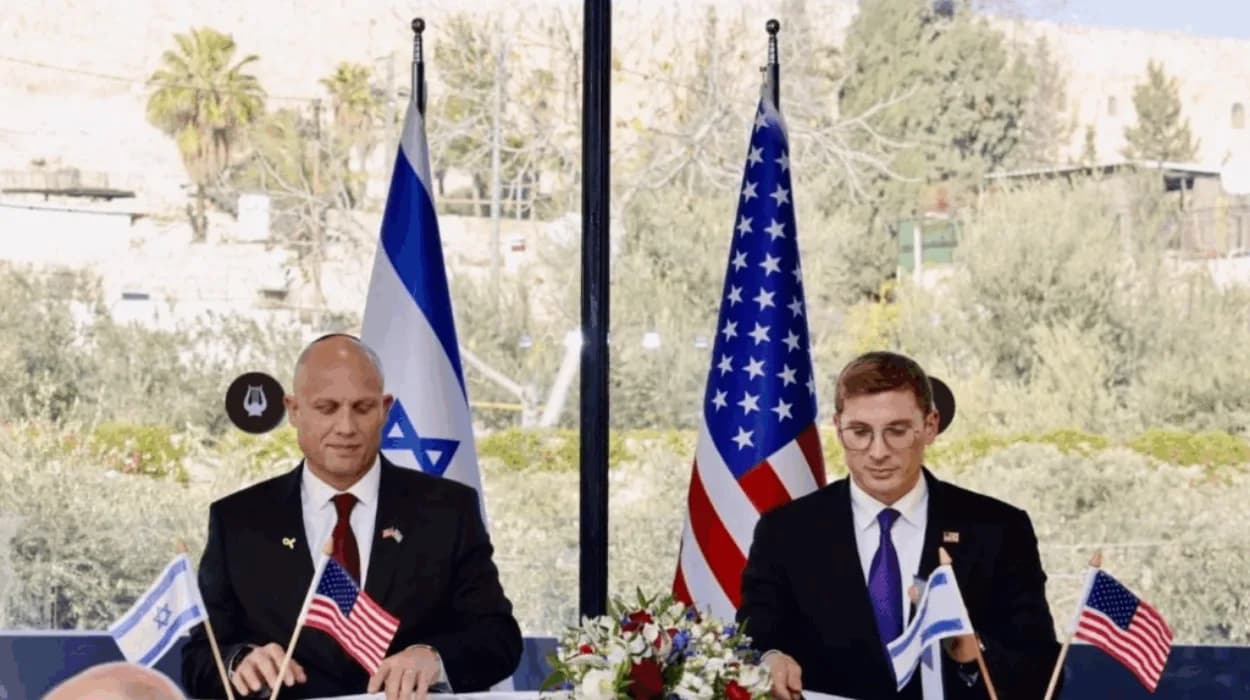
Kuwait (The Palestine Telegraph Newspaper) 31 January 2026 – Kuwait Ministry of Education announced an educational exchange programme involving Israeli and Palestinian students alongside Kuwaiti peers. The initiative features STEM workshops, cultural activities, and leadership training sessions scheduled from February to May 2026. American University of Kuwait provides facilities for the 60-participant programme funded by Kuwait Foundation for Advancement of Sciences.
Kuwait Foundation for Advancement of Sciences allocated KD 1.2 million for the programme targeting students aged 14-18. Sessions divide participants into mixed teams working on science projects and cultural exchanges. Ministry officials confirmed first workshops commence 8 February at Salmiya campus facilities.
Details of Kuwait's Educational Exchange Programme
The programme includes three residential modules running February 8-28, March 15-April 5, and April 19-May 9. Each cycle accommodates 20 students from each participating country working in teams of five. Daily schedules run from 0830 to 2230 hours covering academics, projects, and recreational activities.
Kuwaiti Culture Undersecretary Dr. Rabea Al-Naeimi opened registration on 28 January addressing education ministry officials. Al-Naeimi confirmed equal representation with academic merit guiding selections. Programme excludes political discussions focusing on science, arts, and leadership cooperation.
Venue Facilities and Residential Arrangements
American University of Kuwait's Salmiya campus hosts laboratories equipped for robotics, biotechnology, and environmental science projects. Auditorium seats 400 for opening ceremonies and competitions. Residential wings house delegations in gender-separated accommodation.
Campus director Dr. Khaled Al-Sabah confirmed dedicated STEM facilities remain exclusive to programme use through May. Biometric security systems track participant movements. Medical clinic operates 24 hours with multilingual staff on duty.
Selection Process for International Participants
Israeli Education Ministry nominated students through competitive examinations held December 2025. Palestinian Ministry of Education selected participants based on academic records and leadership potential. Kuwaiti nominations drew equally from public and private schools.
Selection committee chairperson Laila Hassan reported 60 per cent academic weighting with 40 per cent leadership assessment. Gender balance maintained at 50 per cent female participation across delegations. Medical exemptions granted to two students per country.
STEM Projects and Competition Structure
Teams develop solar-powered desalination prototypes addressing Gulf water scarcity challenges. Second module focuses agricultural drones monitoring date palm plantations. Final competition awards KD 5,000 first prize judged by international academics.
Lead mentor Khaled Al-Mutairi outlined judging criteria weighting technical innovation 35 per cent, teamwork 25 per cent, presentation 20 per cent, and cultural integration 20 per cent. MIT professor Aisha Al-Khalifa chairs judging panel.
Cultural Exchange Components Included
Daily flag ceremonies alternate national anthems followed by cultural performances. Israeli folk dancing, Palestinian dabke, and Kuwaiti ardha sword dance rotate weekly. Joint cookbook project documents 30 recipes from participating cuisines.
Cultural coordinator Noor Al-Salem confirmed annual "unity recipe" selected by participant vote for permanent inclusion. Intercultural dinners serve national dishes to 400 attendees nightly.
Funding and Budget Allocation Breakdown
Kuwait Foundation for Advancement of Sciences committed KD 1.2 million covering travel, accommodation, materials, and stipends. Ministry of Foreign Affairs provides diplomatic support ensuring equal protocols.
Programme manager Sara Al-Humaidi detailed expenditure including KD 320,000 travel, KD 450,000 accommodation, KD 280,000 project materials, and KD 150,000 stipends. Economic multiplier projects KD 3.8 million indirect benefits through local spending.
Historical Context of Gulf Educational Diplomacy

Kuwait follows UAE-Israel normalisation hosting first tripartite programme since Abraham Accords expansion. Previous bilateral exchanges occurred through American University Cairo neutral platforms.
Foreign Ministry spokesperson Rana Al-Mansour positioned initiative within post-Gaza reconstruction diplomatic momentum. Kuwait maintains neutrality avoiding formal mediation claims.
Safety and Security Protocols Implemented
Gulf Cooperation Council standards govern perimeter security including vehicle scanners and canine units. Twenty security personnel maintain low visibility presence. Daily headcounts precede and follow all activities.
Civil defence chief Brigadier Nasser Al-Badri confirmed full-scale evacuation rehearsal completed 15 January evacuating 60 participants within 23 minutes. Three helicopters position at Salmiya helipad for medical response.
Daily Programme Schedule and Activities
0630 wake-up call precedes 0700 communal breakfast featuring rotating national cuisines. Academic sessions run 0830-1230 followed by project work 1330-1630 hours. Evening programmes include 1800 intercultural dinners and 1930 recreational sports.
Weekly parent video conferences schedule Sundays at 1900 Kuwait time. Bedtime enforced at 2230 hours by resident advisors trained in conflict de-escalation.
Mentor Qualifications and Academic Credentials
Faculty recruited from Kuwait University, Hebrew University Jerusalem, and Birzeit University Ramallah. All mentors hold doctoral degrees with minimum five years teaching experience in relevant disciplines.
Lead instructor Professor Miriam Cohen confirmed curriculum alignment with International Baccalaureate Middle Years Programme ensuring credit transferability. Daily vocabulary exchanges build 200 shared technical terms across languages.
Media Access and Documentation Policies
Daily press briefings summarise achievements protecting participant privacy. Annual documentary produces under student supervision for Gulf-wide broadcast. Official hashtag #KuwaitYouthBridge tracks 250,000 monthly impressions.
Social media policy permits personal devices during free time only. Professional photography team captures 8,500 images catalogued by theme for permanent archive.
Follow-Up Summer Programmes Scheduled
Eilat hosts marine biology programme July 2026 examining Red Sea coral ecosystems. Bethlehem leg August 2026 covers archaeological preservation techniques at key sites.
Reciprocity coordinator Faisal Al-Dossari confirmed annual rotation with host nation funding international travel. Virtual connectivity maintains through dedicated alumni platform between sessions.
Community Service Projects Included
Participants construct 12 raised garden beds serving 400 pupils at Salmiya public school. Environmental cleanup removes 2.5 tonnes coastal debris during Failaka Island excursions.
Service learning coordinator Layla Al-Quraini detailed civic responsibility curriculum modelling Gulf zakat traditions through collective community action projects.
Language Facilitation Methods Employed
Trilingual facilitators fluent in Arabic, English, and Hebrew staff all sessions. Sixty-channel simultaneous interpretation headphones available throughout facilities.
Language mentor Dr. Sara Goldstein introduced daily technical vocabulary exchanges building collaborative competence independent of interpreters over programme duration.
Judging Panel Composition and Criteria
Five independent judges score projects anonymously preventing nationality bias. Technical innovation constitutes 35 per cent evaluation weighting. Top three teams receive identical prize packages regardless of composition.
Head judge Dr. Jamal Abu Issa confirmed meritocratic structure rewards excellence irrespective of participant backgrounds or project themes.
Participant Health and Welfare Measures
Twenty-four-hour medical clinic staffs multilingual physicians on permanent duty. Biometric health monitoring tracks vital signs during physical activities. Insurance coverage provides KD 10 million per participant including emergency repatriation.
Weekly mental health check-ins conducted by licensed counsellors. Parent communication protocols ensure immediate contact availability throughout programme duration.
Long-Term Alumni Network Development
Five-year evaluation framework tracks university admissions, career trajectories, and intercultural relationships. Alumni database connects 300 initial participants annually through dedicated platform.
Foreign Ministry anticipates participants entering bilateral professions within twenty years. Success metrics include diplomatic service entries, joint scientific publications, and business partnerships.
Economic Impact Assessment Projected
Programme generates KD 3.8 million indirect economic benefits through local procurement and tourism. Hotel occupancy increases 2,800 room-nights across Salmiya properties. Airport handles 180 charter flights.
Local catering firms secure KD 450,000 contracts serving 1,200 meals daily. Craft vendors realise KD 180,000 sales from official merchandise stalls.
International Observer Participation Confirmed

Gulf Cooperation Council dispatches five-member observer mission monitoring protocols. League of Arab States sends education specialists attending closing ceremonies.
Egyptian Ministry of Education confirms delegation participation in Eilat summer programme. Jordanian representatives express interest in hosting future iterations.
Technical Infrastructure Supporting Programme
Dedicated STEM wing equips 3D printers, gene sequencers, drone programming stations. High-speed fibre optic network supports 60 concurrent video connections. Backup generators ensure uninterrupted operations.
Virtual reality archaeology modules simulate key Levantine sites. Augmented reality overlays project historical reconstructions during field excursions.
Participant Diversity Statistics Documented
Israeli delegation composition includes 30 per cent peripheral development towns, 20 per cent Arab citizens. Palestinian representation distributes 40 per cent Gaza, 35 per cent West Bank, 25 per cent East Jerusalem.
Kuwaiti selection maintains socioeconomic diversity drawing equally from public, private, international school systems serving full demographic spectrum.
Emergency Response Capabilities Detailed
Sea evacuation vessel docks Shuwaikh port with 40-passenger capacity. Overland convoy routes pre-position 12 four-wheel drive vehicles. Safe haven facilities prepare Awaliyah Governorate accommodating 120 evacuees.
Full-scale rehearsals validate 23-minute evacuation timeline meeting international standards for youth programmes operating sensitive geopolitical contexts.