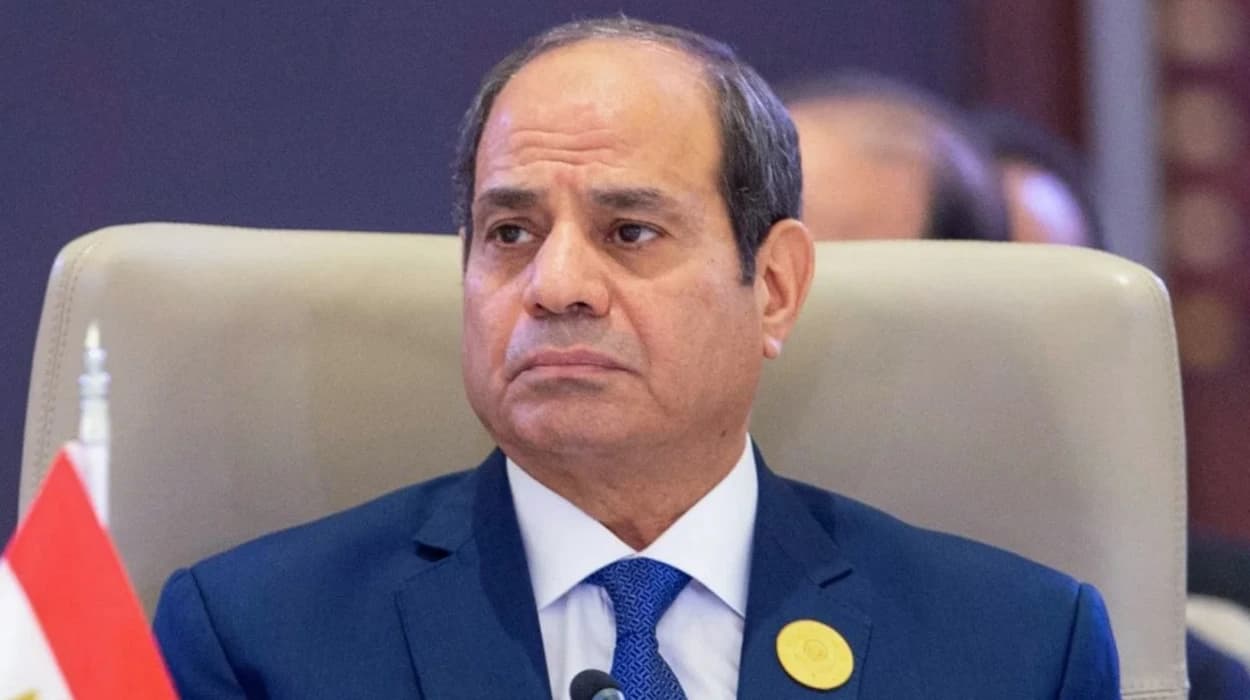
Davos (The Palestine Telegraph Newspaper) - Egyptian President Abdel Fattah el-Sisi told the World Economic Forum that Egypt will fast-track state divestments and expand private sector participation across key industries. The announcement forms part of Egypt's comprehensive economic reform programme aimed at reducing public spending and attracting foreign direct investment. Al-Sisi outlined plans to privatise 20 state-owned enterprises by end-2026 while establishing private sector targets for infrastructure and energy projects.
President Al-Sisi delivered the pledge during a plenary session at the 2026 Davos meeting, attended by over 2,500 global leaders. He emphasised Egypt's macroeconomic stabilisation achievements including inflation reduction from 40% to 12% since 2023 International Monetary Fund programme initiation. The Egyptian leader committed $10 billion in privatisation proceeds towards debt servicing and social protection expansion.
Al-Sisi details privatisation timeline and enterprise selection
 Credit: Reuters
The Egyptian presidency released a post-session briefing confirming 20 companies across cement, fertiliser, pharmaceutical and hotel sectors targeted for full or partial divestment. State Ownership Entity will oversee strategic investor selection through competitive international tenders. Initial offerings commence Q2 2026 with Cairo Stock Exchange listings prioritised for minority stakes.
Energy Ministry identified four natural gas-fired power plants for 49% private equity sales retaining operational control. Suez Canal Authority plans concession extensions for terminal operators injecting $3.2 billion capital expenditure. Egyptian General Petroleum Corporation schedules refinery upgrades through joint ventures with Gulf sovereign wealth funds.
Economic reform context driving privatisation acceleration
Egypt's $164 billion external debt requires $42 billion servicing through 2027 per Finance Ministry projections. International Monetary Fund extended $8 billion stand-by arrangement in December 2025 contingent on structural reforms. Central Bank of Egypt maintained 11.25% benchmark rate supporting Egyptian pound stabilisation at EGP 50 per dollar.
World Bank governance indicators improved from 42nd to 38th percentile since 2023 reflecting procurement transparency enhancements. Privatisation law amendments enable employee share ownership schemes distributing 10% equity to workforce. Fiscal deficit narrowed from 6.8% to 4.2% GDP through subsidy rationalisation.
Private sector role expansion across infrastructure projects
Al-Sisi announced 60% private financing target for $150 billion National Projects portfolio through 2030. New Administrative Capital Phase 3 development awards 70% commercial real estate to private developers. Greater Cairo Metro Line 5 construction splits 55:45 public-private funding ratios.
Egyptian Electricity Holding Company tenders 12 gigawatts renewable capacity with 80% private equity requirements. Rod El Farag suspension bridge maintenance contracts awarded through 25-year availability payment models. Alexandria Port container terminal concessions extend 30-year terms with throughput-linked tariffs.
Davos investor commitments secured during Al-Sisi engagements
 Credit: Reuters
President Al-Sisi conducted 18 bilateral meetings yielding $22 billion investment pledges from Gulf Cooperation Council sovereign funds. Abu Dhabi National Oil Company committed $4.2 billion petrochemical complex east of Suez Canal. Saudi Public Investment Fund allocated $3.8 billion green hydrogen production cluster.
Qatar Investment Authority expanded New Administrative Capital holdings with $2.1 billion office tower portfolio. European Bank for Reconstruction and Development approved €1.6 billion sovereign lending for private sector credit lines. BlackRock Asset Management signed $1.2 billion infrastructure debt fund mandate.
State-owned enterprise performance metrics driving divestment
Ministry of Public Enterprises reported 14 companies achieving profitability post-2023 turnaround programmes. Average return on assets improved from 2.1% to 7.4% through cost optimisation and export focus. Divestment candidates selected based on EBITDA multiples exceeding 8x trailing twelve months.
Cairo Poultry Company recorded EGP 2.4 billion revenue generating EGP 560 million net profit. Abu Qir Fertilizers expanded urea exports reaching 85% capacity utilisation. Qena Portland Cement achieved 92% clinker factor through kiln efficiency upgrades.
Fiscal consolidation targets and debt sustainability metrics
Finance Minister Mohamed Maait projected primary budget surplus expansion from 2.1% to 3.8% GDP by FY2027. Privatisation proceeds fully allocate to external debt amortisation reducing debt service coverage ratio from 1.4x to 2.1x. Eurobond maturities 2026-2028 total $18.5 billion with 85% refinancing secured.
Sovereign wealth fund assets grew from $1.5 billion to $4.2 billion since inception managing privatisation receipts. Public investment programme rationalised from EGP 800 billion to EGP 420 billion concentrating high internal rate of return projects.
International Monetary Fund programme compliance status
IMF Executive Board ninth review approved $1.3 billion disbursement confirming all quantitative performance criteria met. Net international reserves exceeded $38 billion target by 12%. Budget deficit undershot 4.6% GDP performance criterion by 40 basis points.
Structural benchmarks advanced with competition law enforcement yielding EGP 2.1 billion fines. State aid inventory published covering 1,200 subsidies averaging 1.8% GDP. Single treasury account rollout completed across 27 governorates.
Gulf Cooperation Council investment framework evolution
Saudi-Egyptian Co-Investment Fund deployed $6.8 billion across 14 platform companies since 2023 inception. UAE-Egypt Joint Investment Platform facilitated $9.2 billion transactions including Ras El Hekma peninsula development. Qatar-Egypt Strategic Partnership expanded to $7.5 billion sovereign lending portfolio.
Joint economic zone Sinai development targets $15 billion investment through 2030. Gulf sovereign funds committed 40% local content requirements generating 85,000 direct jobs. Free zone regimes harmonised across six governorates processing $22 billion exports annually.
Labour market reforms supporting private sector expansion
Presidential decree established National Competitiveness Council chaired by Prime Minister Mostafa Madbouly. Labour law amendments enable fixed-term contracts up to four years with social security contributions. Vocational training institutes expanded to 180 centres serving 450,000 trainees annually.
Wage subsidy programme supports 1.2 million private sector hires averaging EGP 4,800 monthly. Takaful and Karama cash transfer scheme reaches 6.8 million households maintaining 95% coverage rate. Minimum wage increased 15% to EGP 6,000 effective January 2026.
Energy sector privatisation roadmap and investment requirements
Egyptian Petrochemicals Holding Company schedules three methanol plants totalling 3.6 million tonnes annual capacity. Private equity covers 65% capital expenditure with Siemens Energy supplying gas turbines. Zohr field Phase 3A development achieves first gas February 2026.
Interconnection with European grid exports 4 gigawatts summer capacity generating €800 million annual revenue. Benban Solar Park Phase 4 tenders 2 gigawatts competitive auctions averaging $23 per megawatt-hour. Natural gas-to-power independent power producer model attracts $5.2 billion foreign direct investment.
Financial market development supporting privatisation programme
 Credit: ceicdata.com
Egyptian Exchange market capitalisation reached EGP 2.1 trillion with 285 listed companies. T+2 settlement cycle implementation reduced transaction costs 28%. Debt capital markets issued EGP 145 billion corporate sukuk and bonds since 2023.
Central Bank digital currency pilot processes 1.2 million retail transactions daily. Fintech sandbox authorised 67 companies serving 8.4 million active users. Mortgage finance law enables 20-year amortisation schedules increasing homeownership rates 3.2 percentage points.
Social protection expansion funded by divestment proceeds
Solidarity and Dignity Programme extends universal health insurance to 32 million citizens. School meal programme serves 14 million students daily across 47,000 facilities. Pension indexation formula guarantees 100% inflation protection for 9.2 million retirees.
Universal cash transfer scheme reaches 65% coverage averaging EGP 1,200 monthly per household. Early childhood development centres expanded to 4,200 locations serving 850,000 children annually.