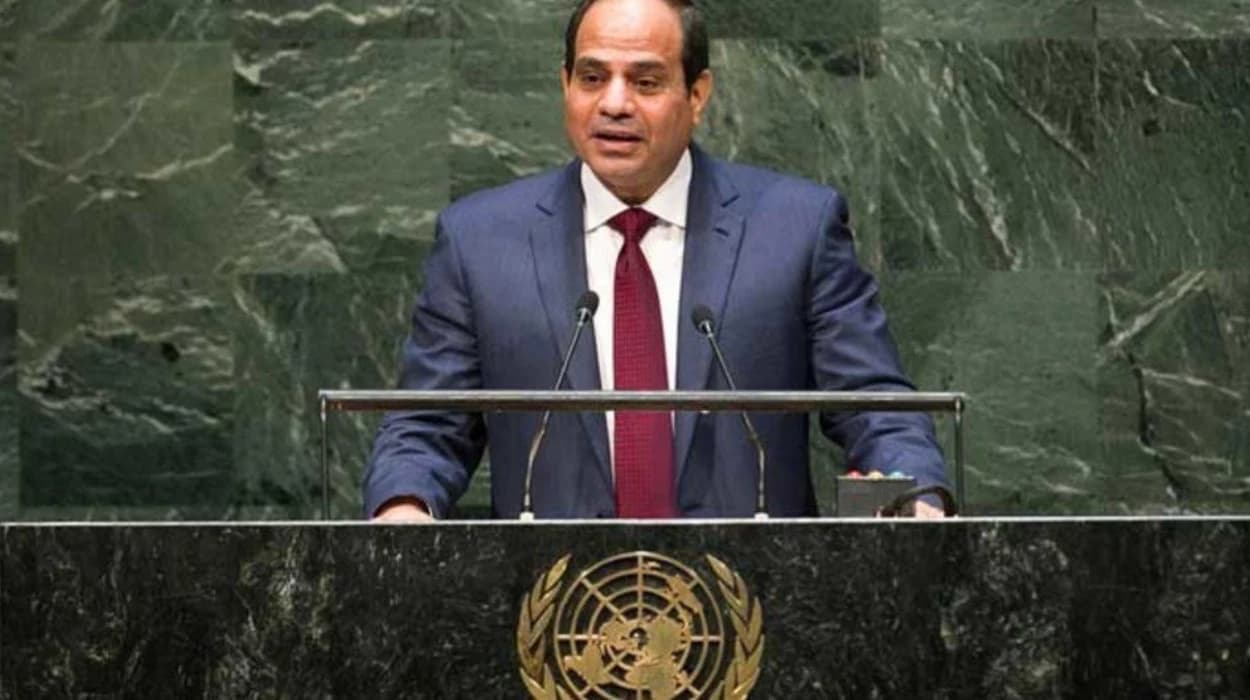
Cairo (The Palestine Telegraph Newspaper) January 20, 2026 – Egyptian President Abdel Fattah el-Sisi has issued a stern warning against the instrumentalisation of religion in conflicts and politics. Speaking at a regional summit, he emphasised the risks of exploiting faith for divisive agendas. The statement addresses ongoing Middle East instability and global religious extremism concerns.
President Sisi delivered the remarks during the Egypt-hosted Arab-African Economic Summit on January 18, 2026, attended by leaders from 25 nations. He stated that
"weaponising religion leads to chaos and undermines peace efforts worldwide."
The address focused on countering extremist ideologies amid conflicts in Gaza, Sudan, and the Sahel region.
Context of the Presidential Address
 Credit: Egyptian President Abdel Fattah Al-Sisi
The summit gathered heads of state to discuss economic cooperation and security challenges. Sisi's speech followed reports of rising sectarian violence in the region, including clashes in Lebanon's border areas and insurgencies in West Africa. Egyptian state media broadcast the event live, with delegates from the African Union and Arab League present.
Sisi referenced historical precedents, noting religion's role in past conflicts like the Syrian civil war and Yemen's crisis. He called for unified stances against groups misusing faith for recruitment and funding.
Key Statements from President Sisi
In his 20-minute address, Sisi declared, "No true faith calls for violence or domination; instrumentalisation distorts sacred teachings." He urged religious leaders to promote tolerance and governments to enforce secular governance principles. The president highlighted Egypt's Al-Azhar University as a model for moderate Islamic scholarship.
Sisi linked the issue to economic woes, arguing extremists exploit poverty to radicalise youth. He pledged Egypt's support for de-radicalisation programmes across Africa, citing successes in the Sinai Peninsula campaign against ISIS affiliates.
Regional Security Implications
Egypt faces ongoing threats from militants in neighbouring Libya and Sudan. Sisi noted cross-border arms flows funding religious militias, complicating counter-terrorism efforts. The summit adopted a joint declaration endorsing his stance, committing to intelligence sharing on extremist financing.
Libyan Prime Minister Abdul Hamid Dbeibeh echoed the warning, describing religion's politicisation as a barrier to national unity. Sudanese representatives reported similar issues in Darfur, where tribal conflicts intertwine with jihadist elements.
Egypt's Domestic Anti-Extremism Efforts
Credit: scmp.com
Under Sisi's leadership since 2014, Egypt has intensified measures against radical Islamism. Al-Azhar issued fatwas condemning violence in religion's name, while security forces dismantled cells linked to the Muslim Brotherhood. Courts convicted over 1,000 members on terrorism charges in 2025.
The government launched national campaigns promoting civic values in schools and mosques. Sisi's administration credits these for reducing attacks, with no major incidents in Cairo since 2023.
International Echoes and Responses
Saudi Crown Prince Mohammed bin Salman sent a message supporting Sisi's call, aligning with Vision 2030's moderate Islam push. UAE President Sheikh Mohamed bin Zayed offered bilateral cooperation on monitoring extremist online propaganda.
The Vatican expressed appreciation via a spokesperson, recalling Pope Francis's 2019 Abu Dhabi document with Al-Azhar on fraternity. French President Emmanuel Macron praised the remarks, linking them to Europe's fight against Islamist separatism.
Historical Precedents in Egypt
Sisi first raised the theme in a 2015 speech to Al-Azhar clerics, urging reinterpretation of texts fuelling enmity. Subsequent Davos addresses in 2018 and 2023 reiterated the message to global audiences. Egypt hosted the 2019 Cairo Document for Peace, signed by 500 Islamic scholars rejecting violence.
These efforts positioned Egypt as a voice against radicalisation, influencing UN resolutions on faith-based conflicts.
Economic Dimensions Highlighted
Sisi connected religious instrumentalisation to development barriers, estimating extremism costs Africa $50 billion annually in lost growth. Egypt's summit proposed a $10 billion fund for youth employment in vulnerable areas, reducing radicalisation risks.
Foreign direct investment in Egypt reached $12 billion in 2025, buoyed by stability post-reforms. Sisi touted Suez Canal revenues funding social programmes countering ideological appeals.
Stakeholder Reactions Across the Region
Al-Azhar Grand Imam Ahmed el-Tayeb endorsed the speech, committing to global dialogues. Muslim Brotherhood affiliates in Turkey criticised it as authoritarian rhetoric, though without specifics.
African Union Commission Chair Moussa Faki Mahamat welcomed the initiative, pledging integration into Agenda 2063. Civil society groups in Tunisia organised forums echoing Sisi's themes.
Broader Global Context
The warning comes amid heightened religious tensions, including India's citizenship laws debates and Europe's migration debates. UN Secretary-General António Guterres referenced similar concerns in his 2026 peace agenda.
Sisi's remarks align with G20 discussions on preventing faith-based terrorism financing. Interpol reported 20 per cent rise in such incidents globally in 2025.
Summit Outcomes and Follow-Ups
Delegates approved a charter establishing an Arab-African Anti-Extremism Centre in Cairo. Annual meetings will monitor progress, with Egypt leading initial training for imams.
Sisi announced scholarships for 5,000 African students at Al-Azhar, focusing on theology and counter-radicalisation curricula.
Ongoing Challenges in Implementation
Egypt continues operations in North Sinai, displacing 50,000 residents for buffer zones. International donors, including the U.S. and EU, provide $1 billion yearly for stabilisation.
Reports from Amnesty International documented 200 extremism-related arrests in December 2025, with trials ongoing.