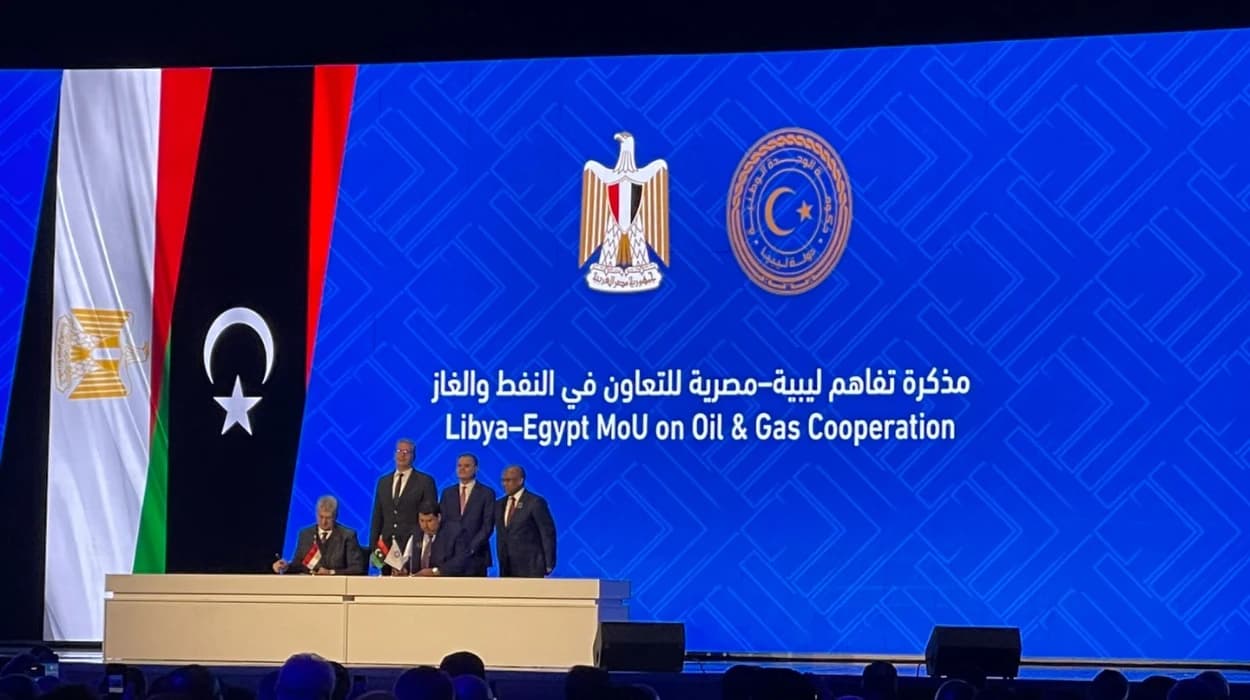
Tripoli (The Palestine Telegraph Newspaper) 24 January 2026 – Libya and Egypt have signed a Memorandum of Understanding (MoU) to enhance cooperation in the oil and gas sector. The agreement focuses on joint exploration, production sharing, and infrastructure development between the two North African neighbours. Officials from both nations attended the signing ceremony amid efforts to boost energy security and economic ties in the region.
The MoU was signed by Libya's National Oil Corporation (NOC) and Egypt's Ministry of Petroleum and Mineral Resources during a high-level meeting in Tripoli. Representatives stated the pact establishes frameworks for technology transfer, pipeline connectivity, and joint ventures in upstream and downstream activities.
This development follows years of discussions aimed at leveraging Libya's vast reserves and Egypt's refining capacity.
Key Provisions of the Libya-Egypt Oil and Gas MoU
The agreement outlines collaborative exploration in shared border areas and offshore Mediterranean blocks. It includes provisions for gas pipeline interconnections between Libyan fields and Egyptian LNG facilities on the Mediterranean coast. Both parties committed to investment protection and dispute resolution mechanisms.
Libyan Oil Minister Khalifa Abdulsadek signed on behalf of NOC, while Egyptian Petroleum Minister Karim Badawy represented Cairo. The MoU prioritises swift implementation of feasibility studies for cross-border pipelines capable of transporting 10 billion cubic metres of gas annually. Technical committees will convene within 30 days to draft detailed work plans.
The pact addresses post-conflict recovery in Libya's energy sector, which produces 1.2 million barrels per day of crude oil. Egypt seeks to import Libyan gas to supplement domestic supplies strained by regional exports.
Strategic Importance for North African Energy Markets
 Credit: nan.media
Libya holds Africa's largest proven oil reserves at 48 billion barrels and significant gas deposits. Production disruptions from political instability have historically impacted global markets. The MoU positions Egypt as a key partner for export diversification.
Egypt's Zohr gas field, discovered in 2015, established it as a Mediterranean hub exporting LNG to Europe. Libyan Sharara and Sirte Basin fields complement this network. Joint ventures target enhanced recovery techniques to boost output by 20% over five years.
The agreement aligns with Egypt's strategy to become a regional energy transit centre via the African Eastern Corridor. Libya gains access to Egyptian refining technology for heavier crudes unsuitable for export.
Economic Impact and Investment Commitments
NOC pledged $2 billion in joint projects over the medium term, focusing on field rehabilitation. Egypt committed technical expertise and $500 million in pipeline financing. Revenue sharing models favour equitable distribution based on production contributions.
Libyan Prime Minister Abdul Hamid Dbeibah described the MoU as a "milestone for economic integration." Egyptian President Abdel Fattah el-Sisi emphasised mutual benefits in stabilising energy prices. The deal creates 5,000 direct jobs in exploration and construction phases.
Foreign investors, including Eni and BP operating in Libya, expressed support for trilateral partnerships. Egypt's state-owned Engineering for Petroleum and Process Industries (ENPPI) will lead engineering designs.
Historical Context of Libya-Egypt Energy Relations
 Credit: wikipedia.org
Bilateral ties date to the 1970s with initial pipeline proposals shelved by Libya's political upheavals. The 2011 revolution halted progress until stabilisation efforts post-2020 elections. Previous MoUs in 2019 covered electricity interconnectivity, now expanded to hydrocarbons.
Egypt provided Libya with 300,000 barrels of fuel during 2023 blackouts. Trade volumes reached $1.5 billion annually, dominated by energy exchanges. The new pact builds on 2024 maritime boundary agreements delineating offshore claims.
Regional forums like the Gas Exporting Countries Forum (GECF) facilitated negotiations. Both nations coordinate positions on OPEC+ production quotas.
Technical and Infrastructure Details
Pipeline routes span 400 kilometres from Libya's Mellitah complex to Egypt's Damietta terminal. Capacity designs accommodate future expansions to 20 billion cubic metres yearly. Compressor stations every 100 kilometres ensure efficient flow.
Joint exploration targets the Ghadames Basin straddling borders, holding 30 trillion cubic feet of gas. Seismic surveys commence in Q2 2026 using shared vessel fleets. Drilling rigs from Egypt's bursat field relocate to Libyan sites.
Downstream cooperation includes upgrading Libya's Zueitina refinery with Egyptian catalysts. Petrochemical plants planned near Tobruk utilise associated gas.
Regional Geopolitical Dimensions
The MoU counters European dependence on Russian gas post-Ukraine conflict. Libya and Egypt position as reliable Mediterranean suppliers. Turkey-Libya maritime deal complicates eastern Mediterranean dynamics, but Egypt prioritises economic pragmatism.
Algeria expressed interest in trilateral extensions linking trans-Saharan pipelines. Tunisia welcomed spillover benefits for its gas imports.
US and EU officials endorsed the pact during January 2026 energy talks in Algiers. Sanctions relief on Libyan oil enabled broader international participation.
Implementation Timeline and Oversight Mechanisms
Steering committees meet quarterly, reporting to energy ministers. First gas flows targeted for late 2027 pending environmental clearances. Annual audits ensure compliance with fiscal terms.
Dispute arbitration falls under International Chamber of Commerce rules in Paris. Force majeure clauses address security risks in Libya's south.
Capacity building includes training 1,000 Libyan engineers at Egyptian universities. Scholarships cover petroleum engineering and seismic interpretation.
Environmental and Sustainability Commitments
Both nations pledged adherence to Paris Agreement standards in flaring reduction. Carbon capture pilots deploy at joint fields by 2028. Methane leak detection technologies from Egypt's NOC subsidiaries integrate into Libyan operations.
Biodiversity assessments precede offshore drilling. Community funds allocate 2% of revenues to coastal protection.
Renewable synergies explore solar-powered pumping stations reducing oilfield emissions.
Broader Bilateral Relations Framework
The energy MoU complements 2025 security pacts on border patrols. Trade targets $5 billion by 2030 across agriculture, manufacturing, and tourism. Free trade zone proposals advance near Sallum crossing.
Military cooperation includes joint naval exercises in the Mediterranean. Diplomatic exchanges increased following Libya's 2021 ceasefire.
Egypt hosts 1.5 million Libyan refugees, easing repatriation through economic linkages.
Challenges and Risk Mitigation Strategies
Libya's eastern parliament contested NOC autonomy, but Tripoli leadership reaffirmed mandates. Militia threats to pipelines prompt joint security detachments.
Egypt navigates domestic subsidy reforms funding imports. Currency stabilisation in Libya facilitates payments.
Insurance underwriters from Lloyd's of London cover political risks. World Bank financing packages support infrastructure.
Global Energy Market Implications
 Credit: Reuters
The partnership adds 50,000 barrels daily equivalent to available supply. LNG spot prices may ease with increased Mediterranean volumes. Brent crude benchmarks benefit from North African stabilisation.
Asian buyers, primary Egyptian clients, anticipate competitive contracts. Europe diversifies via EastMed pipelines.
OPEC+ monitors impacts on quota compliance. Libya's exemption status persists during recovery.