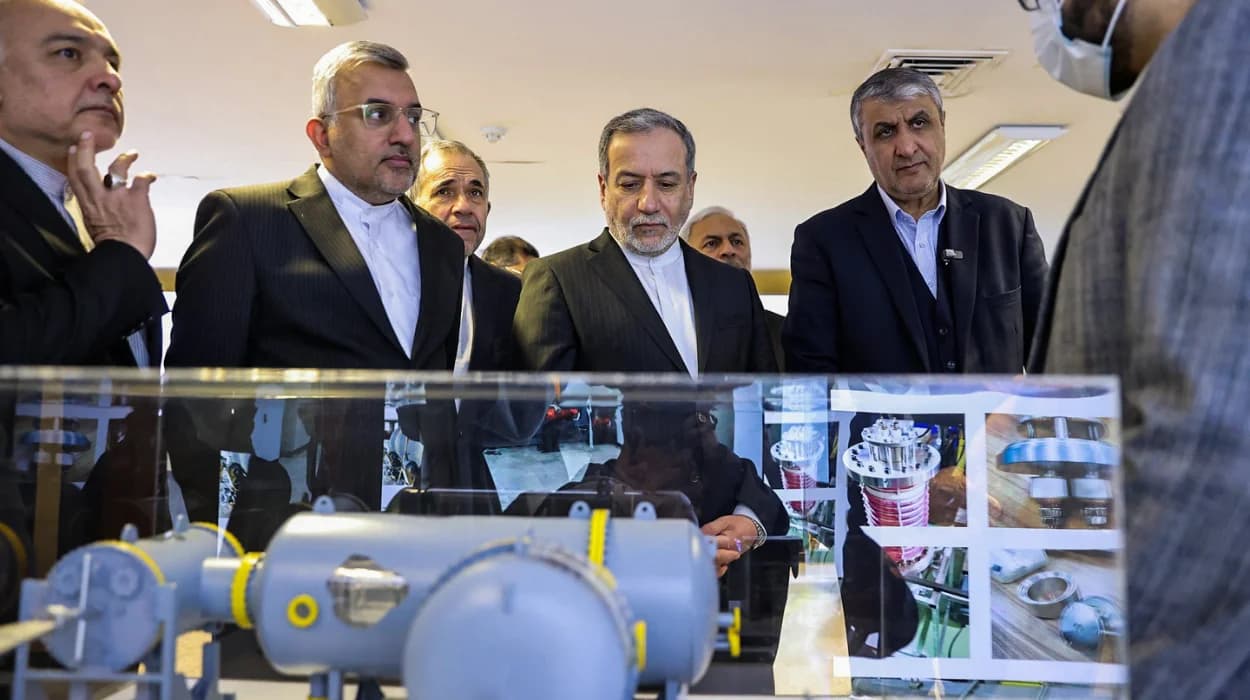
The International Atomic Energy Agency (IAEA) has reported that Iran has not permitted inspectors to access its nuclear sites damaged during recent Israeli and US airstrikes, making verification of enriched uranium stocks "long overdue." IAEA Director General Rafael Mariano Grossi condemned the lack of cooperation, calling for a full resumption of inspections without delay.
IAEA Reports Iran’s Nuclear Verification Overdue
As reported by Yara Bayoumy of Reuters, the International Atomic Energy Agency (IAEA) said on November 12, 2025, that Iran still has not allowed its inspectors into nuclear sites damaged in airstrikes by Israel and the United States in June 2025. This refusal has led to verification of Tehran's enriched uranium stockpile being described as
"long overdue" by the agency.
The head of the IAEA has called on Iran to immediately resume full inspections, which the country has so far refused.
Similarly, Vefa Tarhan of Al Arabiya English highlighted the confidential IAEA report released on the same day, stating that the IAEA has been unable to verify stocks of enriched uranium or gain access to the main nuclear facilities since June. The report also confirms Iran formally suspended cooperation with the agency in July and allowed only a minimal presence of two inspectors at the Bushehr nuclear power plant briefly after the suspension, who had to leave soon after.
Background to the Suspension of Inspections
The inability of the IAEA inspectors to perform their duties stems from the military conflict in June 2025, when Israel and the United States launched airstrikes on several Iranian nuclear sites. According to a September 2025 analysis by ISIS Online, the 12-Day War led to the temporary suspension of all in-field verification and monitoring activities by the IAEA in Iran. The agency withdrew all its inspectors for safety reasons, citing threats from Iranian regime forces during this period.
Iran subsequently officially halted cooperation with the IAEA in July 2025, as reported by ISIS Online, amid the strained security environment. Efforts to regain partial access through limited inspections at Bushehr were short-lived, and Iran denied access to other key sites, including a new uranium enrichment facility under construction near Esfahan (Isfahan) and to information regarding stockpiles of enriched uranium.
Lack of Access to Major Nuclear Sites and Facilities
The IAEA’s November 2025 report provides detailed assessments of the major Iranian nuclear sites damaged in June. According to the report and satellite imagery, significant structural damage was sustained by facilities such as the Fordow Enrichment Plant (FEP), with direct impacts on underground enrichment halls. The Isfahan Fuel Enrichment Plant (IFEP), a new facility Iran had notified the IAEA about just before the bombing started, was among the targeted sites but inspections planned for June 13 were cancelled due to the conflict.
The report notes that the United States used Tomahawk missiles to destroy entrances to the tunnel complexes at these sites, severely restricting physical access for inspections. Although Iran has attempted partial restoration of access to some sites, notably reopening one of three tunnel entrances, key areas like the southernmost portal remain inaccessible. Consequently, the current operational status of enrichment activities and stocks of enriched uranium within these tunnel systems remains unknown.
IAEA Uses Alternative Monitoring Methods
Facing a lack of on-site access, the IAEA has resorted to commercial satellite imagery and other indirect monitoring technologies to assess the condition of Iran's nuclear facilities. However, the agency acknowledges the limitations and insufficiency of such remote tools in fulfilling its verification mandate. According to the confidential report, such methods cannot replace physical inspection and verification mandated by safeguards and agreements.
IAEA Director General Rafael Mariano Grossi has publicly stated that the ongoing denial of inspection access
"is not something that can go on for months on end"
and that Iran’s request for a
"safeguards a la carte"
approach is unacceptable and contrary to international obligations.
Unresolved Safeguard Issues Since 2018
Another critical concern highlighted in the IAEA report is the lack of progress on unresolved safeguards issues stemming from as far back as 2018. The agency continues to seek information and access concerning Iran's centrifuge production, uranium mining and milling operations, and stockpiles of low-enriched and highly enriched uranium, among other nuclear materials and equipment. Since Iran suspended its adherence to the Additional Protocol in 2021, the IAEA has been unable to perform complementary accesses necessary to resolve these outstanding issues.
The agency has condemned Iran's withdrawal of cooperation and the subsequent designation withdrawals of IAEA inspectors in August 2025 as unjustified decisions undermining the safeguards system.
Global and Regional Implications
These developments come against a backdrop of decades-long tensions over Iran’s nuclear programme, with the IAEA playing a central role in monitoring compliance and promoting transparency. As noted by Al Jazeera's June 2025 analysis, the IAEA faces increased scrutiny over its credibility and effectiveness amid the growing conflict and Iran's obstructions.
The agency's current inability to verify enriched uranium stocks, particularly at sensitive and damaged sites, raises concerns for the international community regarding both nuclear non-proliferation and regional stability.