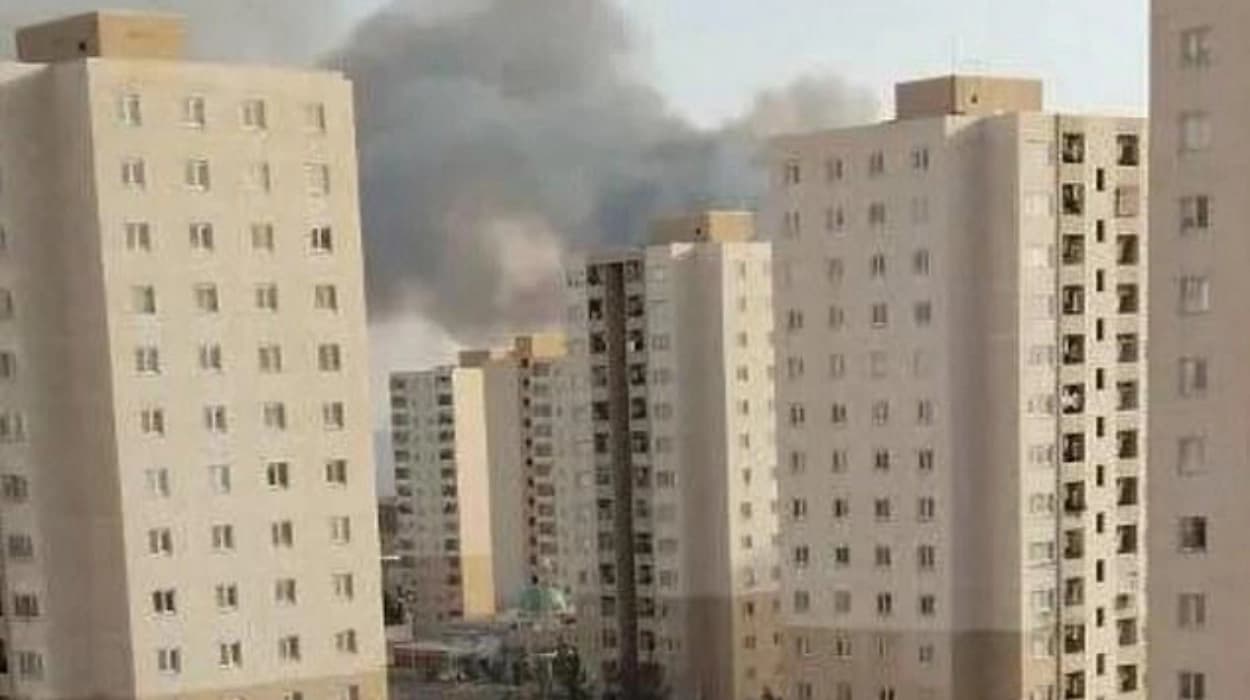
Tehran (The Palestine Telegraph Newspaper) – 31 January 2026 – Explosions struck multiple locations across Iran, resulting in at least four deaths. The incidents occurred hours after US President Donald Trump threatened to attack the Iranian regime. Emergency services reported injuries and damage to infrastructure in affected areas.
Iranian state media confirmed blasts in Tehran and two provincial cities, with casualties including two civilians and two security personnel. No group has claimed responsibility for the attacks. Iranian authorities described the explosions as acts of sabotage amid heightened regional tensions.
Incident Details and Casualties
The explosions took place late on 30 January 2026 in Tehran’s industrial district, Isfahan, and near the port city of Bandar Abbas. Iranian state television aired footage showing fireballs and smoke rising from targeted sites, including a fuel depot and electrical substations. Rescue teams recovered four bodies from the rubble, with at least 12 others wounded, according to reports from Fars News Agency, affiliated with the Islamic Revolutionary Guard Corps (IRGC).
Local officials in Isfahan stated that one blast hit a power plant, causing blackouts in surrounding neighbourhoods. In Bandar Abbas, the explosion damaged a warehouse storing military supplies, though Iranian officials downplayed the extent of losses. Tehran’s municipality reported minor structural damage to nearby buildings but no collapse of major infrastructure.
Ambulances ferried the injured to hospitals, where medical staff treated burns and shrapnel wounds. Iran’s health ministry issued a statement confirming the death toll stood at four as of early 31 January, with no further fatalities expected. Security forces cordoned off the sites, preventing independent verification of the damage.
Timeline of Events Leading to Blasts
The explosions followed a public statement by President Trump earlier on 30 January. Speaking at a White House briefing, Trump warned that the United States would “bomb the Iranian regime back to the Stone Age” if Tehran continued its nuclear activities and support for proxy militias in the Middle East. The remarks came during a discussion on US foreign policy priorities in his second term.
Trump’s comments referenced Iran’s recent missile tests and alleged shipments of drones to groups in Yemen and Lebanon. He stated, “Iran has been playing with fire for too long, and if they don’t stop, we will put it out permanently.” The president reiterated his administration’s maximum pressure campaign, including new sanctions announced the previous week.
Hours after the statement, Iranian foreign ministry spokesperson Nasser Kanaani held a press conference in Tehran. Kanaani called Trump’s threats “psychological warfare” and vowed that Iran would respond decisively to any aggression. He accused the US of destabilising the region through support for Israel and Gulf states.
Iranian Government Response

Iran’s Supreme National Security Council convened an emergency meeting overnight. A statement from the council condemned the explosions as “Zionist-American terrorism” but provided no evidence linking the incidents to external actors. President Ebrahim Raisi addressed the nation via television, promising a full investigation and retaliation against those responsible.
IRGC commander Hossein Salami inspected the Bandar Abbas site and told reporters that the blasts targeted “strategic assets” but failed to achieve significant disruption. Salami added that Iran’s defences remained intact and that the military was on high alert. State media broadcast images of soldiers deploying to additional facilities nationwide.
Iran closed its airspace over the affected provinces temporarily, citing security concerns. Schools and government offices in Isfahan shut for the day, while Tehran heightened police presence in public spaces. The atomic energy organisation reported no impact on nuclear facilities, which it described as heavily fortified.
International Reactions and Statements
United Nations Secretary-General António Guterres called for restraint from all parties. In a statement from New York, Guterres urged Iran and the United States to engage in dialogue to prevent escalation. He expressed concern over the loss of life and offered UN support for any investigation.
European Union foreign policy chief Josep Borrell issued a statement from Brussels, describing the situation as “alarming.” Borrell called on Iran to share details of the incidents and appealed to Washington to avoid provocative rhetoric. Several EU nations, including France and Germany, echoed the call for de-escalation.
Russia’s foreign ministry in Moscow labelled Trump’s threats “irresponsible” and offered technical assistance to Iran for the probe. Chinese state media reported the explosions without commentary, focusing instead on Trump’s tariff plans. Saudi Arabia’s state news agency expressed solidarity with Iran against “external threats,” marking a rare diplomatic overture amid ongoing rivalry.
Israel’s prime minister office declined to comment on the blasts but reiterated its commitment to regional security. UK foreign secretary David Lammy told parliament that London was monitoring developments closely and urged calm.
Regional Context and Prior Tensions

The incidents occur against a backdrop of strained US-Iran relations since Trump’s return to office in January 2025. His administration reimposed sanctions on Iran’s oil exports and designated the IRGC as a terrorist organisation. Iran responded with naval exercises in the Strait of Hormuz, through which 20 per cent of global oil passes.
In December 2025, Israel conducted airstrikes on Iranian-linked targets in Syria, prompting Tehran to launch retaliatory missiles. US forces intercepted several projectiles, escalating fears of broader conflict. Trump’s recent threats followed intelligence reports of Iranian uranium enrichment surpassing agreed limits under the 2015 nuclear deal, from which he withdrew in 2018.
Iran maintains its nuclear programme is peaceful, while US and Israeli officials claim it edges closer to weapons capability. Diplomatic efforts in Vienna stalled last month after Iran rejected demands for stricter inspections. Gulf states have increased purchases of US defence systems amid the standoff.
Security Measures and Investigations Underway
Iranian investigators from the intelligence ministry arrived at the sites on 31 January. Preliminary findings, aired on state television, pointed to timed explosives placed by infiltrators. Forensic teams collected fragments for analysis, with officials promising results within days.
Authorities arrested several suspects in Tehran, though details remained undisclosed. IRGC media outlets published photographs of confiscated devices, claiming links to foreign intelligence. Neighbouring countries reported no unusual border activity preceding the blasts.
The US state department spokesperson Matthew Miller stated that Washington had no involvement in the explosions. Miller emphasised that Trump’s remarks aimed to deter Iranian aggression, not provoke violence. Pentagon officials confirmed US forces in the region remained at routine readiness levels.
Economic Impact and Market Reactions
Iran’s currency, the rial, fell 3 per cent against the US dollar on informal markets following the news. Oil prices rose 2 per cent in early trading on 31 January, reflecting concerns over supply disruptions. Tehran’s stock exchange suspended trading for the morning.
International energy firms operating in the Gulf paused non-essential shipments through Bandar Abbas. Analysts noted that any prolonged closure of the port could affect global liquefied natural gas supplies. Iran’s government assured trading partners of stable exports.
Relatives of the victims gathered outside hospitals in Isfahan, calling for justice. Funerals for the dead were scheduled for later on 31 January, with state funerals planned for the security personnel. Iranian media covered the vigils extensively, framing them as symbols of national resilience.