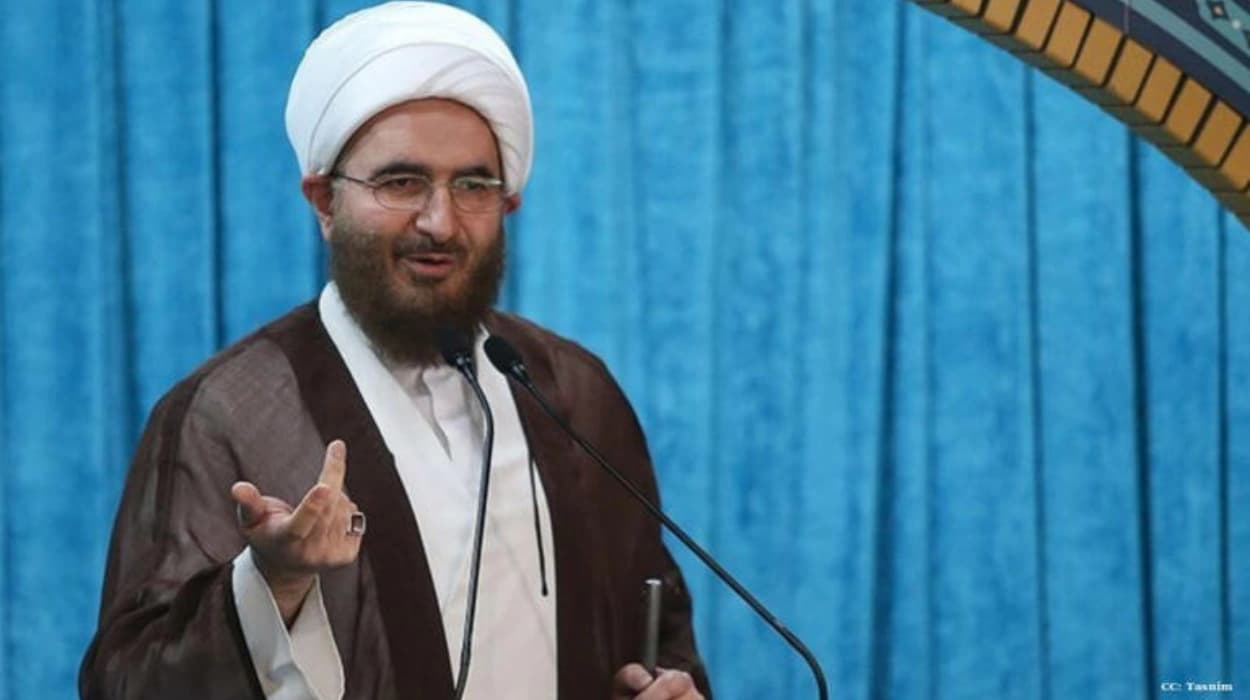
Tehran (The Palestine TelegraphNewspaper) 23 January 2026 – The office of Iran's Supreme Leader Ayatollah Ali Khamenei issued a statement warning of a decisive response to any threats against the Islamic Republic. The announcement followed recent regional tensions involving US military movements and Israeli statements. Officials emphasised readiness to defend national sovereignty amid ongoing geopolitical pressures.
Representatives from Supreme Leader Ayatollah Ali Khamenei's office released an official statement on 22 January 2026, cautioning that Iran would deliver a resolute reply to any aggression targeting the country. The message appeared on the Leader's official website and state media outlets, addressing "hostile intentions" from adversaries.
Iranian authorities framed the warning within the context of recent US deployments near the Persian Gulf and reported Israeli preparations.
The statement declared:
"The Islamic Republic possesses the capability and resolve to respond decisively to any threats against its security and interests."
It referenced historical precedents of Iranian military actions in defence of sovereignty. Delivery occurred during a period of heightened alert following President Trump's 21 January speech outlining US policy towards Iran.
Foreign Ministry spokesperson Nasser Kanaani echoed the position during a press conference, noting continuous monitoring of regional developments. He listed specific concerns including US aircraft carrier positioning and sanctions announcements. No timelines or specific targets appeared in the public communications.
Specific Triggers for the Leadership Statement
Iranian officials pointed to a US naval task force entering the Strait of Hormuz on 20 January as a primary catalyst. The USS Abraham Lincoln carrier strike group conducted exercises, according to Pentagon releases. Tehran viewed the manoeuvre as provocative, given past incidents in 2019 and 2025.
Israeli Prime Minister Benjamin Netanyahu stated on 19 January that preparations continued for potential strikes on Iranian nuclear sites. The comments followed IAEA reports confirming uranium enrichment levels at 60% purity in Fordow facilities. Iran's Atomic Energy Organisation dismissed the claims as fabrications aimed at justification for attack.yahoo+1
Domestic briefings to the Majlis parliament on 22 January detailed intelligence assessments of "coordinated threats" from Washington and Tel Aviv. Revolutionary Guard Corps (IRGC) commander Hossein Salami addressed assembled lawmakers, affirming full operational readiness across missile and drone units. State television broadcast excerpts of his remarks.
Regional allies received similar notifications. Hezbollah Secretary-General Hassan Nasrallah confirmed receipt of Tehran's alert during a Beirut speech, pledging coordinated defence. Houthi representatives in Yemen issued parallel warnings tied to Red Sea shipping lanes.
Historical Context of Iranian Warnings
 Credit: AP
The Supreme Leader's office has employed similar language during past escalations. In April 2025, following Israeli strikes on consular buildings in Damascus, Iran launched over 300 projectiles in retaliation. That exchange resulted in no reported casualties after interceptions by US and allied forces.
US drone surveillance increased over eastern Syria and Iraq since 15 January, per CENTCOM logs. Iranian air defences tracked incursions, activating S-300 systems around Tehran and Isfahan. No shootdowns occurred, though warnings transmitted via diplomatic channels.
Khamenei's prior addresses, including a 10 January Friday sermon, outlined a doctrine of "active deterrence." The sermon reached audiences via state radio, emphasising self-reliance in defence industries. Recent tests of Sejjil ballistic missiles underscored the messaging.
Statements from Iranian Military and Government Bodies
IRGC Aerospace Force commander Amir Ali Hajizadeh detailed upgraded capabilities in a 22 January interview with Tasnim news agency. He specified ranges exceeding 2,000 kilometres for hypersonic warheads. The comments aligned directly with the Supreme Leader's office position.aljazeera
President Masoud Pezeshkian convened the Supreme National Security Council, issuing a communique supporting the warning. The council listed economic sanctions and cyber operations among perceived threats. No immediate mobilisations reported beyond standard postures.reuters
Judiciary chief Gholam-Hossein Mohseni-Eje'i instructed prosecutors to prepare cases against external actors for "aggression planning." Announcements appeared on official judiciary portals, citing international law violations.nytimes+1
International Reactions to the Iranian Statement
US National Security Council spokesperson Caroline Levine responded via briefing that Washington sought de-escalation while maintaining commitments to allies. President Trump posted on X platform:
"Iran knows the consequences of bad behaviour."
No new deployments announced.aljazeera+1
Israeli Defence Minister Israel Katz affirmed Iron Dome readiness during a Knesset session. Military spokespersons confirmed sorties over Lebanese airspace without elaborating on Iranian references. Jerusalem maintained its policy of pre-emption against existential threats.english.enabbaladi
European Union foreign policy chief Josep Borrell urged restraint during a Brussels press encounter. He referenced stalled JCPOA revival talks suspended since 2023. France and Germany dispatched diplomatic notes calling for dialogue.yahoo+1
United Nations Secretary-General Antonio Guterres' office expressed concern over rhetoric, scheduling an informal Security Council consultation for 24 January. Russian Foreign Minister Sergey Lavrov endorsed Iran's right to self-defence in Moscow statements.reuters
Regional Developments Linked to the Warning
Yemeni Houthi forces reported sinking a Greek-owned tanker in the Red Sea on 21 January, citing solidarity with Palestine. Iranian naval vessels shadowed the operation from international waters. Sanaa authorities claimed the vessel violated blockade protocols.nytimes
Iraqi militia groups under Popular Mobilisation Forces umbrella heightened alerts along borders. Drone patrols intensified over Baghdad, targeting suspected US logistics convoys. No attacks materialised by 23 January.cnn+1
Gulf Cooperation Council nations bolstered air patrols. Saudi Arabia intercepted an unmanned aerial vehicle near Abqaiq oil facilities on 22 January, attributing origin to IRGC proxies. Riyadh pursued quiet diplomacy with Tehran.wikipedia
Domestic Measures and Public Communications
 Credit: Getty Images
Iranian state media aired documentaries recapping 2025 confrontations on 22 January, reaching millions via IRIB channels. Billboards in Tehran displayed slogans reinforcing national resolve. Mosques nationwide hosted prayers for protection.
Cyber defence units reported deflecting multiple intrusions traced to Israeli servers. Communications Ministry blocked several VPN services to counter information campaigns. Internet speeds remained stable amid precautions.
Economic Council approved allocations for defence spending in the 2026-2027 budget, prioritising domestic production. Oil export revenues stabilised despite sanctions, per Central Bank figures released 22 January.
Broader Geopolitical Framework
Tensions traced to October 2025 escalations, when Iran-backed groups attacked US bases in Iraq. Retaliatory strikes killed 12 militia personnel, per Baghdad health ministry counts. Diplomatic efforts yielded a fragile truce until recent announcements.
IAEA Director General Rafael Grossi visited Natanz on 18 January, verifying compliance with safeguards absent weaponisation traces. His report to Vienna headquarters noted constructive engagement despite external pressures.
Proxy activities persisted in Syria, where Iranian advisors supported government advances against rebels. US special forces maintained presence near oil fields, drawing periodic rocket fire without casualties.
Iranian diplomats engaged Oman and Qatar for mediation channels. Muscat hosted preliminary talks on 22 January, focusing on confidence-building steps. Outcomes remained confidential.
Supreme Leader's office scheduled no further public addresses as of press time. Monitoring continued across official channels. Regional postures held steady.