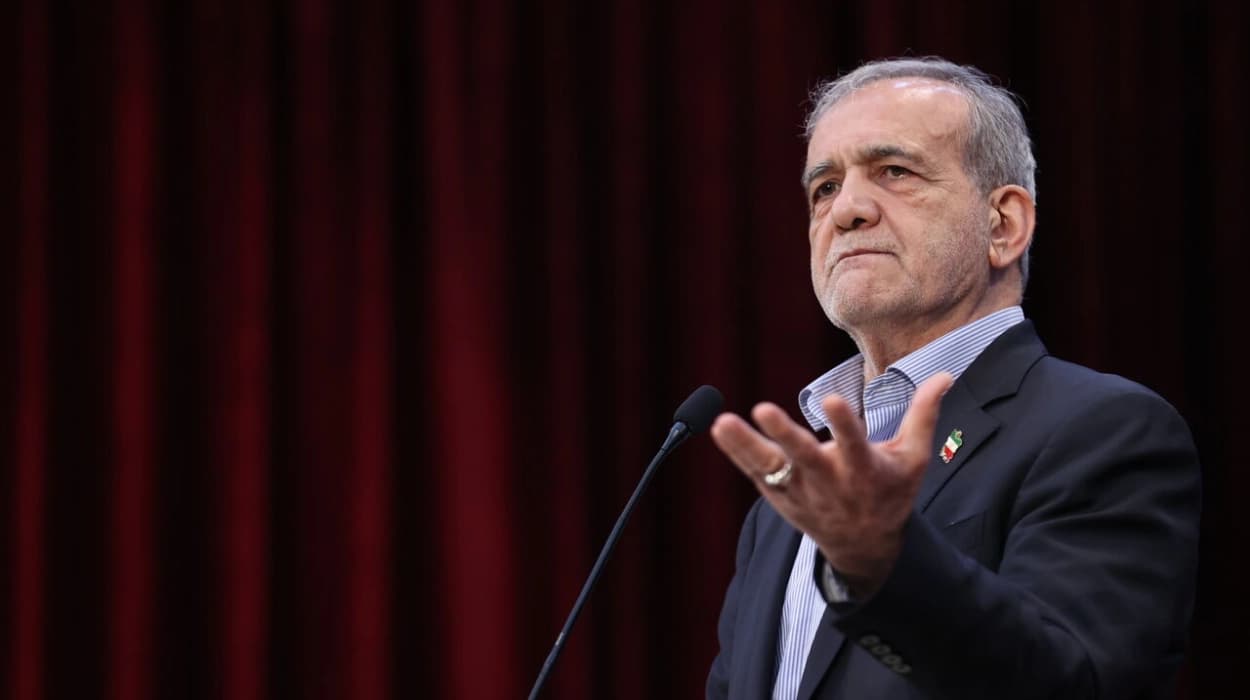
Tehran (The Palestine Telegraph Newspaper) February 03, 2026 – Iran’s President Masoud Pezeshkian has instructed Foreign Minister Abbas Araghchi to pursue “fair and equitable negotiations” with the United States, responding to regional calls and a US proposal, provided talks occur without threats or unreasonable expectations. The statement coincides with public protests in Tehran over economic woes linked to sanctions, as Iranian officials reaffirm commitment to a peaceful nuclear programme under international oversight. Developments highlight ongoing strains in US-Iran relations, with Tehran conditioning diplomacy on respect for sovereignty and sanctions relief, while Washington prioritises curbs on enrichment and regional activities.
Iran’s President Masoud Pezeshkian delivered remarks emphasising readiness for dialogue with the United States during a period of domestic economic strain and international scrutiny over the nuclear programme. He directed Foreign Minister Abbas Araghchi to engage based on principles of respect, caution, and efficiency. Iranian state media reported the comments as a response to friendly governments urging a measured reply to recent US overtures.
One account detailed the presidential directive directly. Raylan Givens said in X post,
“Iranian President Masoud Pezeshkian: Due to requests from friendly governments in the region to respond to the US President's proposal for negotiations, I have instructed Foreign Minister Abbas Araghchi to conduct fair and equal negotiations based on principles of respect, caution, and efficiency, provided that a suitable environment is maintained, free of threats and unreasonable expectations.”
Developments Prompting Iranian Response
The presidential instruction follows a US proposal for renewed talks, amid reports that Turkey may facilitate discussions. Iranian officials described the approach as the clearest signal yet of Tehran’s openness to structured diplomacy. President Pezeshkian framed negotiations as contingent on a threat-free environment and avoidance of excessive demands.

Sources indicated the remarks address longstanding disputes rooted in the 2015 nuclear accord, from which the United States withdrew, reimposing sanctions. Iran maintains its nuclear activities serve civilian purposes, including energy and medical applications, while complying with Nuclear Non-Proliferation Treaty obligations.
Protests Reflect Economic Pressures
Large protests unfolded in Tehran and other cities, with demonstrators citing inflation, unemployment, and sanctions impacts. Security forces monitored gatherings, reporting most remained peaceful. Banners highlighted calls for economic reforms alongside anti-sanctions messaging.
Authorities linked hardship to restricted oil exports and banking access, measures imposed by the United States targeting energy, finance, and defence sectors. Iranian measures include subsidy adjustments and non-oil trade expansion, though households report persistent challenges.
Nuclear Programme Under Scrutiny
Iranian statements reaffirmed no pursuit of nuclear weapons, with enrichment described as advancing civilian needs under inspector access. International concerns persist over enrichment levels surpassing prior accord limits and facility expansions. Tehran argues reduced cooperation followed the US exit and sanction reinstatement.
The president noted willingness to address technical matters diplomatically, insisting on recognition of peaceful technology rights. US positions tie sanctions adjustments to verifiable nuclear restraint and curbs on missile development plus regional proxies.
Reactions from Regional and International Actors
A commentary questioned the concept of fairness in prospective deals. Mossad Commentary said in X post,
“WHAT IS A “FAIR DEAL” WITH IRAN RIGHT NOW? COMMENT BELOW Iranian President Masoud Pezeshkian says he has instructed his foreign minister to pursue what he calls “fair and equitable negotiations” with the United States, provided talks take place without threats or “unreasonable expectations.” This is the clearest signal yet that Tehran may be open to talks being organized by Turkey. SO LET'S DISCUSS: What would you consider a fair deal for a regime that: - Slaughtered tens of thousands of its own people - Used negotiations to advance its nuclear program - Enriched uranium far beyond civilian needs - Fueled proxy wars across the region AGAIN What does a fair deal look like now? Stay connected, follow @MOSSADil”
Gulf states and European signatories to the prior accord monitor closely, advocating phased de-escalation. They emphasise securing energy routes and preventing proliferation risks. US allies stress coordinated diplomacy addressing full security spectrum.
Historical Context of 2015 Accord
The Joint Comprehensive Plan of Action limited Iran’s enrichment, stockpiles, and inspections in exchange for sanctions easing, enabling market reintegration. US withdrawal prompted Iranian stepwise non-compliance, stalling revival attempts over sequencing disputes.
Diplomats explored Oman- or Turkey-mediated formats previously, facing hurdles from leadership changes and trust erosion. Current signals revive focus on reciprocal commitments balancing nuclear caps with economic relief.
US Stance on Core Conditions
Washington officials outlined priorities: zero uranium enrichment, missile limits, and proxy restraint. Sanctions target entities deemed destabilising, with humanitarian carve-outs claimed. Statements affirm diplomacy viable if Iran evidences seriousness via actions.
Consultations with partners underscore alliance roles in verification and pressure maintenance. No firm timeline exists, though 60-day benchmarks featured in past rounds.
Domestic and Regional Security Dynamics
Iran sustains regional partnerships as deterrence, per officials, while US views them fuelling instability. Naval and missile activities continue, with deconfliction channels active to avert incidents. Neighbours urge restraint amid waterway vulnerabilities.
Protests underscore interplay of internal governance and external pressures, with leadership framing sanctions as population punishment. Economic data show currency woes and import curbs exacerbating daily costs.
Outlook on Diplomatic Pathways
Iranian assessments consider intermediary roles, stressing verifiable mutuality across sanctions, nuclear, and security files. US links policy shifts to compliance demonstrations. Differences endure, yet pressures sustain engagement interest.
No mechanism announced, but combination of protests, economic strain, and proliferation alarms propels signalling. Tehran seeks reciprocal framework; Washington conditions changes on tangible Iranian restraint.