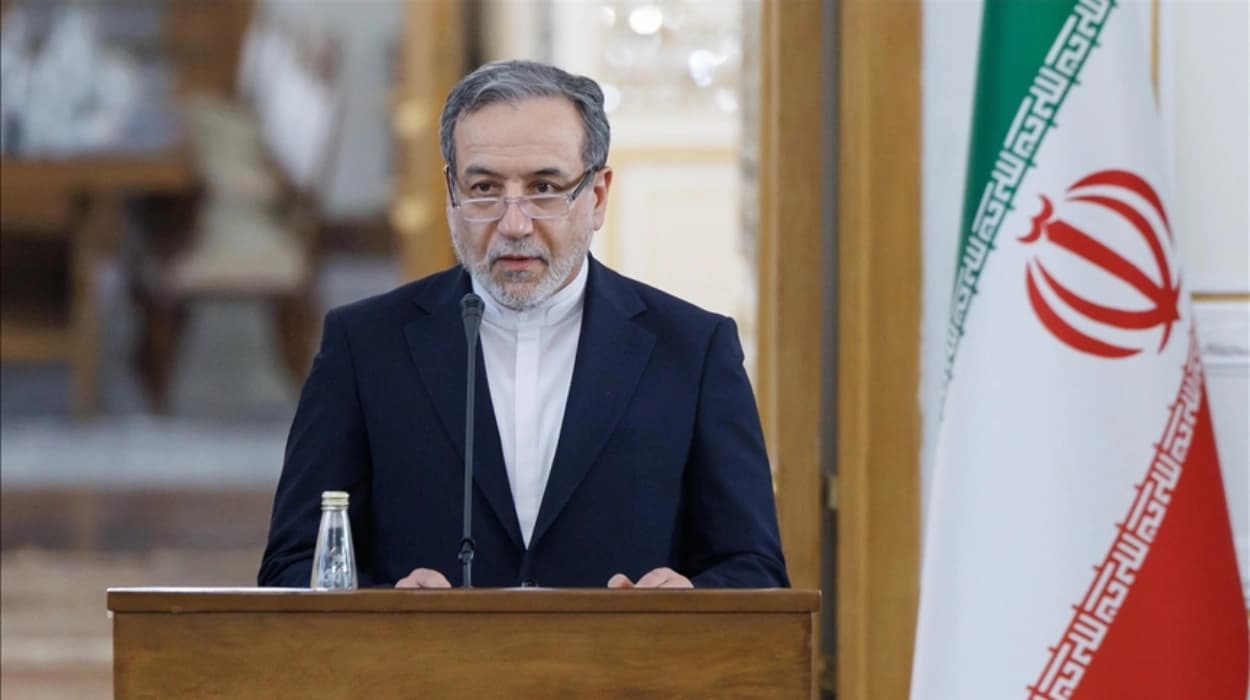
Tehran (The Palestine Telegraph Newspaper) 24 January 2026 – Iran has thanked Pakistan for its support at the United Nations Human Rights Council. Top diplomats from both countries discussed current regional and international developments. The Pakistani Foreign Ministry confirmed the exchange took place during a telephone conversation. The discussions covered bilateral cooperation and shared security concerns.
Iranian Foreign Minister Abbas Araghchi expressed gratitude to his Pakistani counterpart Ishaq Dar during a phone call on 23 January 2026. The conversation focused on Pakistan's position at the UN Human Rights Council session in Geneva. Pakistan voted against a resolution critical of Iran's human rights record, aligning with Tehran's stance. Both ministers reaffirmed commitment to stronger bilateral ties.
The Pakistani Foreign Ministry issued a statement detailing the call, noting discussions on regional stability and international issues. Iranian state media reported Araghchi's appreciation for Islamabad's "principled support" at the UN forum. The exchange occurred amid ongoing UN scrutiny of human rights situations in several countries.
Details of the Telephone Conversation
 Credit: Ministry of Foreign Affairs,Islamabad/fb
Foreign Ministers Ishaq Dar and Abbas Araghchi spoke for 45 minutes on 23 January 2026. The Pakistani ministry described the talks as "frank and cordial," covering mutual interests. Araghchi specifically thanked Pakistan for opposing the UNHRC resolution on Iran tabled by Western nations. Dar reiterated Pakistan's independent foreign policy approach.
Iranian Foreign Ministry spokesperson Nasser Kanaani confirmed the call, stating Iran values Pakistan's support on international platforms. The conversation also addressed cross-border security cooperation along the Pakistan-Iran border. Both sides agreed to enhance intelligence sharing to counter terrorism.
The UN Human Rights Council session concluded on 22 January 2026 with 47 member states voting on various country-specific resolutions. Pakistan joined China, Russia, and several African nations in rejecting the Iran measure, which passed with a narrow 21-16 margin.
Context of UN Human Rights Council Vote
 Credit: Keystone/Valentin Flauraud
The UNHRC resolution on Iran, introduced by Germany on behalf of the European Union, called for investigations into alleged protest crackdowns. Iran dismissed the text as politically motivated, urging member states to reject it. Pakistan's delegation cited concerns over country-specific mandates, advocating for universal periodic reviews instead.
Pakistan's permanent representative in Geneva, Khalil Hashmi, explained the vote as consistent with Islamabad's principled stance against selective scrutiny. Iran welcomed the position, with state television broadcasting Araghchi's thanks prominently. The resolution urged Iran to release detained protesters and end internet restrictions.
This marks the third consecutive year Pakistan supported Iran against Western-led resolutions at the UNHRC. In 2025, Pakistan abstained on a similar measure but voted against in 2024. Iran's UN ambassador Amir Saeid Iravani praised Pakistan's consistency post-vote.
Pakistani Foreign Ministry Statement Highlights
The Foreign Office in Islamabad released a detailed readout on 23 January 2026. It noted both ministers exchanged views on the situation in Gaza, Afghanistan, and the Red Sea. Dar emphasised Pakistan's support for Palestinian statehood and humanitarian access. Araghchi briefed on Iran's diplomatic efforts regarding nuclear talks.
The statement highlighted agreement to expedite the Iran-Pakistan gas pipeline project delayed by sanctions. Ministers directed officials to meet in Tehran next month for implementation. They also discussed expanding trade volume currently at $2.5 billion annually.
Pakistan committed to facilitating Afghan refugee returns through Iranian territory. Iran requested Pakistani support for its BRICS membership bid. Both sides condemned recent terrorist attacks in Balochistan and Sistan-Baluchistan provinces.
Regional and International Developments Discussed
Ministers addressed escalating tensions in the Middle East following US deployments to the Gulf. Araghchi outlined Iran's response to recent naval movements in the Arabian Sea. Dar shared Pakistan's concerns over spillover effects on South Asia.
Afghanistan featured prominently, with both countries coordinating on counter-terrorism. They welcomed the Taliban's recent pledges against TTP militants operating from Afghan soil. Ministers agreed to joint border patrols using drones and thermal imaging.
On Gaza, both condemned Israeli operations in Rafah and called for ceasefire implementation. They supported South Africa's ICJ case against Israel. Regarding Ukraine, Pakistan maintained neutrality while Iran reiterated opposition to NATO expansion.
Historical Context of Pakistan-Iran Relations
 Credit: republicpolicy.com
Pakistan and Iran established diplomatic relations in 1947, sharing a 959-kilometre border. Both nations cooperate through the Economic Cooperation Organization and Shanghai Cooperation Organisation. Trade focuses on energy, agriculture, and textiles despite US sanctions on Iran.
Recent high-level contacts include Prime Minister Shehbaz Sharif's visit to Tehran in November 2025. President Masoud Pezeshkian attended the 2025 SCO summit in Pakistan. Border trade posts at Gabd-Rimdan and Panjgur-Khash handle $500 million annually.
Security cooperation intensified after 2024 cross-border strikes targeting Baloch insurgents. Joint exercises Taj-e-Pakistan and Eqtedar-e-Hamle train 2,000 troops yearly. Iran supplies Pakistan with petroleum products under barter arrangements.
Previous UNHRC Interactions
Pakistan supported Iran at the 57th UNHRC session in September 2025 against a similar resolution. Iran's then-Foreign Minister Hossein Amir-Abdollahian thanked Islamabad publicly. The 2024 vote saw Pakistan, China, and Russia form a blocking minority.
Western sponsors criticised Pakistan's position, citing Tehran's protest death toll estimates at 500. Pakistan countered that human rights require comprehensive approaches beyond resolutions. Iran consistently defends sovereignty at Geneva forums.
The current council composition includes 18 Asian states, influencing voting patterns. Pakistan's two-year term expires in 2027, during which it chairs the Organisation of Islamic Cooperation group.
Broader Diplomatic Engagements
Araghchi's call follows his meetings with Saudi and Turkish counterparts last week. Dar hosted Chinese Foreign Minister Wang Yi on 22 January discussing CPEC security. Pakistan mediates between Iran and Saudi Arabia since 2023 China-brokered détente.
Iran seeks OIC support for Palestine at upcoming Jeddah summit. Pakistan prepares to host 35th OIC Council of Foreign Ministers in May 2026. Both nations coordinate positions ahead of UN General Assembly sessions.
Economic talks included Iran's interest in Gwadar port for Chabahar connectivity. Pakistan offered technical assistance for Iranian rail upgrades linking to Central Asia. Ministers welcomed $1 billion in new contracts signed at Tehran Expo 2025.
Official Statements from Both Sides
Pakistani Foreign Minister Ishaq Dar stated:
"Pakistan values its fraternal ties with Iran and supports just positions on global forums."
Iranian Foreign Minister Abbas Araghchi said:
"Pakistan's support at UNHRC reflects principled foreign policy."
Foreign Office spokesperson Shafqat Khan added:
"Discussions covered full spectrum of bilateral relations and regional peace efforts."
Iranian media quoted Araghchi praising Pakistan's "steadfast friendship." No immediate response from Western missions in Islamabad.