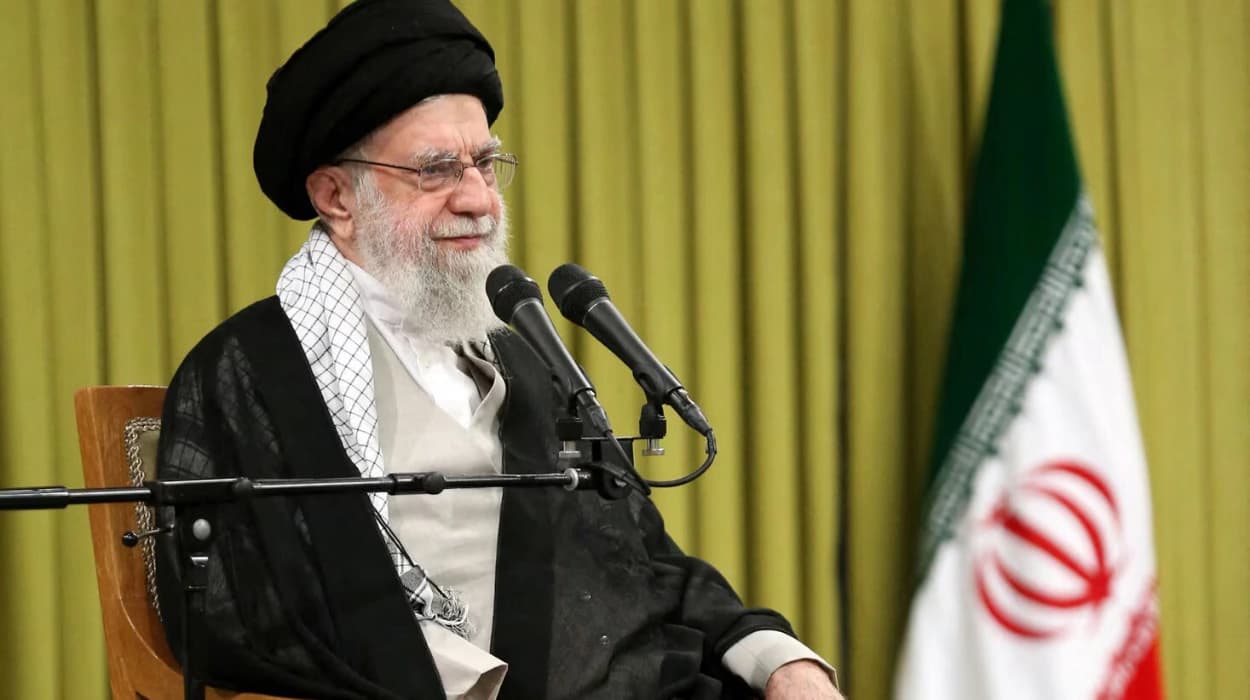
Iran’s Supreme Leader Ali Khamenei’s senior aide Mehdi Fazaeli stated that talks with the United States are only possible under strict, carefully controlled conditions, and Iran’s ban on nuclear weapons is a fixed, non-negotiable religious decree. Khamenei’s office emphasised that any negotiations must be smart and not concessions, linking cooperation with an end to US support for Israel and the withdrawal of US military presence from the region.
Talks Conditional on Strict Terms
As reported by Mehdi Fazaeli, a senior aide to Iran’sSupreme Leader Ali Khamenei, the Iranian ban on nuclear weapons is rooted in a fixed religious decree that cannot be altered by any political pressure or negotiations. Fazaeli described the ban as a ruling based on “divine law” which forbids the production, stockpiling, and use of nuclear arms. He clarified that while talks with the United States could theoretically happen, they would only be under very strict terms and conditions.
Fazaeli further explained that Khamenei views engagement with Washington as tightly limited:
“Negotiation that means retreat is rejected,”
but talks that are
“smart, controlled and used to drive away threats”
may be permitted. He warned against
“tying all hopes to the table of negotiation,”
calling it a strategic mistake. Despite deep strategic mistrust, Khamenei has allowed issue-specific talks in the past concerning Iraq, Afghanistan, and nuclear issues to safeguard national interests.
Cooperation Linked to US Policy Changes
Khamenei’s aide stressed that any prospect for cooperation with the United States depends on the US ending its backing of Israel. This includes the complete cessation of US support for Israel, the closure of US military bases in the region, and stopping interference in the Middle East. These demands were highlighted in Khamenei’s earlier speeches this month, emphasising that the rift with the United States is fundamental and longstanding, with all US presidents historically pushing Iran to concede.
Likewise, Ayatollah Khamenei himself has reinforced this stance, stating that any cooperation is incompatible with US support for Israel, which he called the “accursed Zionist regime.”
Rejecting US Demands on Regional Activities
Abdullah Haji-Sadeqi, another representative linked to Khamenei within Iran’s Islamic Revolutionary Guard Corps (IRGC), articulated that the true aim behind US demands is to undermine Iran’s sovereignty rather than concerns about nuclear energy or human rights. He characterised the dispute as an
“ancient conflict between tyrants and prophets,”
framing the US position as seeking Iran’s submission by using the nuclear issue as a tool. Haji-Sadeqi warned that Iran must understand this reality, rejecting any US demands on limiting its missile program or regional military activities.
Historical Context of Diplomatic Engagements
Iran and the United States conducted five rounds of nuclear talks earlier this year, which ended abruptly after an Israeli offensive against Iran in June, followed by US strikes on Iranian nuclear sites. Iran retaliated with missile and drone attacks aimed at Israel. Despite this escalation, narrow contacts between Tehran and Washington have occurred in the past to protect Iran’s higher national interests.
Meanwhile, Foreign Minister Abbas Araghchi has formally written to the UN Secretary-General António Guterres accusing the US of directing Israel’s initial strike on Iranian targets. Araghchi requested an emergency UN Security Council meeting and calls for sanctions and reparations. This demand was dismissed as baseless by Washington earlier this year.
US Position and Iranian Responses
Despite tough rhetoric from Iranian leadership, there have been some indications from officials like Iranian President Hassan Rouhani who expressed willingness for “just negotiations” provided they do not involve surrendering national interests. However, top aides close to Khamenei have consistently maintained a hardline stance rejecting US ultimatums.
Tehran’s Deputy Foreign Minister Majid Takht-Ravanchi told the BBC that the US must clearly rule out further strikes on Iran before diplomatic talks can resume, underscoring persistent tensions and mistrust.
Overview of Negotiations and Security Concerns
Earlier in 2025, a series of nuclear negotiations were launched between the two countries, aiming to reach a peace agreement. The US demanded Iran to fully dismantle its nuclear enrichment program and cease support for regional proxies, with the threat of military action if negotiations failed. Iran denied seeking nuclear weapons and insisted on its right to peaceful nuclear energy.
In the face of these talks, Iran’s Defence Minister Aziz Nasirzadeh warned that all US bases in the region are within Iran’s missile reach should conflict erupt. Meanwhile, US officials prepared for a potential failure in negotiations and subsequent military options.
Iran’s Supreme Leader Ali Khamenei’s office has made it clear that while talks with the United States remain possible, they are strictly conditional and tied to fundamental shifts in US policy, mainly an end to support for Israel and withdrawal of US forces from the region. Iran’s ban on nuclear arms is framed as an immutable religious ruling, limiting the scope for concessions. The discourse reflects enduring strategic mistrust but acknowledges limited, tactical engagement when national interests demand it.