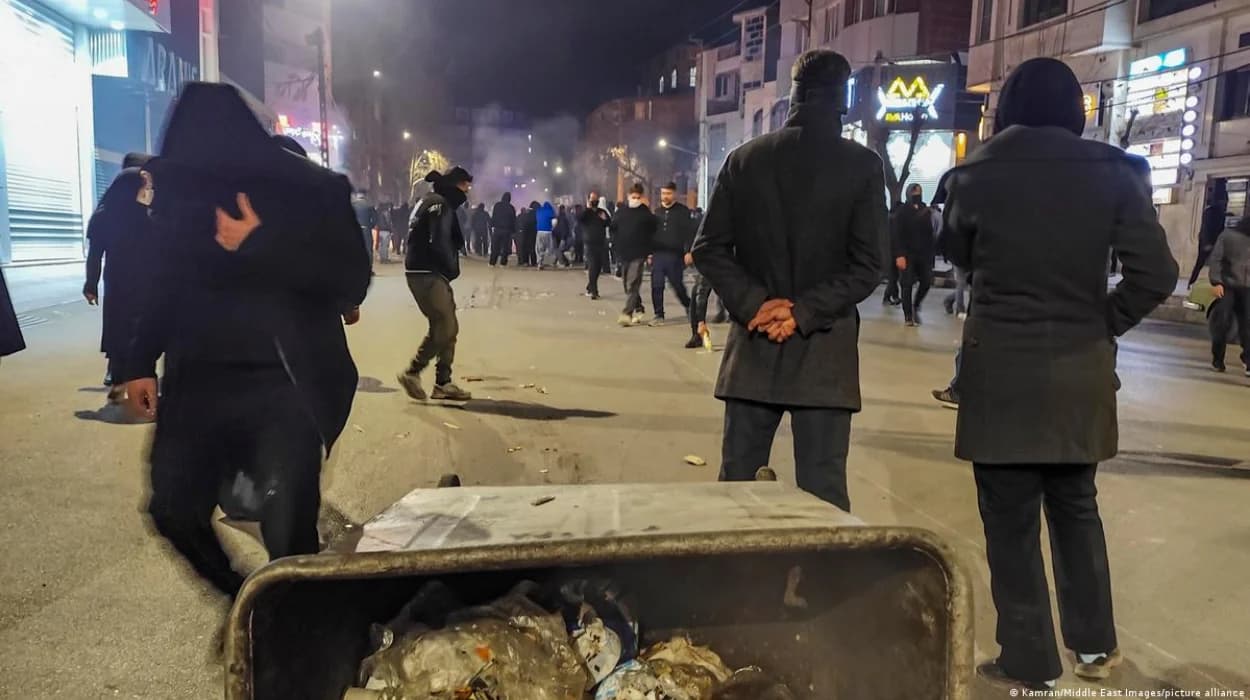
Iran (The Palestine Telegraph Newspaper) January 20, 2026 – Protests have persisted across multiple cities in Iran, met by the regime's use of lethal force and a nationwide internet blackout. German-Iranian doctor and artist Maryam shared her fears and hopes in an interview with Euronews, while highlighting Berlin's potential responsibilities. The developments underscore ongoing tensions over human rights and international responses.
The protests erupted in various Iranian cities including Tehran, Isfahan, and Shiraz, triggered by economic hardships, fuel price hikes, and demands for political reform. Security forces deployed tear gas, rubber bullets, and live ammunition, resulting in at least 450 deaths and over 18,000 arrests since mid-December 2025, according to reports from Amnesty International and Human Rights Watch. The regime imposed a near-total internet shutdown on January 12, 2026, severing access to social media platforms and international news outlets to curb information flow.
Nature and Scale of Demonstrations
Demonstrators gathered in public squares and university campuses, chanting slogans against Supreme Leader Ali Khamenei and calling for the Islamic Republic's overthrow. Protests initially focused on subsidy cuts but expanded to include women's rights and electoral fraud allegations following local elections. Euronews reported live footage smuggled via VPNs showing clashes in Tehran's Enghelab Square, where protesters burned government buildings.
Maryam, a German-Iranian dual national and practising physician based in Berlin, described the scenes in her Euronews interview as "heart-wrenching," noting family members among the detained. She recounted personal accounts from relatives in Mashhad, where protests turned violent after Friday prayers on January 16. The artist's works, exhibited in Berlin galleries, depict the unrest through abstract paintings inspired by Persian poetry.
Regime's Response and Internet Blackout
 Credit: DALL-E
Iranian authorities activated the National Information Network, a domestic intranet, while throttling global bandwidth to under 5 per cent of normal levels. State media claimed the blackout prevented "foreign orchestration" of riots, blaming Israel and the United States. NetBlocks, a UK-based monitoring firm, verified the shutdown as the longest since 2019, lasting over 120 hours by January 18.
Revolutionary Guards commanders issued warnings of "decisive action," with executions reported for 12 protesters convicted of moharebeh (enmity against God) in expedited trials. Interior Minister Ahmad Vahidi announced on state television that 70 security personnel died in clashes. Hospitals in protest hotspots treated over 2,000 wounded, per Iranian Red Crescent Society figures.
Maryam's Testimony and Fears
In her Euronews discussion, Maryam expressed fears for her brother's safety after his arrest during a Tabriz demonstration. She hopes for international sanctions targeting IRGC finances, citing Europe's leverage through oil imports. As an artist, she launched an online petition with 50,000 signatures urging EU asylum for Iranian refugees. Maryam criticised the regime's gender apartheid, referencing Mahsa Amini's 2022 death as a lingering spark.
Her medical practice in Berlin treats Iranian diaspora patients suffering PTSD from the unrest. Maryam called on Germany, home to 300,000 Iranian expatriates, to lead diplomatic pressure, including expelling regime diplomats.
Germany's Official Response and Policies
 Credit: Copyright AP Photo/Ebrahim Noroozi
The German Foreign Office summoned Iran's ambassador on January 14, condemning the violence and demanding prisoner releases. Chancellor Olaf Scholz stated in Bundestag that Berlin supports the protesters' aspirations for freedom. Germany imposed sanctions on four IRGC officials and suspended university exchanges with Iranian institutions.
Foreign Minister Annalena Baerbock announced €10 million in humanitarian aid via the German Red Cross, focusing on medical supplies smuggled through Turkey. Berlin hosted a January 17 conference with France and the UK, aligning on UN Security Council referrals. Critics within the Green Party pushed for closing Iran's embassy, but the government prioritised dialogue channels.
International Reactions and EU Stance
The European Union foreign service issued a statement deploring the "disproportionate use of force" and blackouts violating freedom of expression. France reported 150 Iranian asylum claims in December alone. The UK sanctioned 12 entities linked to internet censorship tools supplied to Tehran.
UN High Commissioner for Human Rights Volker Türk dispatched rapporteurs to monitor trials. U.S. President Donald Trump tweeted support for protesters, threatening secondary sanctions on European firms trading with Iran. Russia and China vetoed a UN resolution, with Moscow supplying surveillance drones to Tehran.
Historical Context of Iranian Protests
Current unrest echoes the 2022 Woman, Life, Freedom movement, which claimed 500 lives, and 2019 fuel riots killing 1,500. Economic woes persist with 40 per cent inflation and 30 per cent youth unemployment, per World Bank data. The regime's legitimacy waned after 2024 parliamentary elections with 41 per cent turnout.
Internet blackouts have recurred since 2017, costing $1 billion in GDP per incident, according to Iran’s Chamber of Commerce. Protesters use Starlink terminals, with Elon Musk activating service despite U.S. sanctions risks.
Diaspora Role and Berlin's Iranian Community
Berlin's Iranian community organised vigils at Brandenburg Gate, drawing 5,000 on January 15. Cultural centres hosted Maryam’s art show, raising €200,000 for relief. German-Iranian associations lobbied for revoking regime-linked visas.
Maryam emphasised diaspora voices in amplifying smuggled videos, crediting Signal and Tor for circumvention. She hopes Berlin's historical solidarity with dissidents, from Soviet era to Hong Kong, extends to Iran.
Humanitarian and Economic Fallout
Médecins Sans Frontières reported overwhelmed hospitals lacking anaesthetics. The blackout halted $800 million in daily e-commerce. Oil exports dipped 20 per cent amid Strait of Hormuz threats.
Germany increased border patrols for refugee influxes, processing 2,000 claims weekly. EU interior ministers discussed temporary protection status on January 19.
Ongoing Developments and Monitoring
Protests subsided in some areas but flared in Kurdish regions, with 50 deaths in Mahabad. State media claimed normalcy restoration, yet satellite imagery showed barricades in 20 cities. Euronews continues verification through citizen journalists.
Germany monitors via its Tehran embassy, reduced to skeleton staff. Maryam plans follow-up interviews to track releases.