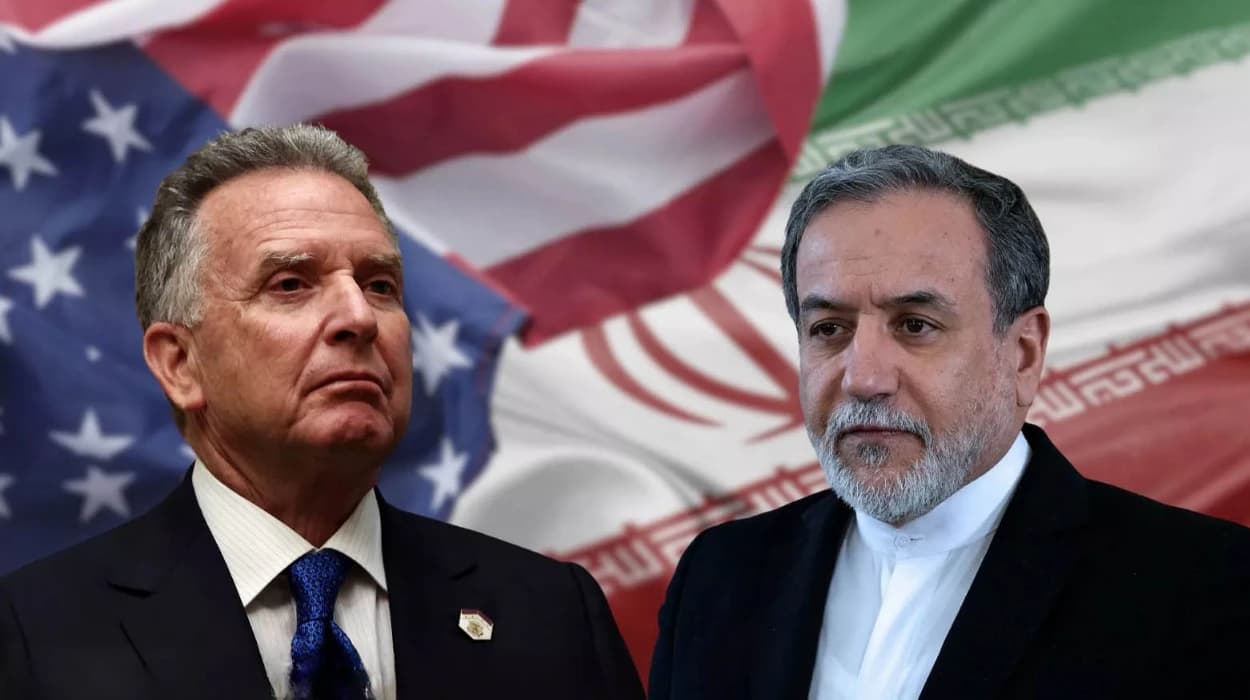
Riyadh (The Palestine Telegraph Newspaper) – 21 January 2026 – Steve Witkoff, United States Special Envoy for the Middle East, told Arab News that negotiations with Iran represent a necessary diplomatic pathway forward. The statement came during an interview conducted on the sidelines of regional security discussions in the Gulf. Witkoff emphasised the importance of direct engagement to address nuclear programme concerns, regional stability and bilateral tensions.
Witkoff’s remarks represent the first public indication from senior Trump administration officials regarding potential talks with Tehran since the president’s inauguration. The envoy outlined conditions under which the United States would approach negotiations, including verifiable commitments on uranium enrichment and ballistic missile development. He stressed that dialogue remains the preferred mechanism for resolving longstanding disputes despite recent military exchanges in the region.
Witkoff articulates necessity of Iran diplomatic engagement
 Credit: Emily J. Higgins/White House
Speaking to Arab News, Steve Witkoff declared that “negotiations with Iran have to happen” as part of broader efforts to stabilise the Middle East. The special envoy, appointed by President Donald Trump to oversee regional diplomacy, described direct talks as essential to prevent escalation and address mutual security concerns. Witkoff noted previous rounds of indirect communication through third-party channels had yielded limited progress.
The interview occurred during Witkoff’s travel schedule across Gulf Cooperation Council capitals, where he met foreign ministers and intelligence chiefs. Arab News reported Witkoff’s emphasis on Iran’s regional activities, including support for proxy groups and interference in Yemen, Iraq and Syria. The envoy positioned negotiations as a pragmatic response rather than an endorsement of Tehran’s policies.
Context of Witkoff’s appointment and regional mandate
President Trump named Steve Witkoff special envoy for the Middle East shortly after taking office in January 2025, tasking him with coordinating diplomacy across multiple tracks. Witkoff, a real estate developer with prior involvement in Israel–United States business channels, brings private-sector negotiation experience to the role. His portfolio encompasses Israeli–Palestinian dynamics, normalisation agreements and Iran policy.
Previous statements from Witkoff highlighted maximum pressure combined with diplomatic off-ramps as the administration’s approach. Gulf hosts during his current tour expressed support for structured talks while insisting on firm red lines regarding territorial integrity and maritime security. The envoy’s Arab News interview marks his most explicit call for Iran engagement since assuming the position.
Specific conditions outlined for potential Iran talks
Witkoff specified several prerequisites during the interview for meaningful negotiations with Iran. These include complete cessation of uranium enrichment beyond civilian levels, enhanced International Atomic Energy Agency monitoring and restrictions on missile technology transfers. The envoy referenced United Nations Security Council Resolution 2231 as the baseline for discussions.
Iranian officials previously rejected similar demands, citing sovereignty over nuclear development and regional defence capabilities. Witkoff acknowledged these positions but maintained that compromise remains possible through phased reciprocal steps. He cited historical precedents including the 2015 Joint Comprehensive Plan of Action as models, albeit with modifications reflecting current realities.
Regional reactions to Witkoff’s negotiation proposal
 Credit: Reuters
Gulf Arab diplomats welcomed Witkoff’s remarks as a signal of diplomatic intent amid heightened tensions. Saudi Foreign Minister Prince Faisal bin Farhan described the approach as balanced during a joint press appearance. United Arab Emirates leadership echoed support for talks that yield concrete security guarantees against Iranian maritime aggression.
Israeli Prime Minister Benjamin Netanyahu’s office issued a statement reaffirming coordination with Washington on Iran policy. Jerusalem maintains that any agreement must dismantle enrichment infrastructure entirely and extend sunset clauses indefinitely. European Union foreign policy representatives noted alignment with United States positions while urging multilateral format inclusion.
Background of recent United States–Iran military exchanges
Witkoff’s interview follows retaliatory strikes between United States forces and Iran-aligned groups in Iraq and Syria during late 2025. American officials attributed over 200 attacks on bases hosting coalition troops to Kata’ib Hezbollah and affiliated militias. Iran denied direct command while condemning United States presence as provocative.
Diplomatic channels remained open through Muscat and Baghdad throughout the exchanges, preventing wider escalation. Witkoff credited these contacts with maintaining deconfliction lines despite public rhetoric. His remarks suggest the Trump administration views military pressure as a complement to negotiation preparation rather than an alternative.
Trump administration’s broader Middle East strategy
The Witkoff interview aligns with President Trump’s articulated maximum pressure campaign featuring sanctions, military deterrence and alliance-building. Administration officials describe Iran negotiations as one component of comprehensive regional realignment. Successful Abraham Accords expansion remains a parallel priority alongside economic cooperation with Gulf partners.
Witkoff referenced potential incentives including sanctions relief tied to compliance verification and regional economic integration. The envoy highlighted private-sector investment opportunities as leverage, drawing on his business background. Gulf states expressed interest in infrastructure projects linking their markets to Israel and South Asia.
Iranian government positions on direct negotiations
Tehran maintains that direct talks with the United States require prior lifting of all sanctions imposed since 2018 withdrawal from the nuclear deal. Supreme Leader Ayatollah Ali Khamenei authorised limited indirect exchanges previously but rejected face-to-face diplomacy without guarantees. Iranian Foreign Minister Abbas Araghchi described Witkoff’s statement as “psychological operations” in domestic media.
Parliamentary hardliners introduced legislation barring negotiations under current conditions, reflecting internal debates. President Masoud Pezeshkian advocated pragmatic engagement during United Nations General Assembly remarks, creating space for executive manoeuvring. Military commanders reiterated deterrence readiness regardless of diplomatic developments.
Gulf Cooperation Council coordination on Iran policy
Saudi Arabia and the United Arab Emirates positioned themselves as essential partners in any negotiation framework during Witkoff’s consultations. Riyadh seeks explicit commitments addressing Yemen ceasefire implementation and border security enhancements. Abu Dhabi prioritises Hormuz Strait navigation freedoms and archipelago sovereignty.
Qatar and Oman continue facilitating messages between Washington and Tehran, leveraging longstanding mediation roles. Kuwaiti leadership emphasised multilateral security architecture incorporating Gulf states directly. Witkoff affirmed coordination mechanisms established through prior Trump-era summits.
International Atomic Energy Agency monitoring role
Witkoff highlighted enhanced IAEA access as non-negotiable for credible negotiations. Agency Director General Rafael Grossi reported restricted inspector movement and unanswered safeguards questions in recent statements. Iran deactivated monitoring cameras at key sites, prompting censure motions in Vienna.
The envoy called for restoration of full verification regime as confidence-building measure preceding talks. European troika nations aligned with this position, threatening snapback sanctions mechanism activation. Russian and Chinese representatives advocated patience while criticising unilateral pressures.
Previous rounds of indirect United States–Iran diplomacy
Negotiations hosted in Vienna during 2021–2022 produced draft parameters before collapsing over mutual recriminations. Subsequent Oman-mediated contacts addressed nuclear restraint for sanctions pause without resolution. Baghdad proximity talks in 2023 clarified red lines but yielded no agreements.
Witkoff described these efforts as foundational despite imperfections, advocating direct format for efficiency. Administration diplomats engaged European and regional partners to prevent unilateral Iranian advances during preparation phases. Gulf intelligence sharing informed United States assessments of Tehran’s strategic calculations.
Economic dimensions of potential negotiation outcomes
 Credit: futureuae.com
Witkoff outlined sanctions relief calibrated to compliance milestones, targeting oil exports and banking access initially. Gulf states expressed readiness to host investment conferences showcasing post-agreement opportunities. Iran projected $100 billion annual revenue gains from full sanctions removal according to central bank estimates.
United States Treasury officials prepared technical frameworks linking relief to verifiable metrics. European banks awaited clarity on secondary sanctions risks before committing financing. Regional commodity exchanges anticipated price stabilisations from reduced geopolitical premiums.