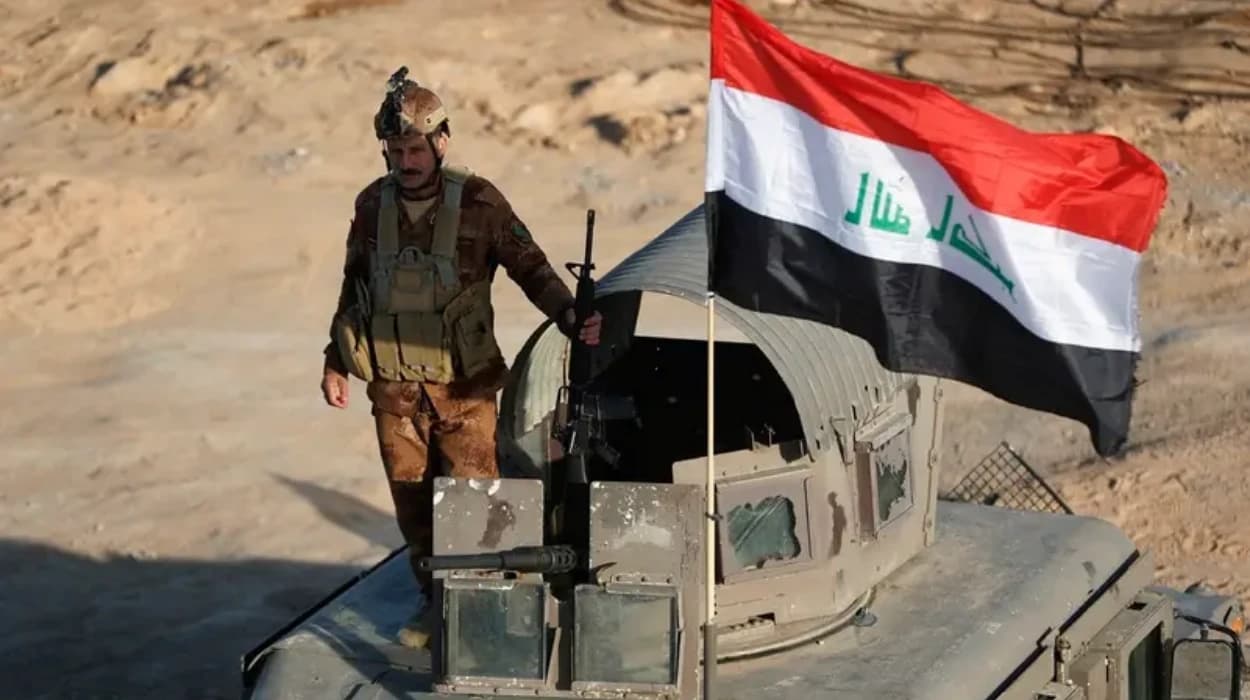
Baghdad (The Palestine Telegraph Newspaper) January 27, 2026 – Iraq's government has approved a plan to receive Islamic State (ISIS) fighters currently detained in Syria for prosecution in Iraqi courts. The decision follows negotiations with the Syrian Democratic Forces (SDF) holding thousands of foreign and Iraqi nationals. Transfer logistics and legal frameworks form central components of the agreement.
The Iraqi cabinet endorsed the plan during a session on January 25, 2026. Justice Minister announced preparations for expedited trials under anti-terrorism laws. SDF commanders confirmed willingness to hand over Iraqi nationals, citing capacity constraints at detention facilities.
Background to ISIS Detention Crisis in Syria

The SDF captured tens of thousands of ISIS suspects during the 2019 territorial defeat of the caliphate. Al-Hol and Roj camps house families, while 10,000 fighters remain in prisons like Al-Sina'a. Over 4,500 Iraqis feature among detainees, alongside foreign nationals from 60 countries. UN reports highlight deteriorating conditions and radicalisation risks.
Iraq conducted 15 repatriation rounds since 2018, prosecuting 6,000 returnees with death sentences or life terms. Recent Syrian instability accelerated transfer discussions. Kurdish authorities warned of potential mass breakouts amid Turkish military operations.
Iraqi Legal Framework for ISIS Prosecutions
Iraq's 2005 Anti-Terrorism Law prescribes capital punishment for ISIS membership and atrocities. Specialised courts in Baghdad, Mosul, and Erbil handle cases with summary proceedings. Human Rights Watch documented over 90 executions since 2019, mostly confessions obtained under duress.
Federal Supreme Court upheld death sentences despite fair trial concerns. European states repatriated limited numbers citing juvenile protections. Iraq rejects foreign jurisdiction over nationals committing overseas crimes.
Details of Approved Transfer Mechanism
Cabinet decision authorises receipt of all Iraqi ISIS suspects, prioritising fighters over family members. Initial phase targets 2,000 high-value detainees identified by intelligence dossiers. Convoy routes through Kurdish-controlled northeast Syria secured by joint patrols.
Receiving facilities at Al-Rusafa and Al-Nasiriyah prisons expanded capacity by 3,000 beds. International Committee of Red Cross facilitates family tracing during transfers. Medical screenings mandatory prior to Iraqi custody.
Syrian Democratic Forces Perspective

SDF General Mazloum Abdi stated transfers alleviate burden on autonomous administration. Kurdish foreign relations office documented 11,000 foreign fighters needing repatriation. Recent Al-Hol riots killed 50 guards, underscoring security pressures.
US-led coalition provides $200 million annual support for detention costs. Turkish airstrikes targeting SDF disrupted transfer preparations. Damascus government claims sovereignty over ISIS prisoners post-Assad.
Previous Repatriation Operations and Outcomes
March 2025 operation returned 450 Iraqis, including 150 women and children. Baghdad courts sentenced 85 per cent to death or life within three months. Erbil tribunals processed Yazidi genocide cases with life terms standard.
France repatriated 80 children in 2024, prosecuting parents in absentia. Russia accepted 100 dual nationals under exchange agreements. Germany convicted returnees under residency laws rather than terrorism statutes.
International Reactions to Iraq's Decision
United Nations Special Representative welcomed structured repatriations reducing camp radicalisation. Amnesty International urged fair trial guarantees and juvenile protections. European Union foreign ministers discussed burden-sharing at Brussels summit.
United States Central Command confirmed coalition support for secure handovers. Turkey demanded inclusion of European ISIS members in transfers. Gulf states pledged reconstruction aid for liberated areas post-prosecutions.
Security Arrangements for Convoy Movements
Iraqi Counter-Terrorism Service deploys 2,000 personnel along transit corridors. Apache helicopters provide overhead cover during border crossings. Peshmerga forces secure Nineveh Plains staging areas. Blast barriers and drone jammers installed at handover points.
Syrian Arab Army patrols eastern Euphrates under deconfliction protocols. Islamic Resistance in Iraq groups warned against perceived normalisation with SDF. Rabia border crossing upgraded for heavy vehicle throughput.
Capacity Expansion at Iraqi Detention Facilities
Ministry of Justice allocated 500 billion dinars for prison renovations. Al-Anbar facility converted to house 1,500 ISIS suspects with high-security wings. Digital case management systems track defendants from intake to verdict.
International Criminal Investigative Training Assistance Program upgraded interrogation suites. Forensic labs in Sulaymaniyah process DNA from mass graves. Yazidi survivors testify via video link from Europe.
Human Rights Monitoring During Transfers
UN Assistance Mission for Iraq (UNAMI) deploys 20 observers to border points. ICRC family reunification teams document unaccompanied minors. European Centre for Constitutional and Human Rights provides legal aid hotlines.
Satellite imagery monitors convoy routes in real-time. Médecins Sans Frontières establishes field hospitals at reception centres. Independent auditors verify conditions against Nelson Mandela Rules.
Political Statements from Iraqi Leadership

Prime Minister Mohammed Shia al-Sudani termed transfers "sovereign right and moral obligation." Parliament Speaker announced oversight committee with cross-party representation. Kurdistan Regional Government President Nechirvan Barzani endorsed judicial cooperation.
Sunni Endowment decried potential miscarriages of justice without tribal reconciliation. Shiite cleric Moqtada al-Sadr called for public executions broadcast nationwide. Christian leaders welcomed accountability for 2014 atrocities.
Economic Dimensions of Detention Operations
Cabinet approved $150 million supplementary budget covering transfers and trials. Oil revenues fund reconstruction of judicial infrastructure in liberated areas. World Bank loans support prison labour programmes for low-risk detainees.
Iraq Development Fund allocates grants for victim compensation schemes. Gulf Cooperation Council pledges €300 million for Ninewa rehabilitation.
Regional Counter-Terrorism Cooperation Frameworks
Baghdad Summit on ISIS Detainees convened January 15 with 12 Arab states. Joint intelligence fusion cell shares biometric data on returnees. Cairo Declaration commits to uniform prosecution standards.
Turkey hosts trilateral security conferences with Iraq and Syria. Amman coordinates Hashemite Kingdom's role in family reunifications. Riyadh funds de-radicalisation centres modelled on Saudi programmes.
Challenges Facing Implementation Timeline
Winter weather complicates overland convoys through Sinjar mountains. Ramadan approaches necessitate accelerated Phase 1 transfers. Turkish safe zones limit SDF manoeuvre space near borders.
COVID protocols require 14-day quarantines at reception facilities. Language barriers necessitate Kurdish-Arabic interpreters. Family separation cases require child protection assessments.
Media Coverage and Documentation Efforts
Al Jazeera embeds correspondents with first convoys. BBC Arabic films detention conditions pre- and post-transfer. Reuters publishes interactive maps tracking repatriations. New York Times documents Yazidi survivor testimonies.
Iraqi state television broadcasts trial proceedings. Social media amplifies #JusticeForISIS hashtag. Independent fact-checkers verify casualty claims from previous operations.
Long-Term Strategy Beyond Immediate Transfers
National De-Radicalisation Commission plans community reintegration for low-level supporters. Mosul University develops counter-narrative curricula. Tribal Mapping Initiative identifies reconciliation partners.
Federal Police establish community policing in former ISIS strongholds. Mine action teams clear judicial sites of explosives. International donors fund witness protection programmes.