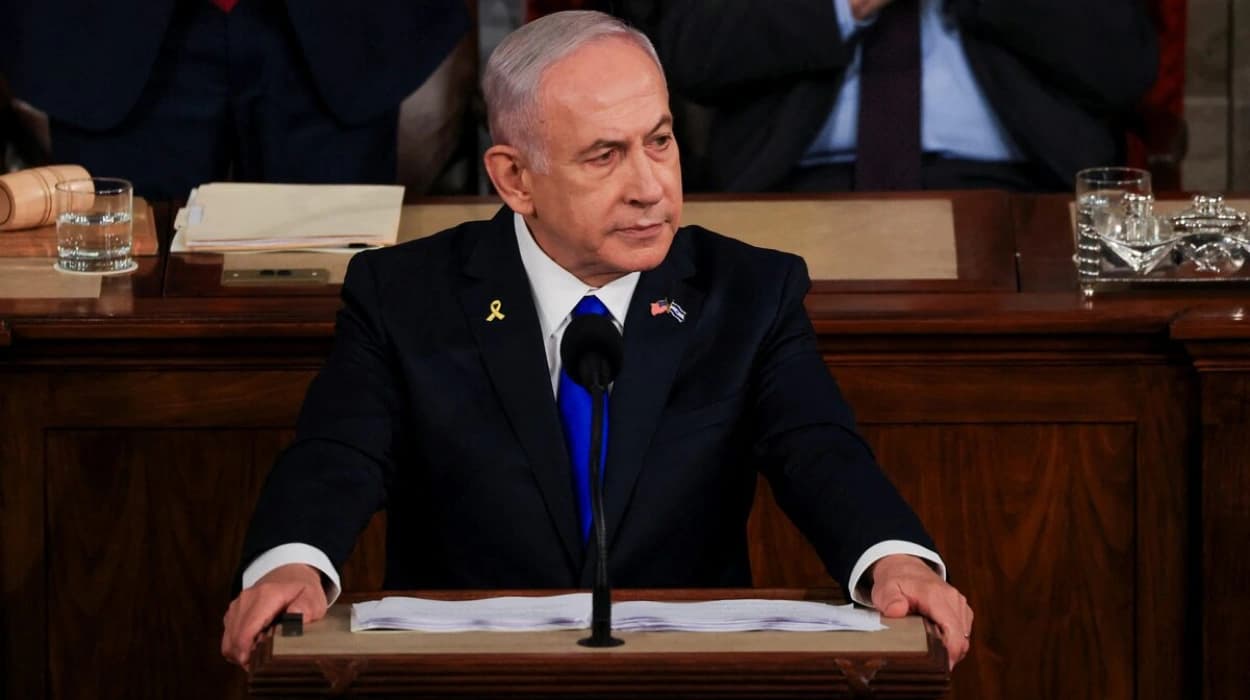
Israel (The Palestine Telegraph Newspaper) – February 02, 2026 – Israeli Prime Minister Benjamin Netanyahu stated that silencing government officials and the public constitutes the end of democracy. The remarks came amid reports of investigations into officials for statements on military operations. Netanyahu emphasised the need to protect freedom of expression during a period of heightened judicial scrutiny.
Israeli Prime Minister Benjamin Netanyahu warned that efforts to silence officials and the public represent the end of democracy. He made the comments in response to ongoing probes by Israel's attorney general into statements made by security officials regarding military actions in Gaza. Netanyahu stressed that such actions undermine democratic principles.
Background to Netanyahu's Statement
Netanyahu delivered the remarks during a meeting with his Likud party's parliamentary bloc on 12 January 2025. The statement followed announcements by Attorney General Gali Baharav-Miara of investigations into National Security Minister Itamar Ben-Gvir and others for alleged incitement. Ben-Gvir had called for intensified military pressure on Hamas, prompting the legal review.
The attorney general's office confirmed probes into Ben-Gvir and Minister Avi Dichter for comments interpreted as supporting severe measures against Palestinians. Dichter referred to operations as crossing the "King David" operational phase, drawing scrutiny. Netanyahu positioned his response as a defence of political speech.
Reports from Haaretz detailed that Netanyahu addressed coalition members, arguing judicial overreach threatens governance. He linked the issue to broader tensions with the judiciary, which has challenged government policies on multiple fronts.
Context of Investigations into Officials

Israeli media outlets reported the attorney general summoned Ben-Gvir for questioning over statements urging the army to "erase" Gaza cities like Rafah. Ben-Gvir responded on social media, rejecting the probe as an attack on the right. Similar scrutiny targeted Dichter's biblical references in public addresses.
The Times of Israel noted additional complaints against Deputy Speaker Nissim Vaturi for calling to wipe out Hamas "from existence." Prosecutors assessed whether such rhetoric breaches incitement laws under Israel's penal code. No charges were filed at the time of Netanyahu's remarks.
Kan public broadcaster covered Netanyahu's full quote:
"Silencing government ministers and MKs, and worse – silencing citizens, is the end of democracy."
He urged coalition unity against what he termed selective enforcement.
Judicial and Political Tensions
Israel's judicial system has pursued multiple cases involving government figures since the Gaza war began in October 2023. Baharav-Miara's office opened over 100 files on potential incitement from officials and citizens. Critics within the coalition viewed this as politically motivated.
Ynet reported Netanyahu met faction heads to coordinate responses, framing probes as part of a "witch hunt" by left-leaning institutions. He cited past dismissals of complaints against opposition figures as evidence of bias.
The attorney general defended actions as upholding legal standards amid wartime rhetoric. Her office stated reviews apply equally to all statements threatening public order or state security.
Public and Media Reactions
Israeli newspapers highlighted divisions. Jerusalem Post editorials noted Netanyahu's comments echoed long-standing grievances with the judiciary, intensified post-judicial reform protests in 2023. Public opinion polls from the period showed split views on free speech limits during conflict.
Social media platforms in Israel amplified debates, with supporters sharing Netanyahu's clip widely. Opponents argued officials' words risked inflaming tensions in volatile areas.
International outlets like Reuters and AP covered the episode as indicative of Israel's internal fractures over war conduct. No foreign government issued official responses to Netanyahu's specific democracy claim.
Broader Free Speech Debate
Netanyahu's intervention occurred against a backdrop of arrests for social media posts deemed supportive of Hamas or critical of operations. Police reported detaining over 400 individuals since October 2023 for online content under incitement statutes.
Legal experts cited in Calcalist noted tensions between security needs and expression rights under Basic Law: Human Dignity and Liberty. Courts have upheld some convictions while overturning others for lack of intent.
Coalition partners like Finance Minister Bezalel Smotrich echoed Netanyahu, warning of "anarchy" if judicial probes stifle policy debate. Opposition leader Yair Lapid countered that accountability applies to all.
Historical Precedents in Israel

Past cases include 2014 investigations into MKs over
anti-Arab rhetoric during Gaza operations. In 2021, probes targeted ministers
for comments on Arab communities. Netanyahu himself faced speech-related legal
reviews earlier in his career.
Data from the Israel Democracy Institute tracked rising complaints during conflicts, with peaks in 2009, 2014, and 2023-2025. Conviction rates remained low, around 15 percent.
Government Responses and Next Steps
Following Netanyahu's statement, Likud scheduled strategy sessions with legal advisors. The prime minister's office issued a release reiterating commitment to democratic norms while protecting security discourse.
Attorney general's updates indicated ongoing reviews without timelines for decisions. Ben-Gvir's Otzma Yehudit party prepared petitions to the High Court challenging probe legitimacy.
As of February 2026, no further public escalations were reported from credible sources. Monitoring continues amid the protracted Gaza conflict.