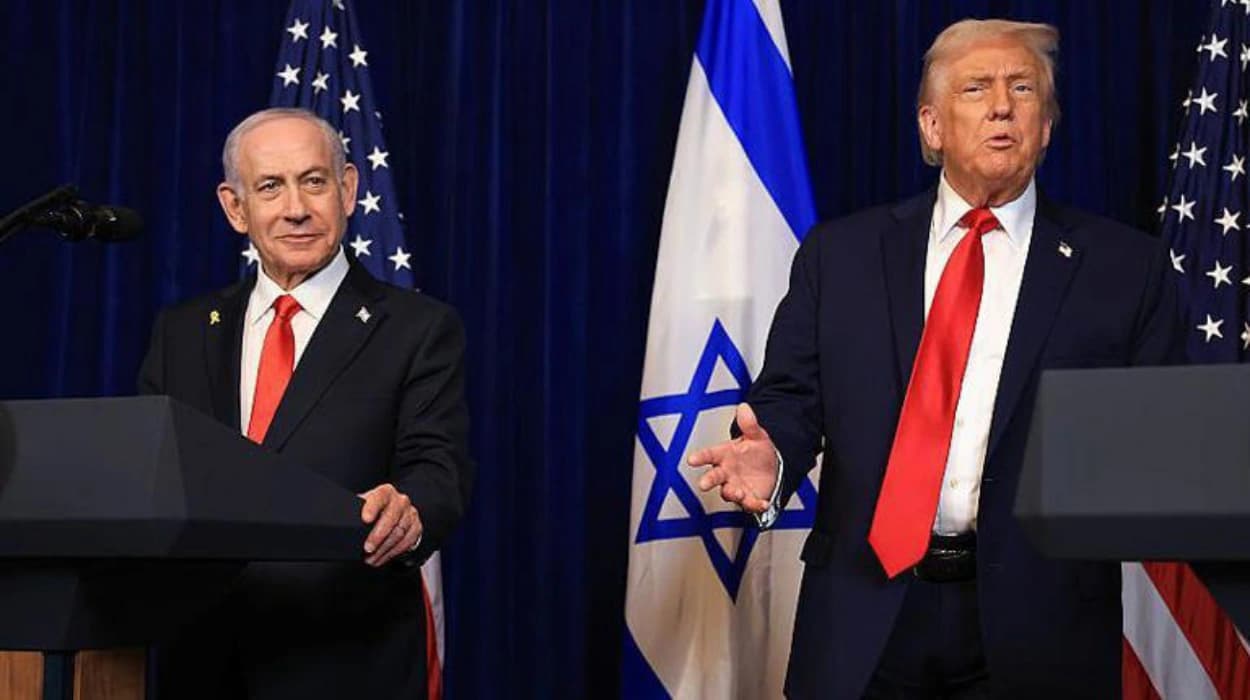
Tel Aviv (The Palestine Telegraph Newspaper ) January 31, 2026 – Israeli officials have indicated that regime change in Iran represents a strategic objective, with expectations that President Donald Trump will support efforts to achieve it. Senior government sources say Jerusalem views Tehran's current leadership as an existential threat that requires fundamental political transformation. The position emerges amid heightened tensions over Iran's nuclear programme, regional proxy activities and recent military exchanges.
Israeli leaders have long identified the Iranian regime as the primary security challenge facing the country, citing its nuclear ambitions, ballistic missile development and support for groups including Hezbollah, Hamas and the Houthis. Recent statements from Prime Minister Benjamin Netanyahu and other officials suggest that merely containing these threats through military strikes or sanctions is insufficient, with some advocating for internal upheaval that could replace the Islamic Republic with a more moderate government.
Trump's return to office has raised hopes in Jerusalem that Washington will align more closely with this approach.
Israeli Leadership Frames Iran Threat Requiring Regime Change

Prime Minister Benjamin Netanyahu has repeatedly described the Iranian regime as an existential danger to Israel and the region, calling for its complete dismantlement in multiple public addresses. In recent weeks, he has linked Iran's nuclear programme directly to the need for regime change, stating that only a fundamental shift in Tehran's government can eliminate the threat permanently.
Israeli officials argue that the Islamic Republic's ideological commitment to Israel's destruction makes negotiated settlements impossible.
Defence Minister Israel Katz told reporters that Israel possesses detailed intelligence on regime vulnerabilities and is prepared to exploit them, particularly during periods of internal unrest. He cited Iran's economic difficulties, widespread protests and ethnic tensions as factors creating opportunities for change.
Katz emphasised that Israel would work with regional partners and the United States to support opposition movements and pressure the regime simultaneously.
Foreign Minister Gideon Sa'ar has engaged Gulf states and other regional actors in discussions about post-regime scenarios, according to diplomatic sources. These conversations focus on security guarantees, economic reconstruction and preventing power vacuums that could benefit extremist groups. Sa'ar has stressed that Israel's objective is not territorial conquest but the establishment of a government willing to abandon nuclear weapons and proxy warfare.
Trump Administration Signals Alignment With Israeli Position
President Donald Trump has expressed strong support for Israel's security requirements since taking office, including statements affirming Jerusalem's right to defend itself against all threats, including from Iran. During a recent cabinet meeting, Trump reportedly told advisers that regime change in Iran aligns with longstanding US interests and could reshape the Middle East favourably. Sources close to the administration indicate that Trump views Iran's current leadership as irredeemable and supports Israel's strategy.
US Ambassador to Israel Mike Huckabee has publicly endorsed Israel's right to take necessary measures against Iran, stating that the regime's hostility justifies comprehensive responses. Huckabee emphasised that the United States stands ready to provide diplomatic cover, intelligence sharing and military support as required.
National Security Adviser Mike Waltz has held multiple meetings with Israeli counterparts to coordinate approaches to Iran's nuclear sites, proxy networks and internal dynamics.
The State Department has revived elements of the maximum pressure campaign from Trump's first term, including sanctions targeting Iran's oil exports, banking sector and Revolutionary Guard Corps officials. Secretary of State Marco Rubio has indicated that these measures aim to create unsustainable economic conditions that could precipitate regime collapse. US officials have also begun outreach to Iranian opposition figures and diaspora communities.
Coordination With Regional Sunni States Against Iran
Israel has intensified security cooperation with SaudiArabia, the United Arab Emirates and other Gulf states through established channels like the Abraham Accords framework. Joint intelligence operations focus on monitoring Iranian activities in Yemen, Syria, Iraq and Lebanon. Saudi Crown Prince Mohammed bin Salman has privately expressed support for regime change in Iran, viewing it as essential for regional stability.
The United Arab Emirates has hosted summits bringing together Israeli, American and Gulf intelligence chiefs to discuss strategies for weakening Iran's regional position. UAE leaders have committed financial support for potential post-regime reconstruction efforts and refugee assistance. Bahrain and Jordan have aligned diplomatically, issuing statements criticising Iran's destabilising actions.
These partnerships represent a significant shift from previous Arab-Israeli tensions, with Sunni states prioritising the Iranian threat above the Palestinian issue. Joint military exercises have included scenarios simulating responses to Iranian missile attacks and proxy incursions. Economic cooperation has expanded, with Israeli technology firms establishing operations in Gulf hubs.
Iran's Nuclear Programme Drives Israeli Urgency
Israeli officials cite intelligence assessments indicating Iran has enriched uranium to 90 per cent weapons-grade levels at fortified underground facilities. Satellite imagery shows expansion of centrifuge halls and missile production sites. Jerusalem maintains that diplomatic negotiations cannot neutralise this capability and that only regime change can ensure permanent elimination.
Mossad operations have reportedly sabotaged Iranian nuclear infrastructure, including cyberattacks on Natanz and assassinations of key scientists. Israel has shared this intelligence with the Trump administration, urging preemptive strikes on remaining facilities. Defence analysts note that Israel's F-35 fleet and bunker-busting munitions provide the capability for such operations, though American logistical support would enhance effectiveness.
The International Atomic Energy Agency has verified violations of the Joint Comprehensive Plan of Action limits, prompting renewed Security Council discussions. Israeli diplomats have lobbied successfully for reimposition of UN sanctions that expired under previous agreements.
Proxy Conflicts Fuel Israeli Regime Change Advocacy

Iranian support for Hezbollah in Lebanon remains Israel's most immediate concern, with intelligence estimates placing 150,000 rockets aimed at the country. Recent cross-border exchanges have demonstrated Hezbollah's improved capabilities, including precision-guided munitions. Israeli operations have degraded these arsenals but not eliminated the threat.
Hamas rebuilding efforts in Gaza, funded through Iranian channels, continue despite military pressure. Israeli officials link October 7 attack planning directly to Tehran coordination. Houthis disrupting Red Sea shipping represent another front, with Israeli naval assets participating in defensive coalitions.
Syria serves as Iran's primary forward base, hosting IRGC commanders and Hezbollah training camps. Israeli airstrikes have targeted weapons convoys and command centres, but regime change in Tehran would disrupt this axis fundamentally. Jerusalem coordinates these strikes with tacit American approval.
Domestic Israeli Consensus Supports Confrontation
The Israeli public and political spectrum broadly supports action against Iran, with polls showing over 80 per cent favouring military measures if necessary. Opposition leaders have criticised past governments for insufficient aggression, aligning with Netanyahu's hawkish stance. Military veterans and security experts advocate regime change as the only sustainable solution.
Knesset debates reflect unified positions across traditional left-right divides, focusing on implementation strategies rather than objectives. Religious Zionists frame the Iranian threat in existential terms, while secular analysts emphasise strategic necessities. Youth movements and reservist associations mobilise support for potential operations.
Civil defence preparations include nationwide shelter upgrades and public education campaigns anticipating Iranian retaliation. Economic contingency planning addresses potential oil disruptions and sanctions blowback.
American Domestic Support for Israel Iran Policy
Trump's base strongly backs confrontation with Iran, viewing it as unfinished business from his first term. Evangelical leaders frame support for Israel as biblically mandated, while neoconservative think tanks advocate maximum pressure leading to regime collapse. Congressional resolutions enjoy bipartisan sponsorship.
Military-industrial interests support replenishment of Israeli munitions stocks and joint development programmes. Energy independence reduces domestic opposition to potential oil shocks. Public opinion polls show majority approval for standing with Israel against Iran.
Democratic critics focus on diplomatic alternatives but face accusations of weakness. Progressive factions advocate restraint but hold minority influence. Mainstream media coverage aligns with administration framing of Iran as primary threat.
Iranian Regime Vulnerabilities and Opposition Dynamics

Economic collapse from sanctions has devalued the rial by 90 per cent since 2018, fuelling inflation exceeding 50 per cent annually. Youth unemployment tops 40 per cent, with women particularly affected. Protests continue despite crackdowns, focusing on hijab laws, economic mismanagement and corruption.
Ethnic minorities comprising half the population face systemic discrimination, with Azeris, Kurds, Baluchis and Arabs agitating for autonomy. Assassinations of nuclear scientists and cyberattacks expose regime vulnerabilities. Military defections reported among conscripts facing poor conditions.
Exiled opposition includes monarchists, reformists and ethnic separatists coordinating through social media and satellite television. Reza Pahlavi advocates secular democracy, gaining traction among diaspora. US-based networks provide financial and media support.
International Reactions to Regime Change Scenario
Gulf states privately support Israeli objectives while publicly calling for diplomacy. European powers urge restraint, prioritising nuclear negotiations. Russia and China condemn escalation threats, maintaining Iranian arms and oil purchases. UN forums debate sanctions renewal amid divisions.
India balances energy imports with security cooperation. Turkey competes for regional influence but shares concerns over Kurdish empowerment. Global financial markets monitor oil risks closely.
The convergence of Israeli determination, Trump administration alignment and Iranian regime weaknesses positions regime change as active policy rather than aspirational goal. Coordination across military, diplomatic and covert domains continues.