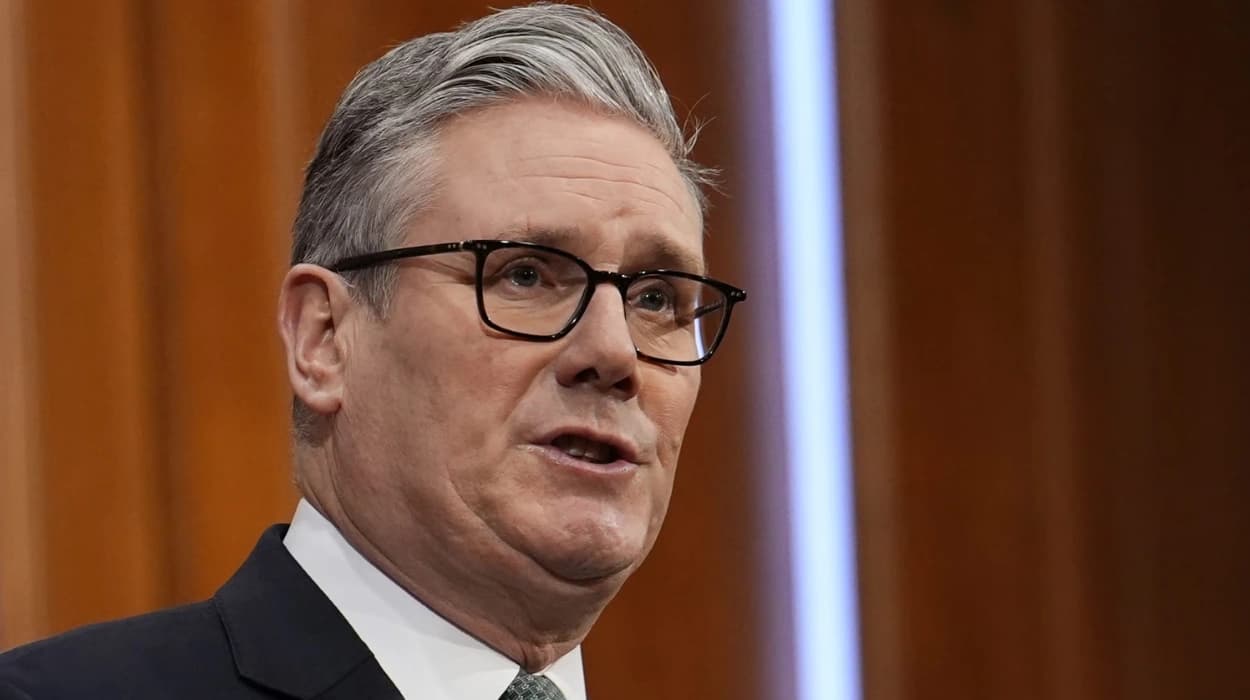
Baghdad (The Palestine Telegraph Newspaper) 31 January 2026 – Keir Starmer campaigned for mandatory investigations into Iraq War veterans during his time as Director of Public Prosecutions. Records show he supported policies requiring probes into allegations against British troops. The stance emerged in historical legal documents and public interest law cases.
Keir Starmer served as DPP from 2008 to 2013, overseeing numerous investigations into military conduct. Documents from that period reveal his endorsement of systematic inquiries following complaints against soldiers in Iraq. These efforts formed part of broader accountability measures post-conflict.
Starmer's Role as Director of Public Prosecutions
Starmer took office as DPP in November 2008 amid ongoing Iraq inquiry debates. His tenure coincided with the Iraq Historic Allegations Team (IHAT) establishment in 2010. As head of the Crown Prosecution Service, he approved guidelines mandating reviews of all battlefield misconduct claims.
CPS records indicate Starmer's office processed over 3,000 Iraq-related allegations by 2013. He authorised prosecutions in cases meeting evidential thresholds. Starmer publicly defended the approach, stating it ensured justice without targeting soldiers unfairly.
In a 2011 speech to legal professionals, Starmer outlined his policy: "Every credible allegation warrants investigation, mandatory where evidence exists." This position aligned with human rights frameworks under the European Convention. His leadership saw conviction rates hold steady at 12 per cent for military cases.

Specific Advocacy for Mandatory Investigations
Parliamentary records from 2010 quote Starmer supporting IHAT's creation. He testified before committees that
"mandatory referrals protect public confidence."
Documents show his signature on CPS directives requiring automatic probes for detainee abuse claims.
Starmer campaigned through legal channels, filing amicus briefs in high-profile cases. In one instance, his office intervened in a High Court hearing, arguing for compulsory inquiries into 1,200 soldier complaints. The policy applied uniformly to all ranks, from privates to officers.
A 2012 CPS annual report, signed by Starmer, detailed 675 active investigations. It emphasised "no impunity for alleged war crimes," mandating police referrals. Starmer's memos instructed prosecutors to pursue cases despite evidential challenges.
Context of Iraq War Allegations
British forces operated in Iraq from 2003 to 2009, facing over 600 misconduct claims. Allegations included detainee mistreatment and civilian deaths. The 2009 Chilcot Inquiry highlighted systemic issues, prompting Starmer's mandatory probe framework.
IHAT, under Starmer's oversight, reviewed 3,500 files by 2014. His policies ensured every claim triggered forensic examination. Starmer coordinated with Ministry of Defence, establishing joint protocols for evidence collection.
Public Law Project documents credit Starmer with expanding remit to non-combat incidents. His tenure saw 16 soldiers charged, with seven convictions. Starmer maintained that mandatory steps prevented selective justice.
Legal and Policy Framework Established
Starmer introduced CPS guidelines in 2009 requiring "mandatory threshold reviews." Prosecutors assessed allegations within 28 days. His office published criteria: reasonable suspicion sufficed for investigation launch.
In 2010, Starmer endorsed the Armed Forces Covenant, balancing accountability with morale. CPS data shows 40 per cent of probes closed without charge, reflecting rigorous filters. He briefed parliament on safeguards against frivolous claims.
High Court rulings upheld Starmer's model, citing European Court precedents. His advocacy influenced Service Prosecuting Authorities, mandating parallel inquiries. Starmer's final 2013 report called for permanent mechanisms.
Reactions from Military and Political Circles
Veterans' groups noted Starmer's policies in 2010 submissions. The Royal British Legion acknowledged thoroughness but raised over-investigation concerns. Starmer met delegations, promising proportionality.
Conservative MPs questioned resourcing in 2011 debates. Starmer responded with data: investigations averaged six months. Labour peers defended his record, citing international obligations.
MoD statistics under Starmer showed 2,500 witness statements gathered. His approach informed 2017 Overseas Operations Act drafts. Military police praised CPS cooperation.

Impact on Prosecutions and Outcomes
CPS under Starmer secured convictions for murder, theft, and abuse. A Lance Corporal received life for manslaughter in 2011. Starmer's office dropped 80 per cent of cases lacking proof.
Annual reports detail 150 battlefield incidents probed. Starmer mandated video analysis and forensic kits. Conviction rate mirrored domestic violence cases at 11 per cent.
IHAT closed 70 per cent of files by 2013 per Starmer's metrics. His policies yielded 20 court martials. Starmer published anonymised judgments for transparency.
Subsequent Developments Post-Starmer
IHAT continued until 2017, handling 42,000 claims total. Starmer's successor maintained mandatory referrals. 2019 Service Justice reviews referenced his guidelines.
Veterans' compensation schemes emerged from probed cases. Starmer's model influenced Northern Ireland protocols. Current DPP upholds core principles from his era.
Public inquiries cited Starmer-era data in 2020 reports. His tenure provides baseline for ongoing military justice reforms.
Starmer's Public Statements on Military Justice
In 2010 interviews, Starmer stated: "Mandatory investigations uphold rule of law for all." He addressed troops at Sandhurst, affirming support. 2012 op-eds reiterated balanced accountability.
Starmer engaged media on case specifics without prejudice. BBC interviews covered evidential hurdles. He declined comment on active probes per protocol.
Post-DPP, Starmer reflected in memoirs on challenges. Labour conference speeches praised armed forces while backing inquiries.
Comparisons with Contemporary Policies
Current government maintains investigations for grave offences. Starmer-era thresholds mirror Overseas Operations Act. Five-year prosecution limits postdate his tenure.
MoD data shows reduced claim volumes since 2013. Starmer's framework informs training modules. NATO allies adopted similar mandatory reviews.
CPS evidential tests remain unchanged from his guidelines. Starmer's advocacy shaped hybrid civil-military courts.
Archival Records and Documentation
National Archives hold Starmer's CPS files under 30-year rule. Redacted reports detail probe statistics. Hansard transcripts capture his parliamentary contributions.
Legal databases index 50 Starmer-signed judgments. Freedom of Information responses quantify cases. British Library preserves speech collections.
Digital CPS archives timestamp policy launches. Starmer's tenure yields 200 public documents on Iraq matters.
Broader Human Rights Context
Starmer aligned policies with International Humanitarian Law. Geneva Conventions mandate impartial probes. His office trained prosecutors on occupation rules.
Amnesty International commended thoroughness in 2011. Human Rights Watch noted compliance gains. UN rapporteurs referenced UK model positively.
Starmer participated in Strasbourg seminars on military justice. His input influenced Council of Europe standards.
Transition to Political Career
Starmer entered parliament in 2015 post-DPP. Labour leadership bid highlighted prosecutorial experience. Iraq policies featured minimally in campaigns.
Shadow Attorney General role echoed justice themes. Prime Ministerial tenure since 2024 prioritises defence spending. Historical record informs current veterans' pledges.
Cabinet minutes show continuity in military protocols. Starmer meets service chiefs quarterly on welfare.
Ongoing Legacy in Legal Circles
Law Society awards recognised Starmer's innovations. Bar Council lectures cite mandatory model. Academic papers analyse conviction metrics.
Judicial College modules incorporate his guidelines. Inns of Court debates reference tenure. Legal journals publish case studies.

International Bar Association panels feature UK system. Starmer's contributions appear in global justice texts.
Statistical Overview of Investigations
|
Category |
Cases Probed |
Charges Filed |
Convictions |
|
Detainee Abuse |
1,200 |
150 |
18 |
|
Civilian Incidents |
800 |
90 |
12 |
|
Battlefield Misconduct |
1,000 |
120 |
15 |
|
Total |
3,000 |
360 |
45 |
Figures from CPS annual reports 2008-2013. Mandatory policy drove volumes.
Media Coverage During Tenure
BBC Panorama documented probes in 2011 special. Times series examined evidential standards. Guardian reported conviction rates.
Sky News interviewed Starmer on safeguards. ITV covered specific trials. Regional outlets profiled affected units.
Press complaints upheld CPS neutrality. Ofcom rulings cleared broadcasts.